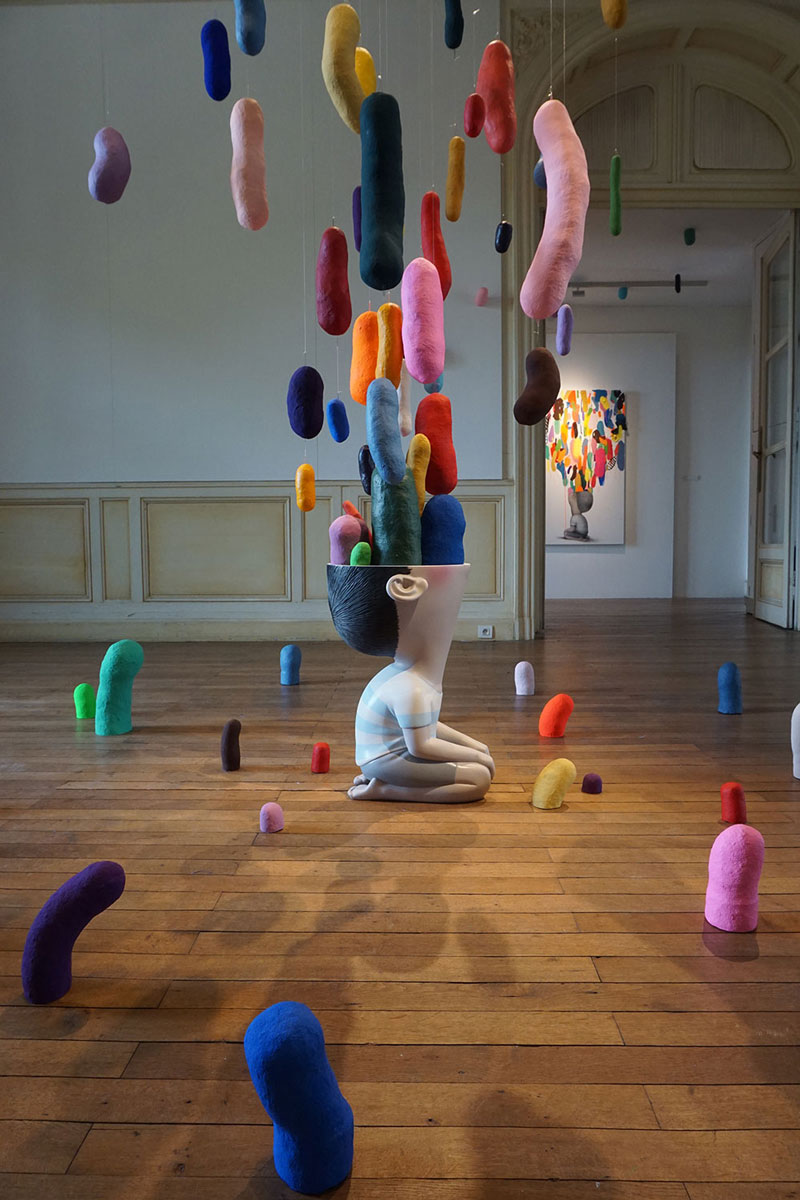
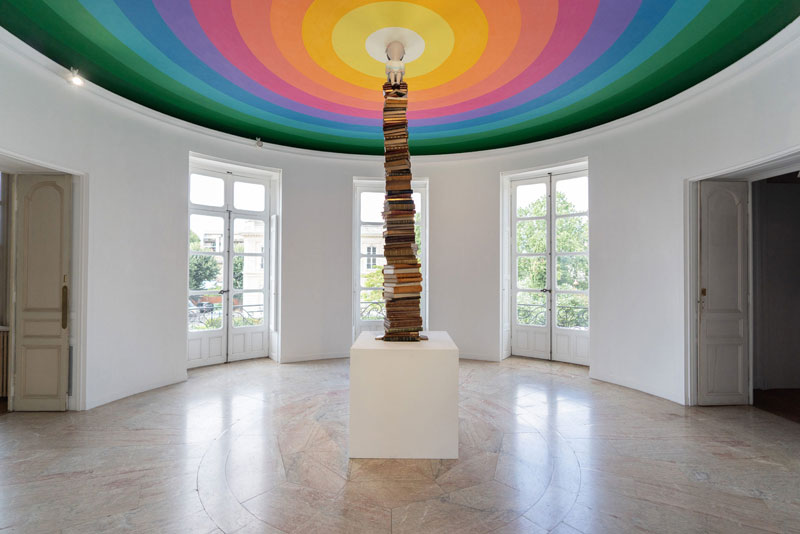
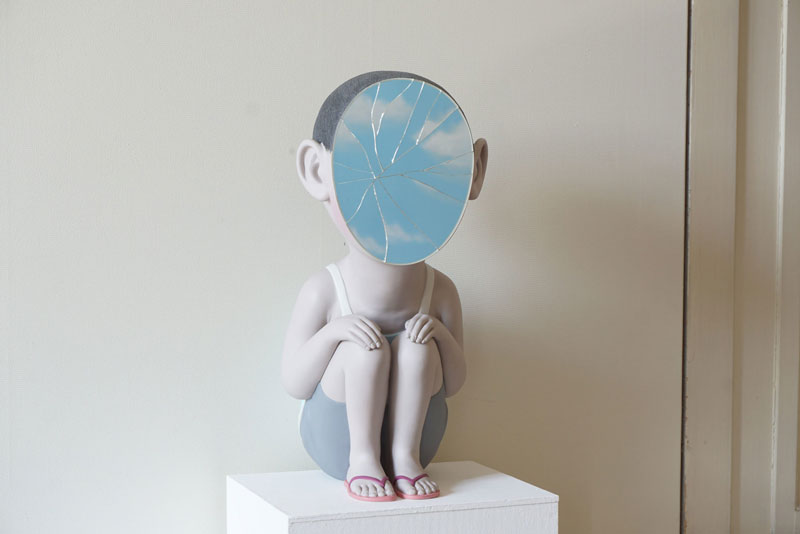
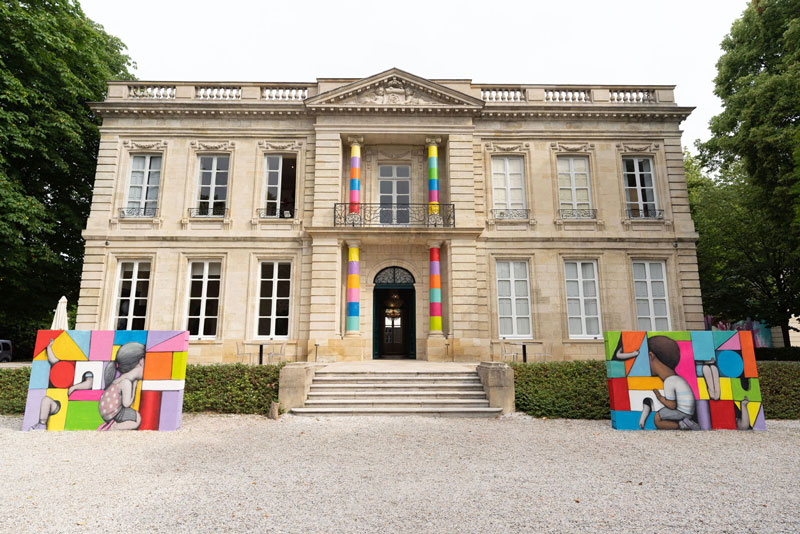
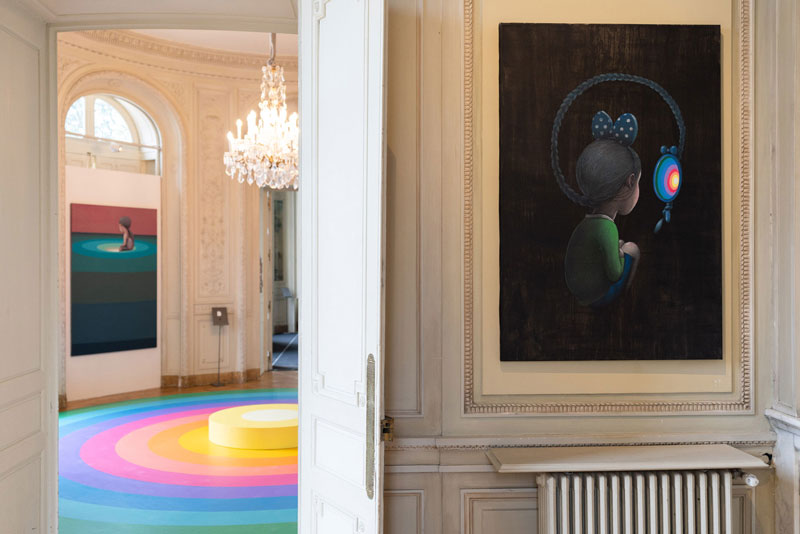
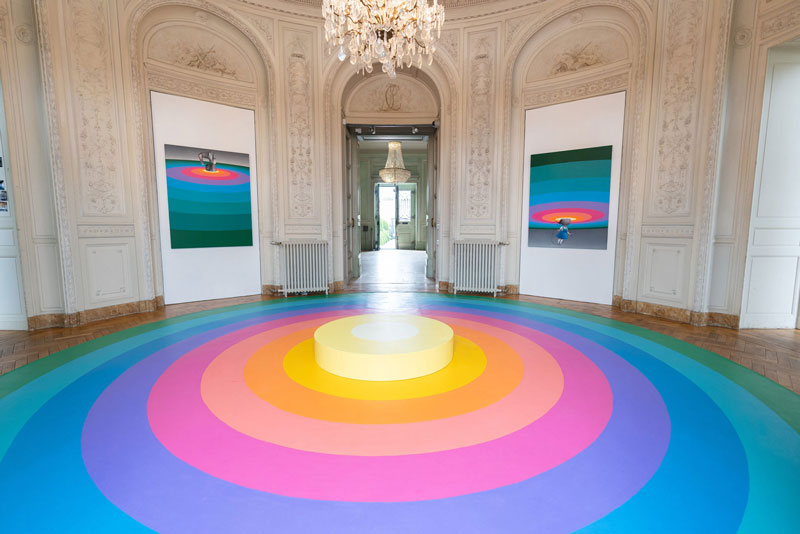
Seth is a renowned street artist, previously featured on Designer Daily, whose colorful artworks have a deep impact on viewers.
For this occasion, he took his art to a more classical gallery, in a French castle to be more specific. The name of the exhibition is “1, 2, 3 Soleil“, which could be translated to “1, 2, 3 Sunshine”. It takes you in a trip into the universe of Seth through installation based on the theme of his artworks.
Seth is a renowned street artist, previously featured on Designer Daily, whose colorful artworks have a deep impact on viewers.
For this occasion, he took his art to a more classical gallery, in a French castle to be more specific. The name of the exhibition is “1, 2, 3 Soleil“, which could be translated to “1, 2, 3 Sunshine”. It takes you in a trip into the universe of Seth through installation based on the theme of his artworks.
Seth is a renowned street artist, previously featured on Designer Daily, whose colorful artworks have a deep impact on viewers.
For this occasion, he took his art to a more classical gallery, in a French castle to be more specific. The name of the exhibition is “1, 2, 3 Soleil“, which could be translated to “1, 2, 3 Sunshine”. It takes you in a trip into the universe of Seth through installation based on the theme of his artworks.
Seth is a renowned street artist, previously featured on Designer Daily, whose colorful artworks have a deep impact on viewers.
For this occasion, he took his art to a more classical gallery, in a French castle to be more specific. The name of the exhibition is “1, 2, 3 Soleil“, which could be translated to “1, 2, 3 Sunshine”. It takes you in a trip into the universe of Seth through installation based on the theme of his artworks.
Seth is a renowned street artist, previously featured on Designer Daily, whose colorful artworks have a deep impact on viewers.
For this occasion, he took his art to a more classical gallery, in a French castle to be more specific. The name of the exhibition is “1, 2, 3 Soleil“, which could be translated to “1, 2, 3 Sunshine”. It takes you in a trip into the universe of Seth through installation based on the theme of his artworks.
In this week’s roundup, the string length of two emojis is not always equal, something to consider before making that rounded button, and we may have a new way to share web apps between devices, even when they are offline.
The JavaScript string length of emoji characters
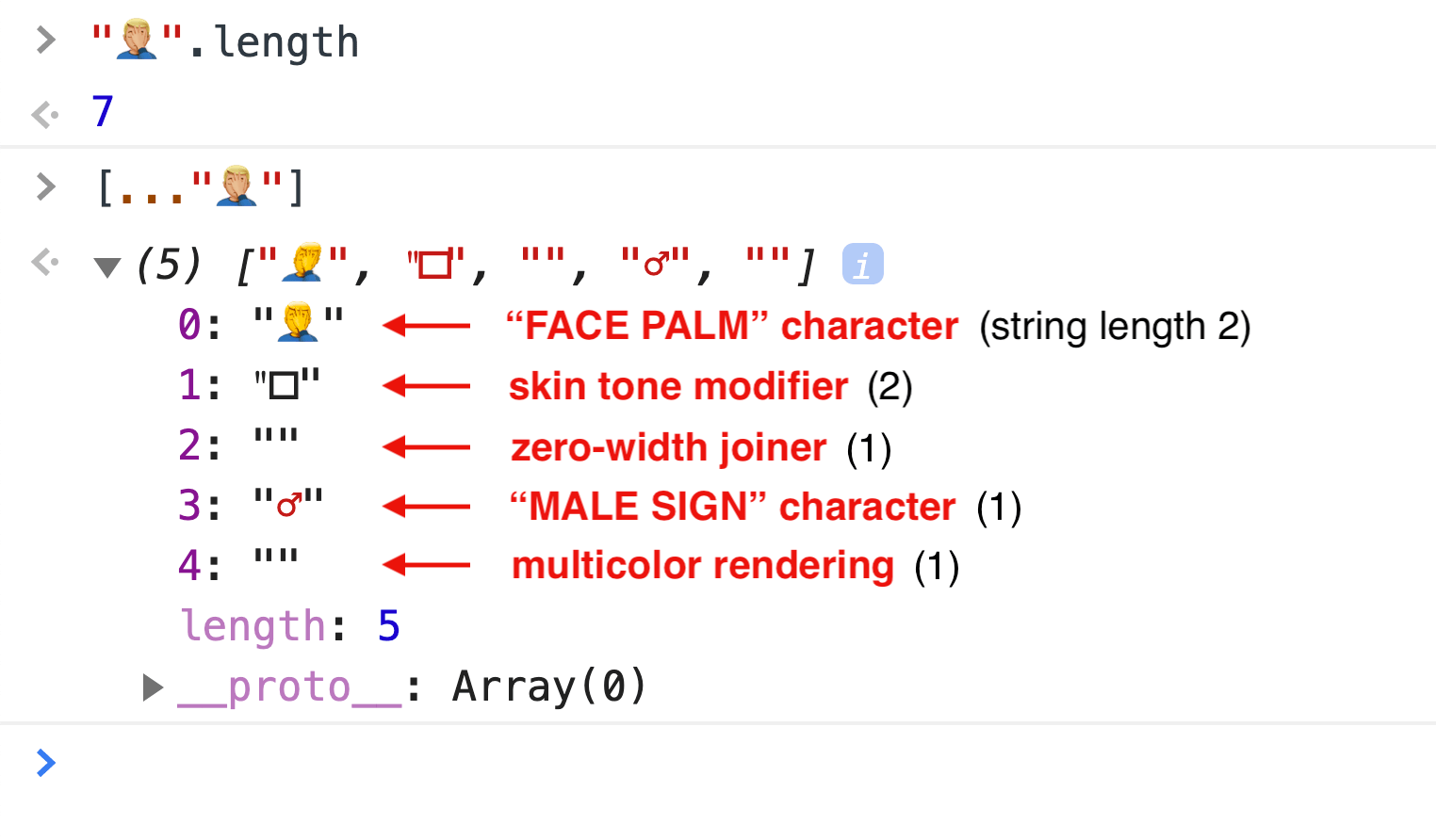
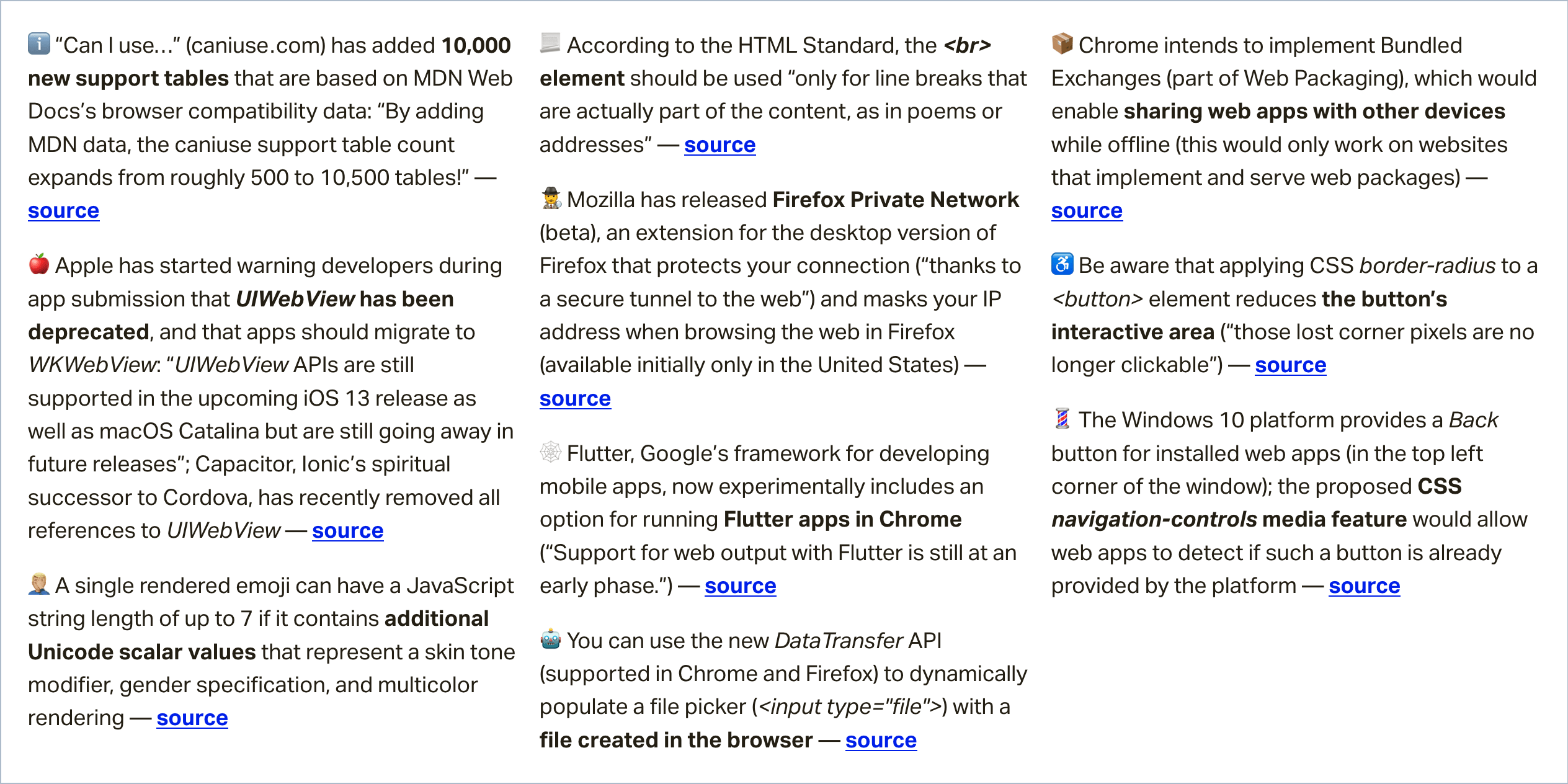
A single rendered emoji can have a JavaScript string length of up to 7 if it contains additional Unicode scalar values that represent a skin tone modifier, gender specification, and multicolor rendering.
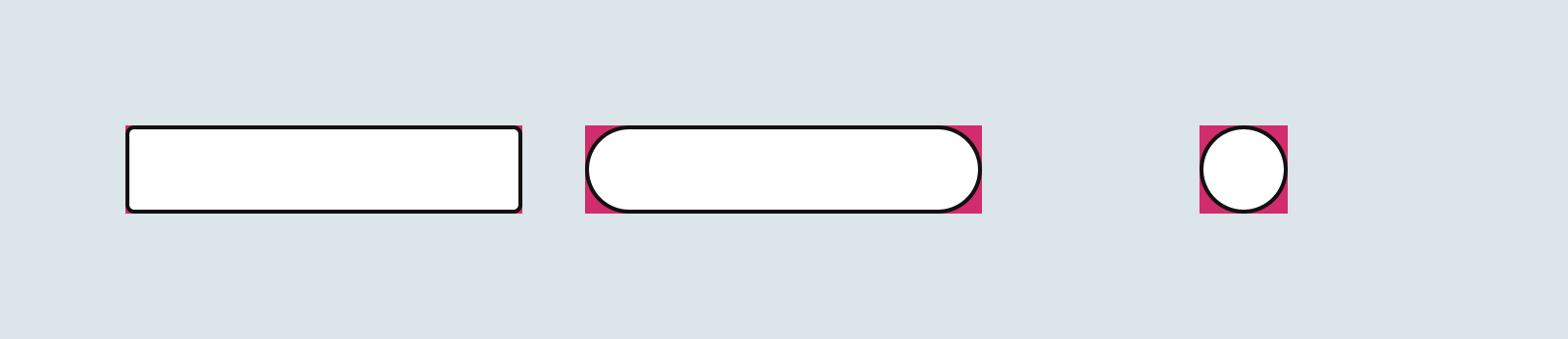
Be aware that applying CSS border-radius to a <button> element reduces the button’s interactive area (“those lost corner pixels are no longer clickable”).
You can avoid this accessibility issue in CSS, e.g., by emulating rounded corners via border-image instead, or by overlaying the button with an absolutely positioned, transparent ::before pseudo-element.
Sharing web pages while offline with Bundled Exchanges
Chrome plans to add support for navigation to Bundled Exchanges (part of Web Packaging). A bundled exchangeis a collection of HTTP request/response pairs, and it can be used to bundle a web page and all of its resources.
The browser should be able to parse and verify the bundle’s signature and then navigate to the website represented by the bundle without actually connecting to the site as all the necessary subresources could be served by the bundle.
Kinuko Yasuda from Google has posted a video that demonstrates how Bundled Exchanges enable sharing web pages (e.g., a web game) with other devices while offline.
Read even more news in my weekly Sunday issue, which can be delivered to you via email every Monday morning. Visit webplatform.news for more information.
Here’s a little direct product endorsement for ya: I literally use Buddy for deployment on all my projects.
Buddy isn’t just a deployment tool, we’ll get to that, but it’s something that Buddy does very well and definitely a reason you might look at picking it up yourself if you’re looking around for a reliable, high-quality deployment service.
Here’s my current setup:
CSS-Tricks is WordPress site.
The whole wp-content folder is a private repository on GitHub.
The hosting is on Flywheel, which gives me SFTP access to the server.
When I push to the Master branch, Buddy automatically deploys the changed files over SFTP. This is fast because the fact it’s only dealing with changed files.
The setup on Buddy for this is incredibly nice and simple and I’ve never once had any problems with it. You may want to look at zero-downtime deployments as well, where files are uploaded to a separate directory first and swapped out with the destination directories if the entire upload is successful.
And I don’t just use this setup for CSS-Tricks but all my sites that need this kind of deployment.
But like I said, Buddy isn’t just deployment. Buddy is all about pipelines. You (visually) configure a bunch of tasks that you want Buddy to do for you and the trigger that kicks it off. Pushing to Master is just one possible trigger, you can also kick them off manually or on a timer.
What tasks? Well, a common one would be running your tests. You know: Continuous Integration (CI) and Continuous Development (CD). You can tell Buddy to run whatever terminal commands you want (they’ll spin up a Docker container for you), so however you run tests and get output will work just fine.
You could have it shoot you an email, hit some other web service, or run a build process.
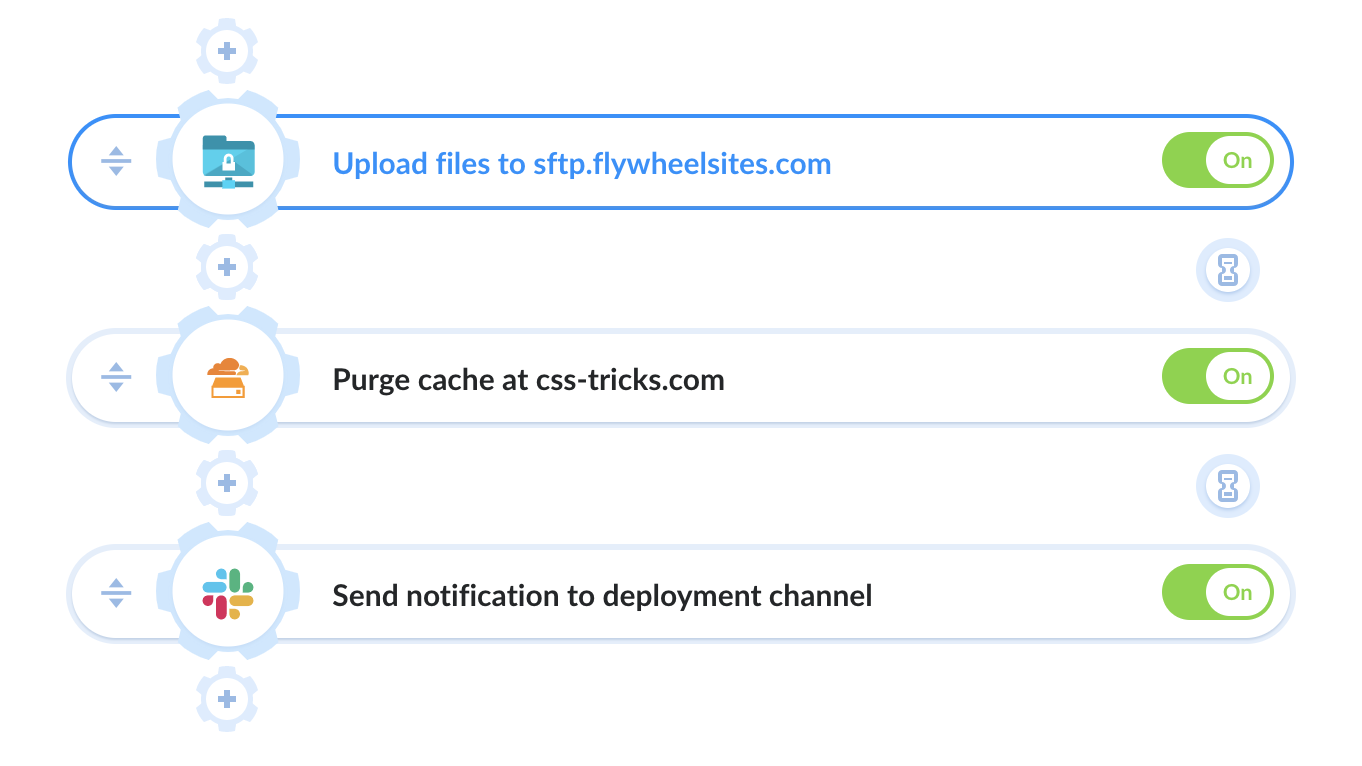
Here’s the actual tasks I run in my pipeline right now:
Upload the files over SFTP
Tell Cloudflare to purge all the cache on the site
Send a message to a particular channel on Slack (also do that on failure)
So useful.
It’s so easy to set up it almost encourages doing more with your pipelines. I need to get some Cypress tests in there and I’d love to integrate an action to automatically optimize all images in the commits.