“Biggie was a monumental talent and Steve Stoute is a living legend. Being part of a project that helped one pay tribute to the other was such an honor. One of the lovely things about creating animation is that it can help visualize abstract ideas like emotion, memory and admiration. With this film we wanted to create something intimate that complimented the personal experiences Steve had with BIG’s music but something that expressed the experience the broader community had as they saw Biggie shift the culture around them. The energy between these ideas as Steve Stoute expresses them was a wonderful thing to respond to as we carefully designed and animated the film.”
Habito is a seemingly simple animation about a mortgage algorithm. Our interview with director and graphic artist Nicolas Menard reveals there’s a lot more under the hood that makes this piece quite unique.
The virtual medium has become so strong these days that every entrepreneur with a small business or a multi-national company is vouching for online advertisement and promotion of their business. Having a website is the basic step that makes people across the globe aware of your presence and gives them a medium to get in touch with you. There was a time when it was difficult to get products from different countries but not anymore thanks to the internet. But the question arises, how businessmen can ensure a strong virtual presence and profits via the website? How can a website pool in traffic? And most importantly, amidst so many websites of the same product; how can your website stand out of the crowd?
Let’s start with basics:
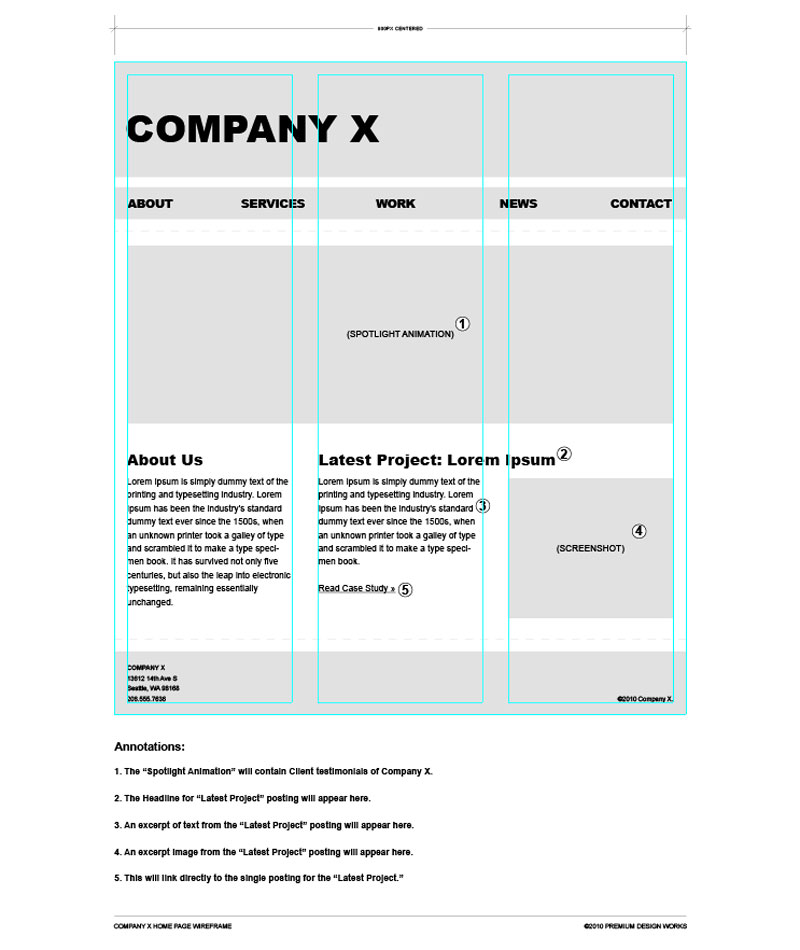
Always have a Wireframe: What is a wireframe? A wireframe is like a map or a blueprint that guides the web designer about the design and template of the website. This will help the designer arrange all the elements required on the website like the logo, color, theme, widgets, headers, footers, etc. Half of the work is done when one gets a wireframe ready and rest is all about execution. There are many vectors available that you can get at a reasonable price with the help of ByDiscountCodes.
Let your website tell your story: Every business has a story to tell and let your website narrate your story. Anyway, when viewers open a website they try to decode about the working and style of the business but it will be much easier and safe; if we let them hear what we have to say. In this way, we have all the controls on our business and it helps to create a positive impact. So when you are thinking about creating a website; think what kinda story you want your viewers to know? What kind of target audience you have in mind? Is the blueprint doing justice to your story? Accordingly, create a theme and set the tone of the site.
Be cut to the point: Gone are the days when people used to love reading essays. Now is the time when people want everything short and crisp. So how about creating a website which is visually appealing but not confusing. Create a homepage that is catchy but not chaotic. Opt for logo and images that does not make the viewers confused as this will not serve your purpose and make the viewers shift from your site.
Think out of the box: Don’t be a stereotype and change according to time. Innovation is the key to success in the digital world. You might not have something different to offer but if the presentation is different; it will make your website the most visited one.
To conclude, web designing is an art that can make or break your business. So while creating your website; it is essential to work on these key factors and hire a professional web designer who will help in creating a strong website.
Una Kravets is absolutely right. In modern CSS development, there are so many things to learn. For someone starting out today, it’s hard to know where to start.
Here is a list of things I wish I had known if I were to start all over again.
1. Don’t underestimate CSS
It looks easy. After all, it’s just a set of rules that selects an element and modifies it based on a set of properties and values.
CSS is that, but also so much more!
A successful CSS project requires the most impeccable architecture. Poorly written CSS is brittle and quickly becomes difficult to maintain. It’s critical you learn how to organize your code in order to create maintainable structures with a long lifespan.
But even an excellent code base has to deal with the insane amount of devices, screen sizes, capabilities, and user preferences. Not to mention accessibility, internationalization, and browser support!
CSS is like a bear cub: cute and inoffensive but as he grows, he’ll eat you alive.
Learn to read code before writing and delivering code.
It’s your responsibility to stay up to date with best practice. MDN, W3C, A List Apart, and CSS-Tricks are your source of truth.
The web has no shape; each device is different. Embrace diversity and understand the environment we live in.
2. Share and participate
Sharing is so important! How I wish someone had told me that when I started. It took me ten years to understand the value of sharing; when I did, it completely changed how I viewed my work and how I collaborate with others.
You’ll be a better developer if you surround yourself with good developers, so get involved in open source projects. The CSS community is full of kind and generous developers. The sooner the better.
Share everything you learn. The path is as important as the end result; even the tiniest things can make a difference to others.
Share! Write a blog, documentation, or tweets; speak at meetups and conferences.
Find an accountability partner, someone that will push you to share consistently.
3. Pick the right tools
Your code editor should be an extension of your mind.
It doesn’t matter if you use Atom, VSCode or old school Vim; the better you shape your tool to your thought process, the better developer you’ll become. You’ll not only gain speed but also have an uninterrupted thought line that results in fluid ideas.
The terminal is your friend.
There is a lot more about being a CSS developer than actually writing CSS. Building your code, compiling, linting, formatting, and browser live refresh are only a small part of what you’ll have to deal with on a daily basis.
Research which IDE is best for you. There are high performance text editors like Vim or easier to use options like Atom or VSCode.
Pick up your way around the terminal and learn CLI as soon as possible. The short book „Working the command line” is a great starting point.
4. Get to know the browser
The browser is not only your canvas, but also a powerful inspector to debug your code, test performance, and learn from others.
Learning how the browser renders your code is an eye-opening experience that will take your coding skills to the next level.
Every browser is different; get to know those differences and embrace them. Love them for what they are. (Yes, even IE.)
Install every browser you can and learn how each one of them renders your code.
5. Learn to write maintainable CSS
It’ll probably take you years, but if there is just one single skill a CSS developer should have, it is to write maintainable structures.
This means knowing exactly how the cascade, the box model, and specificity works. Master CSS architecture models, learn their pros and cons and how to implement them.
Remember that a modular architecture leads to independent modules, good performance, accessible structures, and responsive components (AKA: CSS happiness).
Learn about CSS architectures, keep up with the trends, and have an opinion!
Modern CSS is amazing. Its future is even better. I love CSS and enjoy every second I spend coding.
If you need help, you can reach out to me or probably any of the CSS developers mentioned in this article. You might be surprised by how kind and generous the CSS community can be.
What do you think about my advice? What other advice would you give? Let me know what you think in the comments.
We’ve already covered „The Notch” and the options for dealing with it from an HTML and CSS perspective. There is a bit more detail available now, straight from the horse’s mouth:
Safe area insets are not a replacement for margins.
… we want to specify that our padding should be the default padding or the safe area inset, whichever is greater. This can be achieved with the brand-new CSS functions min() and max() which will be available in a future Safari Technology Preview release.
It is important to use @supports to feature-detect min and max, because they are not supported everywhere, and due to CSS’s treatment of invalid variables, to not specify a variable inside your @supports query.
Jeremey Keith’s hot takes have been especially tasty, like:
You could add a bunch of proprietary CSS that Apple just pulled out of their ass.
Or you could make sure to set a background colour on your body element.
I recommend the latter.
And:
This could be a one-word article: don’t.
More specifically, don’t design websites for any specific device.
Although if this pushes support forward for min() and max() as generic functions, that’s cool.
Marvin Visions is a new typeface designed in the spirit of those letters you’d see in scruffy old 80’s sci-fi books. This specimen site has a really beautiful layout that’s worth exploring and reading about the design process behind the work.
Welcome to our monthly feature of fantastic tutorial results created by
you, the Envato Tuts+ community!
Every day, visitors like you take the
time not only to read our tutorials but also to try them out. This is an
assortment of those comment submissions found throughout the Design
& Illustration section. Check out this set of results and join in
for the next roundup, published next month!
Vector Tutorial Results
Taken from the
comments section of your favorite tutorials, these first pieces are an
assortment of results created with vector drawing programs. Check out
these amazing results!
How to Create a Futuristic Racing Illustration in Sketch
Beautiful tutorial! Thank you for sharing it, I had a blast following it. I
just had a little trouble regulating the size of the pattern, but oh
well!
Adobe Photoshop Tutorial Results
Let’s
take a look at this next set of results inspired by Adobe Photoshop
tutorials published here on Envato Tuts+. Contributions range from photo
manipulations to text effects and more! Check out these wicked results
below!
How to Create a Double Exposure Action in Adobe Photoshop
How to Create a Glossy, Puffy Text Effect in Adobe Photoshop
Jonas Stark walked away with many new tips from this Glossy Text Effect tutorial by Rose. He commented:
I really liked the tutorial! Short and easy, but the outcome is amazing. And I get to learn the English-German Photoshop translation more and more. Thanks Rose!
Create a Photo Manipulation of the Emerald City of Oz With Adobe Photoshop
Step into a fairy tale with this Emerald City Manipulation from Jenny Le. Reader Koko tried it and created this insane manipulation. She commented:
I enjoyed it! Very cool. Thanks for the tutorial.
Design Tutorial Results
These final
pieces are inspired by an assorted of design tutorials that don’t quite
fit the previous categories. They include everything from print design
to drawing and more! Enjoy these beautiful pieces created by the
community below!
How to Create a Vintage Music Festival Flyer in Adobe InDesign
Awesome tutorial! Here are my Sunday sketches! Thank you Carlos!
How to Be Involved in the Next Showcase
Have
you created a piece based on one of our tutorials here in the Design
& Illustration section of Envato Tuts+? We’re keen for you to share
your results with us! Check out the general guidelines below to join in
with our community:
Your artwork should be similar in some
way to the tutorial that you followed or that inspired it. The aim of
these showcases is to share what readers have created after following
the tutorial.
Comment on the tutorial you used, attaching an
image of your result. We’re keen on all levels of ability: from beginner
to advanced!
Include a comment about your result, yourself, or your process. We like knowing about you and what you’re sharing.
Share
the tutorial when you share that artwork elsewhere on the web. If
you’ve posted your piece on sites like Facebook, Tumblr or Behance, link
back to the tutorial so that other users know your source and can join
in on the fun.
Thanks to everyone who was highlighted above for sharing your results with the Envato Tuts+ community. We look forward
to checking out your brilliant versions of our tutorials in the near
future, and welcome users new and old to participate in upcoming
showcases.
Win $250 in Envato Market Credits!
Jump over to the Envato community forums to show off your creation from one of the many Tuts+ tutorials. Read more about it over here.
The Study of Human Being, the design elements used in the 2016 Dentsu Advertising Awards, has been awarded a Gold Clio at the 2017 Clio Awards. The Dentsu Advertising Awards is the most prestigious advertising award in Japan. Five posters feature crowds of people, in various configurations and levels of proximity. The images were used in an installation at the Awards, as well as in the awards year book, the rule book and promotional material. “Great advertisement only comes from acute observations of human being: its behavior and the deep understanding of psychology. This universal value never changes with the times, however the modes of advertising become more varied and ambitious.”
The Study of Human Being Credits
The Study of Human Being design project was developed at Dentsu Inc, Tokyo, by creative director Yoshihiro Yagi, copywriter Haruko Tsutsui, art director Yoshinaka Ono, copywriter Marina Danjo, designer Katsunori Nishino, print producer Masaharu Nishiyama. Print was produced at Dentsu On Demand Graphic Inc.
Photography by Amana Inc photographer Ryohei Takanashi was retouched by Takuya Tsugane, with producers Ryo Ikeda, Tomomi Arii and Kumiko Furukawa. Installation was managed by J2 Complex.
Agregator najlepszych postów o designie, webdesignie, cssie i Internecie