So Microsoft launches a Node-based browser automation project called Playwright. It allows you to spin up a headless version of a browser and control it. Go here! Click something! Take a screenshot! That kind of stuff. Particularly useful for testing.
It’s just like Google’s Puppeteer, only instead of being Chrome-only, it also „works” in Firefox and Safari.
The drama started immediately.
The launch tweet from Andrey Lushnikov (who’s Twitter bio is „former TL @ Chrome Puppeteer, former eng @ Chrome DevTools”), is responded to by Sam Sneddon who questions the cross-browser compatibility. Apparently that compatibility comes via very large patches to those other browsers which some feel are a little house-of-cards-esque and will never actually land in those other browsers, especially since there are competing efforts like puppeteer-firefox.
It’s fairly obvious that the original team from Google behind Puppeteer kinda, uhhhh, made their way over to Microsoft and re-did the work over there. A little bird tells me Google is proper pissed about it.
I don’t have any other inside knowledge here, but it doesn’t seem to make Microsoft look very good here. For a company that has had so much success with an open-source strategy, hiring away a team to build a directly competing alternate open-source project without much cooperation from the other open-source projects it integrates with isn’t a great look. At the same time, having a working project that allows cross-browser headless control is pretty rad.
Feel free to enlighten me if I have it all wrong.
Related: As I understand it, Cypress doesn’t use either project, but has their own thing, and is close to Firefox support as well.
Performance advice from David Calhoun on how many scripts to load on a page for best performance:
[…] some of your vendor dependencies probably change slower than others. react and react-dom probably change the slowest, and their versions are always paired together, so they both form a logical chunk that can be kept separate from other faster-changing vendor code:
Funny how times haven’t changed that much! Me, in 2012, talking about how many CSS files need to be loaded on any given page: One, Two, or Three. I split it into global, section-specific, and-page-specific so it was less about third-party code, although that could certainly apply, too.
Some HTML elements accept width and height as attributes. Some do not. For example:
<!-- valid, works, is a good idea -->
<img width="500" height="400" src="..." alt="...">
<iframe width="600" height="400" src="..."></iframe>
<svg width="20" height="20"></svg>

<!-- not valid, doesn't work, not a good idea -->
<div width="40" height="40"></div>
<span width="100" height="10"></span>
Those attributes are sometimes referred to as presentational attributes. The thing to know about them is that they are overridden by any other styling information whatsoever. That makes them ideal as a fallback.
So, if CSS loads and has a declaration like:
img {
  width: 400px;
}
…that is going to override the width="500" on the <img> tag above. Presentational attributes are the weakest kind of styling, so they are overridden by any CSS, even selectors with very low specificity.
What might be a smidge confusing is that presentational attributes seem like they would have high specificity. These inline styles, for instance, are very strong:
Using an inline style (which works on any element, not a select few), we’ve moved from the weakest way to apply width and height to one of the strongest. Regular CSS will not override this, with a selector of any specificity strength. If we need to override them from CSS, we’ll need !important rules.
img {
  width: 400px !important;
}
To reiterate, presentational attributes on elements that accept them (e.g. <img>, <iframe>, <canvas>, <svg>, <video>) are a good idea. They are fallback sizing and sizing information as the page is loading. They are particularly useful on <svg>, which may size themselves enormously in an awkward way if they have a viewBox and lack width and height attributes. Browsers even do special magic with images, where the width and height are used to reserve the correct aspect-ratio derived space in a situation with fluid images, which is great for a smooth page loading experience.
But presentational attributes are also weak and are usually overridden in the CSS.
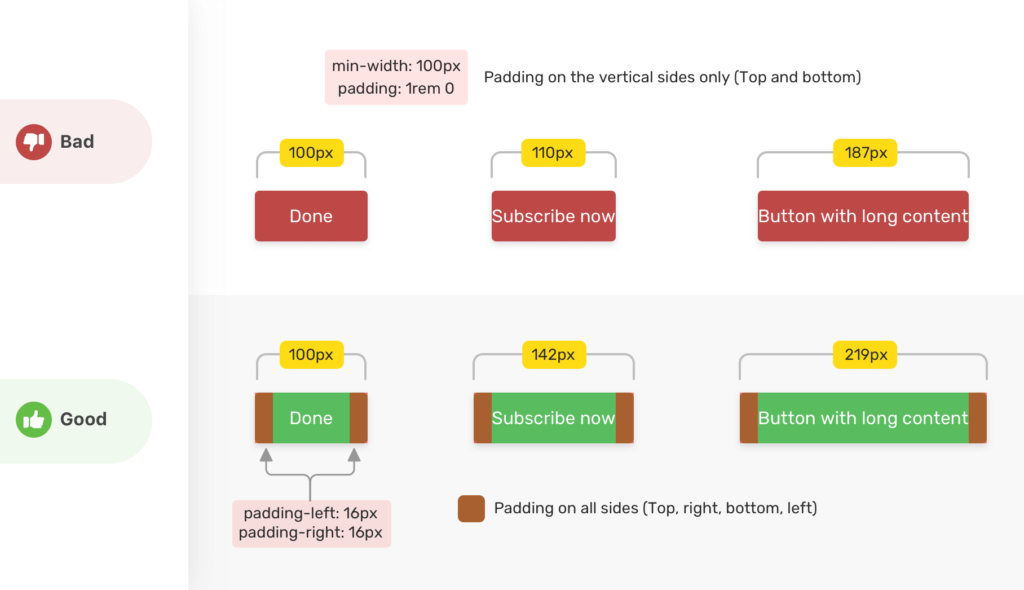
Here’s a nice deep dive into min-width / min-height / max-width / max-height from Ahmad Shadeed. I like how Ahmad applies the properties to real-world design situations in addition to explaining how it works. In the very first demo, for example, he shows a button where min-width is used as a method for (trying to) make sure a button has space on its sides. It works if the text is short enough, and fails when the text is longer. That’s the kind of „CSS thinking” that is fundamental to this trade.
Welcome to our Indigenous Artists Around the World series, which features both popular and little-known artists from the hundreds of indigenous communities across the globe.
According to the United Nations, there are an estimated 370–500 million indigenous people in the world, spread across 90 countries. Though they can be found in all geographic regions and represent 5,000 different cultures, many of us know precious little about their rich lives and cultures. Well, what better way to expand our knowledge of these communities than through their artists?
Today, join us as we kick off our series with the work of an amazing Kikuyu artist from Kenya, Jacque Njeri.
From the series MaaSci by Kikuyu artist from Kenya Jacque Njeri
Welcome to our Indigenous Artist series, Jacque. Thank you so much for being here. Let’s start off with a bit of background. What indigenous group do you belong to?
I am a Kikuyu born in Kenya.
From the series Genesis by Kikuyu artist from Kenya Jacque Njeri
According to the United Nations, Indigenous peoples created and speak the majority of the world’s 7,000 languages, but these languages are under threat with one dying every two weeks. Has your group retained its native tongue and how important is it that you maintain your own language?
Maintaining my native tongue gives me an identity and sense of belonging. It connects me to my history and my culture and informs my work.
For example in my latest work I draw on the Kikuyu myth of Gikuyu. The myth describes the origin of the tribe where Gikuyu the founder of the tribe was given land by God. While he descended upon it, a woman appeared and her name was Mumbi. Together they have more than nine daughters. The exact number is not mentioned as a survival mechanism for the continuity of the tribe. For example, if there was an attack and the known number was killed the rest would survive and this would ensure the continuity of the tribe.
Each daughter’s name was used as the identity of each clan. They were the head, making the system matriarchal. Each clan had its own attributes inherited from their mother. For example, if the daughter had a singing ability it was believed that her clan would make great singers and their duty was to entertain when there were ceremonies in the community.
In my new series, Genesis, I use the attributes as the embodiment of each artwork in a futuristic interpretation of a matriarch.
From the series Genesis by Kikuyu artist from Kenya, Jacque Njeri
What a beautiful story and a good place to tell us how and why you got into art making?
I have always been interested in art for as long as I can remember. Growing up, I would always get in trouble for filling up my books with doodles. In high school I took art classes and that’s where my interest really piqued. I went on to pursue a Bachelors in Art and Design at the University of Nairobi and graduated in 2013. Art for me is a communication channel from the divine to the world and it comes in many forms. Life imitates art and the world is largely shaped by it.
Tell us a bit about your work, your style and what motivates you.
I am a digital artist who primarily uses Adobe Photoshop to create Afro-futuristic work. Afro-futurism is my simulation of an African future. I think projecting a future requires high imagination because it’s not a derivative of anything that we see day to day as opposed to historical work which references what we have seen before. It’s almost abstract in that sense and that’s what makes it interesting. There are tons of myths and legends from Africa that have yet to be told to the world, for example, the myth of Gikuyu which is a story of creation from a Kikuyu perspective.
From the series Genesis by Kikuyu artist from Kenya, Jacque Njeri
MaaSci is another example of Afro-Futurism in my work. It is a digital collage series that explores a fellow indigenous people of Kenya, the Maasai, in Sci-Fi environments.
From the series MaaSci by Kikuyu artist from Kenya Jacque Njeri
The Maasai live in the savannah and that’s the image associated with them but the project imagines the Maasai in outer space in diverse backgrounds.
From the series MaaSci by Kikuyu artist from Kenya Jacque Njeri
Tell us a bit more about the themes and issues you explore using this Afro-Futurist style?
I explore culture, feminism and female empowerment. As a woman, addressing women’s issues comes naturally. It’s an expression of what I go through and what I see women going through and a projection of narrative change.
Despite being a forward-thinking country, pose the question 'When will Kenya be ready for a woman President?’ and the vile comments that arise from men and even women themselves gives a clear impression of the overall condition of women in our society. This of course stems from the cultural idea that women are to be led and lack the emotional stability to take on some roles.
From the series Genesis by Kikuyu artist from Kenya, Jacque Njeri
What was the best advice you can pass on to aspiring creatives?
The most critical advice I can give to other artists is this: Create every day!
What a way to kick off our new series. Thank you so much, Jacque, for taking the time to answer my questions and share your stunning and inspiring work with us. You can see even more of Jacque’s work on her website, jacquenjeri.com, and look out for more intriguing articles highlighting other talented indigenous artists around the world.
Welcome to our Indigenous Artists Around the World series, which features both popular and little-known artists from the hundreds of indigenous communities across the globe.
According to the United Nations, there are an estimated 370–500 million indigenous people in the world, spread across 90 countries. Though they can be found in all geographic regions and represent 5,000 different cultures, many of us know precious little about their rich lives and cultures. Well, what better way to expand our knowledge of these communities than through their artists?
Today, join us as we kick off our series with the work of an amazing Kikuyu artist from Kenya, Jacque Njeri.
From the series MaaSci by Kikuyu artist from Kenya Jacque Njeri
Welcome to our Indigenous Artist series, Jacque. Thank you so much for being here. Let’s start off with a bit of background. What indigenous group do you belong to?
I am a Kikuyu born in Kenya.
From the series Genesis by Kikuyu artist from Kenya Jacque Njeri
According to the United Nations, Indigenous peoples created and speak the majority of the world’s 7,000 languages, but these languages are under threat with one dying every two weeks. Has your group retained its native tongue and how important is it that you maintain your own language?
Maintaining my native tongue gives me an identity and sense of belonging. It connects me to my history and my culture and informs my work.
For example in my latest work I draw on the Kikuyu myth of Gikuyu. The myth describes the origin of the tribe where Gikuyu the founder of the tribe was given land by God. While he descended upon it, a woman appeared and her name was Mumbi. Together they have more than nine daughters. The exact number is not mentioned as a survival mechanism for the continuity of the tribe. For example, if there was an attack and the known number was killed the rest would survive and this would ensure the continuity of the tribe.
Each daughter’s name was used as the identity of each clan. They were the head, making the system matriarchal. Each clan had its own attributes inherited from their mother. For example, if the daughter had a singing ability it was believed that her clan would make great singers and their duty was to entertain when there were ceremonies in the community.
In my new series, Genesis, I use the attributes as the embodiment of each artwork in a futuristic interpretation of a matriarch.
From the series Genesis by Kikuyu artist from Kenya, Jacque Njeri
What a beautiful story and a good place to tell us how and why you got into art making?
I have always been interested in art for as long as I can remember. Growing up, I would always get in trouble for filling up my books with doodles. In high school I took art classes and that’s where my interest really piqued. I went on to pursue a Bachelors in Art and Design at the University of Nairobi and graduated in 2013. Art for me is a communication channel from the divine to the world and it comes in many forms. Life imitates art and the world is largely shaped by it.
Tell us a bit about your work, your style and what motivates you.
I am a digital artist who primarily uses Adobe Photoshop to create Afro-futuristic work. Afro-futurism is my simulation of an African future. I think projecting a future requires high imagination because it’s not a derivative of anything that we see day to day as opposed to historical work which references what we have seen before. It’s almost abstract in that sense and that’s what makes it interesting. There are tons of myths and legends from Africa that have yet to be told to the world, for example, the myth of Gikuyu which is a story of creation from a Kikuyu perspective.
From the series Genesis by Kikuyu artist from Kenya, Jacque Njeri
MaaSci is another example of Afro-Futurism in my work. It is a digital collage series that explores a fellow indigenous people of Kenya, the Maasai, in Sci-Fi environments.
From the series MaaSci by Kikuyu artist from Kenya Jacque Njeri
The Maasai live in the savannah and that’s the image associated with them but the project imagines the Maasai in outer space in diverse backgrounds.
From the series MaaSci by Kikuyu artist from Kenya Jacque Njeri
Tell us a bit more about the themes and issues you explore using this Afro-Futurist style?
I explore culture, feminism and female empowerment. As a woman, addressing women’s issues comes naturally. It’s an expression of what I go through and what I see women going through and a projection of narrative change.
Despite being a forward-thinking country, pose the question 'When will Kenya be ready for a woman President?’ and the vile comments that arise from men and even women themselves gives a clear impression of the overall condition of women in our society. This of course stems from the cultural idea that women are to be led and lack the emotional stability to take on some roles.
From the series Genesis by Kikuyu artist from Kenya, Jacque Njeri
What was the best advice you can pass on to aspiring creatives?
The most critical advice I can give to other artists is this: Create every day!
What a way to kick off our new series. Thank you so much, Jacque, for taking the time to answer my questions and share your stunning and inspiring work with us. You can see even more of Jacque’s work on her website, jacquenjeri.com, and look out for more intriguing articles highlighting other talented indigenous artists around the world.
Welcome to our Indigenous Artists Around the World series, which features both popular and little-known artists from the hundreds of indigenous communities across the globe.
According to the United Nations, there are an estimated 370–500 million indigenous people in the world, spread across 90 countries. Though they can be found in all geographic regions and represent 5,000 different cultures, many of us know precious little about their rich lives and cultures. Well, what better way to expand our knowledge of these communities than through their artists?
Today, join us as we kick off our series with the work of an amazing Kikuyu artist from Kenya, Jacque Njeri.
From the series MaaSci by Kikuyu artist from Kenya Jacque Njeri
Welcome to our Indigenous Artist series, Jacque. Thank you so much for being here. Let’s start off with a bit of background. What indigenous group do you belong to?
I am a Kikuyu born in Kenya.
From the series Genesis by Kikuyu artist from Kenya Jacque Njeri
According to the United Nations, Indigenous peoples created and speak the majority of the world’s 7,000 languages, but these languages are under threat with one dying every two weeks. Has your group retained its native tongue and how important is it that you maintain your own language?
Maintaining my native tongue gives me an identity and sense of belonging. It connects me to my history and my culture and informs my work.
For example in my latest work I draw on the Kikuyu myth of Gikuyu. The myth describes the origin of the tribe where Gikuyu the founder of the tribe was given land by God. While he descended upon it, a woman appeared and her name was Mumbi. Together they have more than nine daughters. The exact number is not mentioned as a survival mechanism for the continuity of the tribe. For example, if there was an attack and the known number was killed the rest would survive and this would ensure the continuity of the tribe.
Each daughter’s name was used as the identity of each clan. They were the head, making the system matriarchal. Each clan had its own attributes inherited from their mother. For example, if the daughter had a singing ability it was believed that her clan would make great singers and their duty was to entertain when there were ceremonies in the community.
In my new series, Genesis, I use the attributes as the embodiment of each artwork in a futuristic interpretation of a matriarch.
From the series Genesis by Kikuyu artist from Kenya, Jacque Njeri
What a beautiful story and a good place to tell us how and why you got into art making?
I have always been interested in art for as long as I can remember. Growing up, I would always get in trouble for filling up my books with doodles. In high school I took art classes and that’s where my interest really piqued. I went on to pursue a Bachelors in Art and Design at the University of Nairobi and graduated in 2013. Art for me is a communication channel from the divine to the world and it comes in many forms. Life imitates art and the world is largely shaped by it.
Tell us a bit about your work, your style and what motivates you.
I am a digital artist who primarily uses Adobe Photoshop to create Afro-futuristic work. Afro-futurism is my simulation of an African future. I think projecting a future requires high imagination because it’s not a derivative of anything that we see day to day as opposed to historical work which references what we have seen before. It’s almost abstract in that sense and that’s what makes it interesting. There are tons of myths and legends from Africa that have yet to be told to the world, for example, the myth of Gikuyu which is a story of creation from a Kikuyu perspective.
From the series Genesis by Kikuyu artist from Kenya, Jacque Njeri
MaaSci is another example of Afro-Futurism in my work. It is a digital collage series that explores a fellow indigenous people of Kenya, the Maasai, in Sci-Fi environments.
From the series MaaSci by Kikuyu artist from Kenya Jacque Njeri
The Maasai live in the savannah and that’s the image associated with them but the project imagines the Maasai in outer space in diverse backgrounds.
From the series MaaSci by Kikuyu artist from Kenya Jacque Njeri
Tell us a bit more about the themes and issues you explore using this Afro-Futurist style?
I explore culture, feminism and female empowerment. As a woman, addressing women’s issues comes naturally. It’s an expression of what I go through and what I see women going through and a projection of narrative change.
Despite being a forward-thinking country, pose the question 'When will Kenya be ready for a woman President?’ and the vile comments that arise from men and even women themselves gives a clear impression of the overall condition of women in our society. This of course stems from the cultural idea that women are to be led and lack the emotional stability to take on some roles.
From the series Genesis by Kikuyu artist from Kenya, Jacque Njeri
What was the best advice you can pass on to aspiring creatives?
The most critical advice I can give to other artists is this: Create every day!
What a way to kick off our new series. Thank you so much, Jacque, for taking the time to answer my questions and share your stunning and inspiring work with us. You can see even more of Jacque’s work on her website, jacquenjeri.com, and look out for more intriguing articles highlighting other talented indigenous artists around the world.
Welcome to our Indigenous Artists Around the World series, which features both popular and little-known artists from the hundreds of indigenous communities across the globe.
According to the United Nations, there are an estimated 370–500 million indigenous people in the world, spread across 90 countries. Though they can be found in all geographic regions and represent 5,000 different cultures, many of us know precious little about their rich lives and cultures. Well, what better way to expand our knowledge of these communities than through their artists?
Today, join us as we kick off our series with the work of an amazing Kikuyu artist from Kenya, Jacque Njeri.
From the series MaaSci by Kikuyu artist from Kenya Jacque Njeri
Welcome to our Indigenous Artist series, Jacque. Thank you so much for being here. Let’s start off with a bit of background. What indigenous group do you belong to?
I am a Kikuyu born in Kenya.
From the series Genesis by Kikuyu artist from Kenya Jacque Njeri
According to the United Nations, Indigenous peoples created and speak the majority of the world’s 7,000 languages, but these languages are under threat with one dying every two weeks. Has your group retained its native tongue and how important is it that you maintain your own language?
Maintaining my native tongue gives me an identity and sense of belonging. It connects me to my history and my culture and informs my work.
For example in my latest work I draw on the Kikuyu myth of Gikuyu. The myth describes the origin of the tribe where Gikuyu the founder of the tribe was given land by God. While he descended upon it, a woman appeared and her name was Mumbi. Together they have more than nine daughters. The exact number is not mentioned as a survival mechanism for the continuity of the tribe. For example, if there was an attack and the known number was killed the rest would survive and this would ensure the continuity of the tribe.
Each daughter’s name was used as the identity of each clan. They were the head, making the system matriarchal. Each clan had its own attributes inherited from their mother. For example, if the daughter had a singing ability it was believed that her clan would make great singers and their duty was to entertain when there were ceremonies in the community.
In my new series, Genesis, I use the attributes as the embodiment of each artwork in a futuristic interpretation of a matriarch.
From the series Genesis by Kikuyu artist from Kenya, Jacque Njeri
What a beautiful story and a good place to tell us how and why you got into art making?
I have always been interested in art for as long as I can remember. Growing up, I would always get in trouble for filling up my books with doodles. In high school I took art classes and that’s where my interest really piqued. I went on to pursue a Bachelors in Art and Design at the University of Nairobi and graduated in 2013. Art for me is a communication channel from the divine to the world and it comes in many forms. Life imitates art and the world is largely shaped by it.
Tell us a bit about your work, your style and what motivates you.
I am a digital artist who primarily uses Adobe Photoshop to create Afro-futuristic work. Afro-futurism is my simulation of an African future. I think projecting a future requires high imagination because it’s not a derivative of anything that we see day to day as opposed to historical work which references what we have seen before. It’s almost abstract in that sense and that’s what makes it interesting. There are tons of myths and legends from Africa that have yet to be told to the world, for example, the myth of Gikuyu which is a story of creation from a Kikuyu perspective.
From the series Genesis by Kikuyu artist from Kenya, Jacque Njeri
MaaSci is another example of Afro-Futurism in my work. It is a digital collage series that explores a fellow indigenous people of Kenya, the Maasai, in Sci-Fi environments.
From the series MaaSci by Kikuyu artist from Kenya Jacque Njeri
The Maasai live in the savannah and that’s the image associated with them but the project imagines the Maasai in outer space in diverse backgrounds.
From the series MaaSci by Kikuyu artist from Kenya Jacque Njeri
Tell us a bit more about the themes and issues you explore using this Afro-Futurist style?
I explore culture, feminism and female empowerment. As a woman, addressing women’s issues comes naturally. It’s an expression of what I go through and what I see women going through and a projection of narrative change.
Despite being a forward-thinking country, pose the question 'When will Kenya be ready for a woman President?’ and the vile comments that arise from men and even women themselves gives a clear impression of the overall condition of women in our society. This of course stems from the cultural idea that women are to be led and lack the emotional stability to take on some roles.
From the series Genesis by Kikuyu artist from Kenya, Jacque Njeri
What was the best advice you can pass on to aspiring creatives?
The most critical advice I can give to other artists is this: Create every day!
What a way to kick off our new series. Thank you so much, Jacque, for taking the time to answer my questions and share your stunning and inspiring work with us. You can see even more of Jacque’s work on her website, jacquenjeri.com, and look out for more intriguing articles highlighting other talented indigenous artists around the world.
Welcome to our Indigenous Artists Around the World series, which features both popular and little-known artists from the hundreds of indigenous communities across the globe.
According to the United Nations, there are an estimated 370–500 million indigenous people in the world, spread across 90 countries. Though they can be found in all geographic regions and represent 5,000 different cultures, many of us know precious little about their rich lives and cultures. Well, what better way to expand our knowledge of these communities than through their artists?
Today, join us as we kick off our series with the work of an amazing Kikuyu artist from Kenya, Jacque Njeri.
From the series MaaSci by Kikuyu artist from Kenya Jacque Njeri
Welcome to our Indigenous Artist series, Jacque. Thank you so much for being here. Let’s start off with a bit of background. What indigenous group do you belong to?
I am a Kikuyu born in Kenya.
From the series Genesis by Kikuyu artist from Kenya Jacque Njeri
According to the United Nations, Indigenous peoples created and speak the majority of the world’s 7,000 languages, but these languages are under threat with one dying every two weeks. Has your group retained its native tongue and how important is it that you maintain your own language?
Maintaining my native tongue gives me an identity and sense of belonging. It connects me to my history and my culture and informs my work.
For example in my latest work I draw on the Kikuyu myth of Gikuyu. The myth describes the origin of the tribe where Gikuyu the founder of the tribe was given land by God. While he descended upon it, a woman appeared and her name was Mumbi. Together they have more than nine daughters. The exact number is not mentioned as a survival mechanism for the continuity of the tribe. For example, if there was an attack and the known number was killed the rest would survive and this would ensure the continuity of the tribe.
Each daughter’s name was used as the identity of each clan. They were the head, making the system matriarchal. Each clan had its own attributes inherited from their mother. For example, if the daughter had a singing ability it was believed that her clan would make great singers and their duty was to entertain when there were ceremonies in the community.
In my new series, Genesis, I use the attributes as the embodiment of each artwork in a futuristic interpretation of a matriarch.
From the series Genesis by Kikuyu artist from Kenya, Jacque Njeri
What a beautiful story and a good place to tell us how and why you got into art making?
I have always been interested in art for as long as I can remember. Growing up, I would always get in trouble for filling up my books with doodles. In high school I took art classes and that’s where my interest really piqued. I went on to pursue a Bachelors in Art and Design at the University of Nairobi and graduated in 2013. Art for me is a communication channel from the divine to the world and it comes in many forms. Life imitates art and the world is largely shaped by it.
Tell us a bit about your work, your style and what motivates you.
I am a digital artist who primarily uses Adobe Photoshop to create Afro-futuristic work. Afro-futurism is my simulation of an African future. I think projecting a future requires high imagination because it’s not a derivative of anything that we see day to day as opposed to historical work which references what we have seen before. It’s almost abstract in that sense and that’s what makes it interesting. There are tons of myths and legends from Africa that have yet to be told to the world, for example, the myth of Gikuyu which is a story of creation from a Kikuyu perspective.
From the series Genesis by Kikuyu artist from Kenya, Jacque Njeri
MaaSci is another example of Afro-Futurism in my work. It is a digital collage series that explores a fellow indigenous people of Kenya, the Maasai, in Sci-Fi environments.
From the series MaaSci by Kikuyu artist from Kenya Jacque Njeri
The Maasai live in the savannah and that’s the image associated with them but the project imagines the Maasai in outer space in diverse backgrounds.
From the series MaaSci by Kikuyu artist from Kenya Jacque Njeri
Tell us a bit more about the themes and issues you explore using this Afro-Futurist style?
I explore culture, feminism and female empowerment. As a woman, addressing women’s issues comes naturally. It’s an expression of what I go through and what I see women going through and a projection of narrative change.
Despite being a forward-thinking country, pose the question 'When will Kenya be ready for a woman President?’ and the vile comments that arise from men and even women themselves gives a clear impression of the overall condition of women in our society. This of course stems from the cultural idea that women are to be led and lack the emotional stability to take on some roles.
From the series Genesis by Kikuyu artist from Kenya, Jacque Njeri
What was the best advice you can pass on to aspiring creatives?
The most critical advice I can give to other artists is this: Create every day!
What a way to kick off our new series. Thank you so much, Jacque, for taking the time to answer my questions and share your stunning and inspiring work with us. You can see even more of Jacque’s work on her website, jacquenjeri.com, and look out for more intriguing articles highlighting other talented indigenous artists around the world.
Agregator najlepszych postów o designie, webdesignie, cssie i Internecie