
Wszystkie wpisy, których autorem jest admin

Waterfront City
logo


ПОКЕ? ДА!


Fake pizzas, real lookalike? / Des pizzas au goût de réchauffé?
Post pobrano z: Fake pizzas, real lookalike? / Des pizzas au goût de réchauffé?
 |
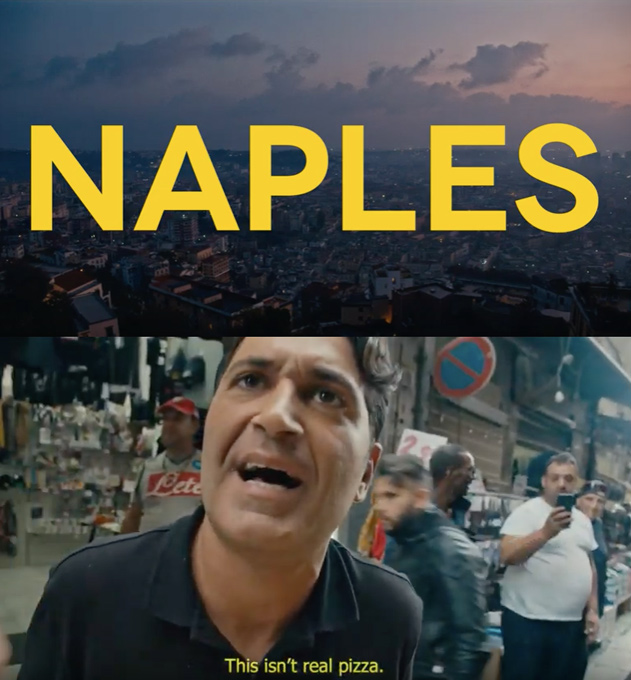 |
| THE ORIGINAL? Subway Pizza Sub “sorry Italy” – Oct 2019 Watch the TV Commercial Source : The Drum Agency : Above + Beyond (United Kingdom) |
LESS ORIGINAL Crust Australian Pizza “it’s not a pizza” – Dec 2019 Watch the TV Commercial Source : CampaignBrief, Instagram, Facebook Agency : Mullen Lowe Sydney (Australia) |
Fake pizzas, real lookalike? / Des pizzas au goût de réchauffé?
Post pobrano z: Fake pizzas, real lookalike? / Des pizzas au goût de réchauffé?
|
|
| THE ORIGINAL? Subway Pizza Sub “sorry Italy” – Oct 2019 Watch the TV Commercial Source : The Drum Agency : Above + Beyond (United Kingdom) |
LESS ORIGINAL Crust Australian Pizza “it’s not a pizza” – Dec 2019 Watch the TV Commercial Source : CampaignBrief, Instagram, Facebook Agency : Mullen Lowe Sydney (Australia) |
Motion Paths – Past, Present and Future
Post pobrano z: Motion Paths – Past, Present and Future
Cassie Evans has a great intro to motion paths. That is, being able to animate an element along a path. Not just up/down/left/right, but whatever curvy/wiggly/weird path you want.
It’s an interesting subject because there are so many different technologies helping to do it over time. SMIL, JavaScript-powered animation libraries, native JavaScript APIs, and even CSS via offset-path and friends. I think offset-path is funny – it was changed to that name from motion-path as you don’t technically have to apply motion to an element you place on a path in this way.
There’s no clear winner. I’m (perhaps obviously) a fan of doing stuff like this in CSS whenever possible, but the browser support there is essentially Chrome-only. Plus seeing SVG path values in CSS always feels a smidge uncomfortable because of the unitless numbers. SMIL feels like essentially dead technology, but at least then you’re in SVG-land and the paths make good sense in that context. If browser support is vital, you have to use a library.
I do think there is untapped cool design possibility in motion paths. It’s not just for landing space ships, but can be for practical stuff like how a modal enters a page.
Direct Link to Article — Permalink
The post Motion Paths – Past, Present and Future appeared first on CSS-Tricks.
Motion Paths – Past, Present and Future
Post pobrano z: Motion Paths – Past, Present and Future
Cassie Evans has a great intro to motion paths. That is, being able to animate an element along a path. Not just up/down/left/right, but whatever curvy/wiggly/weird path you want.
It’s an interesting subject because there are so many different technologies helping to do it over time. SMIL, JavaScript-powered animation libraries, native JavaScript APIs, and even CSS via offset-path and friends. I think offset-path is funny – it was changed to that name from motion-path as you don’t technically have to apply motion to an element you place on a path in this way.
There’s no clear winner. I’m (perhaps obviously) a fan of doing stuff like this in CSS whenever possible, but the browser support there is essentially Chrome-only. Plus seeing SVG path values in CSS always feels a smidge uncomfortable because of the unitless numbers. SMIL feels like essentially dead technology, but at least then you’re in SVG-land and the paths make good sense in that context. If browser support is vital, you have to use a library.
I do think there is untapped cool design possibility in motion paths. It’s not just for landing space ships, but can be for practical stuff like how a modal enters a page.
Direct Link to Article — Permalink
The post Motion Paths – Past, Present and Future appeared first on CSS-Tricks.
Case Study: lynnandtonic.com 2019 refresh
Post pobrano z: Case Study: lynnandtonic.com 2019 refresh
Lynn Fisher walks us step-by-step through the redesign process of her latest outstanding personal website. In this design, increasing the width of the browser window will cause the illustrations on the page crack to open and reveal more within them:

This case study reminded me that Lynn also has an archive of every case study and project that she’s made over the years and that it’s most certainly worth checking out.
Direct Link to Article — Permalink
The post Case Study: lynnandtonic.com 2019 refresh appeared first on CSS-Tricks.
Case Study: lynnandtonic.com 2019 refresh
Post pobrano z: Case Study: lynnandtonic.com 2019 refresh
Lynn Fisher walks us step-by-step through the redesign process of her latest outstanding personal website. In this design, increasing the width of the browser window will cause the illustrations on the page crack to open and reveal more within them:
This case study reminded me that Lynn also has an archive of every case study and project that she’s made over the years and that it’s most certainly worth checking out.
Direct Link to Article — Permalink
The post Case Study: lynnandtonic.com 2019 refresh appeared first on CSS-Tricks.