Wszystkie wpisy, których autorem jest admin

How Ground Temperature Changes with Depth

Post pobrano z: How Ground Temperature Changes with Depth

ground temperature with depth

Introduction

The study of ground temperature changes with depth is essential for understanding the thermal characteristics of the Earth’s crust. It provides valuable insights into various environmental processes and can be used in a range of applications, from geothermal energy production to climate modeling. By examining the factors that influence ground temperature, as well as the different layers and profiles within the ground, scientists can gain a more comprehensive understanding of how temperature varies at different depths. In this article, we will explore the various aspects of ground temperature changes with depth and their significance in different fields.

Introduction to ground temperature changes with depth

Ground temperature changes with depth refer to the variations in temperature that occur as we go deeper into the Earth’s surface. This phenomenon is influenced by various factors such as geography, climate, soil properties, and thermal conductivity. Understanding these changes is crucial for numerous applications, including geothermal energy extraction and geoengineering projects.

Factors That Affect Ground Temperature

There are several factors that can influence ground temperature. Geography and climate play a significant role, as regions closer to the equator experience higher temperatures compared to those near the poles. Additionally, soil properties, such as moisture content and composition, can impact heat transfer and thus affect ground temperature. These factors need to be considered when studying ground temperature changes with depth.

Geography and Climate

Geography and climate are important factors that influence ground temperature changes with depth. The geographical location of an area plays a role in determining the amount of incoming solar radiation, which affects the temperature at various depths. Additionally, different climates can lead to variations in ground temperature profiles due to variations in air temperature and precipitation patterns.

Soil Properties

Soil properties play a crucial role in determining ground temperature changes with depth. The composition, texture, and moisture content of the soil affect its ability to hold and transfer heat. Soil with high thermal conductivity will allow heat to pass through more easily, resulting in faster temperature changes with depth. On the other hand, soil with low thermal conductivity will have a slower temperature gradient. Moreover, different types of soil can have varying thermal properties, impacting how heat is distributed underground.

Ground Temperature Layers

Ground temperature layers refer to the different levels of temperature beneath the surface of the ground. These layers are influenced by factors such as soil properties, climate, and thermal conductivity. Understanding these layers is crucial in studying how ground temperature changes with depth.

Layer 1

Layer 1 of the ground temperature layers refers to the uppermost portion of the Earth’s surface, including the layer affected by atmospheric conditions. This layer experiences the most significant temperature fluctuations due to factors such as solar radiation and weather patterns.

Surface/Atmospheric Layer

The surface or atmospheric layer refers to the uppermost portion of the ground that is in direct contact with the atmosphere. This layer is influenced by various factors such as solar radiation, air temperature, and precipitation. It plays a crucial role in determining the overall temperature profile of the ground.

Layer 2

Layer 2 refers to the subsurface layer below the ground surface. It consists of various materials such as rocks, sediments, and soil. The temperature in this layer gradually decreases with increasing depth. Factors such as composition, moisture content, and thermal conductivity of the materials affect the rate of temperature change in this layer.

Ground Surface Layer

The ground surface layer, also known as the topsoil layer, refers to the uppermost portion of the ground. It is influenced by factors such as vegetation cover, human activity, and weather conditions. This layer plays a crucial role in regulating the exchange of heat between the atmosphere and the ground.

Ground Temperature Profile

The ground temperature profile refers to the distribution of temperature with depth in the ground. As you move deeper into the ground, the temperature usually increases. This profile can vary depending on factors such as climate, soil properties, and geographical location. Understanding the ground temperature profile is crucial for various applications, such as geothermal energy systems and climate studies.

Temperature Distribution

Temperature distribution refers to the way in which temperatures vary with depth in the ground. This distribution is influenced by factors such as sunlight, air temperature, and thermal properties of the soil. Understanding temperature distribution helps in assessing ground heat flux and designing efficient geothermal systems.

Monthly Temperatures

Monthly temperatures play a significant role in understanding ground temperature changes with depth. By analyzing the variations in temperature on a monthly basis, researchers can identify patterns and trends that help in determining how ground temperature fluctuates throughout the year. This data is crucial for various applications, such as analyzing climate change impacts and optimizing geothermal energy systems.

Soil Thermal Conductivity

Soil thermal conductivity refers to the ability of soil to conduct heat. It is a measure of how easily heat can pass through the soil. Factors that influence soil thermal conductivity include moisture content, mineral composition, and organic matter content. Good conductors of heat have higher thermal conductivity values, indicating that they can transfer heat more efficiently. The ability of soil to conduct heat plays a significant role in determining the temperature distribution within the ground as well as its response to external climate conditions.

Overview of Soil Thermal Conductivity

Soil thermal conductivity refers to the ability of soil to conduct heat. It is influenced by factors such as moisture content, type of soil, and organic matter. Understanding soil thermal conductivity is crucial in analyzing ground temperature changes with depth because it determines how heat is transferred within the soil. Factors like moisture content and composition affect the flow of heat, which in turn impacts the temperature profile at different depths. By examining soil thermal conductivity, scientists can better comprehend the patterns and variations in ground temperature distribution.

How Thermal Conductivity Affects Temperature Profile

Thermal conductivity plays a crucial role in determining the temperature profile of the ground. It refers to the ability of a material to conduct heat. Materials with high thermal conductivity, such as metals, transfer heat more efficiently than those with low thermal conductivity, like soil. In the context of ground temperature changes, soil thermal conductivity influences how heat is transferred from the surface to deeper layers. Soils with higher thermal conductivity will allow heat to penetrate deeper, resulting in a steeper temperature gradient with depth. On the other hand, soils with lower thermal conductivity may impede heat transfer, leading to a relatively uniform temperature distribution throughout the subsurface. Understanding how thermal conductivity affects temperature profiles is essential for various applications such as geothermal energy extraction and climate modeling.

Ground Temperature Monitoring

Ground temperature monitoring plays a crucial role in understanding the changes in ground temperature with depth. Various techniques, such as thermocouples, heat flux sensors, and fiber-optic distributed temperature sensing, are used to measure and monitor ground temperature. Accurate data acquisition and storage methods are employed to ensure reliable monitoring and analysis of ground temperature fluctuations over time.

Monitoring Techniques

Monitoring techniques play a crucial role in understanding ground temperature changes with depth. These techniques include the use of temperature sensors, borehole logging, and satellite remote sensing. By employing these methods, scientists can gather accurate and real-time data to study variations in ground temperature over time.

Data Acquisition and Storage

Data acquisition and storage is an essential aspect of monitoring ground temperature changes. Through various techniques such as thermocouples and remote sensing devices, data on ground temperature can be collected. This data is then stored in databases or cloud storage for analysis and future reference.

Examples of Ground Temperature Change

Examples of ground temperature change can be observed in various terrains and locations. For instance, mountainous regions tend to have cooler temperatures at deeper depths due to lower solar radiation exposure. Urban areas, on the other hand, experience higher temperatures near the surface due to the heat island effect caused by human activities and materials.

Examples of Temperature Changes on Different Terrains

Temperature changes on different terrains can vary significantly based on factors such as vegetation, elevation, and surface materials. For example, mountainous regions experience cooler temperatures due to higher elevation, while urban areas with concrete and asphalt surfaces tend to have higher temperatures due to the urban heat island effect. These variations highlight the impact of terrain on ground temperature changes.

Urban Heat Islands

Urban Heat Islands refer to urban areas that experience higher temperatures compared to surrounding rural areas due to human activities and the built environment. The presence of concrete, asphalt, and limited vegetation in cities leads to increased absorption and retention of heat, leading to a rise in temperatures. This phenomenon can have adverse effects on energy consumption, air quality, and human health. Understanding the factors contributing to Urban Heat Islands is crucial for urban planning and mitigating their impacts.

Applications of Ground Temperature Changes

Ground temperature changes have a wide range of practical applications. One significant application is in the field of geoengineering, where knowledge of ground temperature profiles is essential for designing structures and underground constructions. Ground temperature changes also play a crucial role in geothermal energy production, as it helps in determining the feasibility and efficiency of geothermal systems. These applications demonstrate the importance of understanding ground temperature changes and their implications in various industries and sectors.

Geoengineering

Geoengineering refers to the deliberate manipulation of the earth’s climate system to mitigate the impacts of climate change. It involves various techniques such as solar radiation management and carbon dioxide removal. By understanding ground temperature changes with depth, scientists can better assess the potential effectiveness and environmental impacts of geoengineering solutions.

Geothermal Applications

Geothermal energy is a renewable source of energy that utilizes the heat stored within the Earth. The ground temperature changes with depth play a crucial role in geothermal applications. Geothermal power plants harness the natural heat from deep beneath the surface to generate electricity. This is done by using the hotter temperatures found at greater depths and pumping the hot water or steam to drive turbines, thus producing clean energy. Additionally, in residential and commercial settings, geothermal heat pumps use the stable ground temperatures for heating and cooling purposes. These systems circulate fluid through underground pipes to transfer heat either into buildings during winter or back into the ground during summer, providing efficient heating and cooling solutions while reducing carbon emissions. Overall, understanding ground temperature changes with depth is essential for harnessing geothermal energy and promoting sustainable practices worldwide.

Conclusion

In conclusion, understanding the changes in ground temperature with depth is crucial for various applications. Factors like geography, climate, and soil properties play a significant role in determining these temperature variations. By monitoring and analyzing ground temperature profiles, we can gain valuable insights that can aid in geoengineering projects and geothermal applications. With further research and advancements in technology, we can continue to explore the depths of ground temperature changes and uncover new possibilities for environmental management and energy solutions.

Summary of Ground Temperature Changes with Depth

Ground temperature changes with depth, influenced by factors such as geography, climate, and soil properties. The temperature profile consists of layers, with the surface layer being most affected by atmospheric conditions. Soil thermal conductivity plays a significant role in determining the temperature distribution. Monitoring techniques and data acquisition are crucial for studying temperature changes. Examples of temperature variations on different terrains and the phenomenon of urban heat islands provide practical applications for understanding ground temperature changes. Overall, understanding these changes has implications for geothermal applications and geoengineering efforts to mitigate climate change.

Future Prospects

Future Prospects: As technology and research continue to advance, the understanding of ground temperature changes with depth will become more precise. This will allow for more accurate predictions of climate patterns, improved geothermal energy utilization, and effective planning for sustainable urban development.

The post How Ground Temperature Changes with Depth appeared first on LatestSolarNews.

2023’s Renewable Energy Surge: China Dominates as Global Capacity Hits New Highs

Post pobrano z: 2023’s Renewable Energy Surge: China Dominates as Global Capacity Hits New Highs

Credit: US department of Agriculture

The world has set new records in clean energy generation in 2023, with China leading the way. As per data from Global Energy Monitor, China is on track to exceed its ambitious target of generating 1,200 gigawatts of utility-scale solar and wind power capacity by 2030, five years ahead of schedule if all planned projects are successfully executed.

This report comes as great news for the global push toward renewable energy. China’s impressive progress in clean energy development is particularly surprising considering the country’s previous reputation as one of the world’s biggest polluters.

While the US, UK, and Germany have been lagging behind in clean energy growth, China has surpassed all expectations and taken the lead in this fast-evolving industry.

The Global Wind Energy Council highlighted that China was one of the few growing markets in the wind energy sector this year. Faster permitting and other improvements in key markets such as Germany and India also contributed to the global growth of wind energy.

It is clear that China is making significant strides towards achieving a sustainable future. The country’s efforts in clean energy generation are a step in the right direction and are expected to inspire other nations to follow suit.

As we move forward, it is essential that more countries join the fight against climate change and embrace renewable energy in all possible ways. By prioritizing clean energy generation, we can collectively work towards a cleaner, greener, and more sustainable planet.

The post 2023’s Renewable Energy Surge: China Dominates as Global Capacity Hits New Highs appeared first on LatestSolarNews.

How to Maximize the Performance of Your Solar Panels in Winter

Post pobrano z: How to Maximize the Performance of Your Solar Panels in Winter

Navigating the Winter Landscape – Ensuring Solar Panel Efficiency

Harnessing the Winter Sun: A Solar Panel’s Journey

As the four seasons turn and the crisp cold weather blankets the landscape, the performance of solar panels becomes a focal topic for many environmentally-conscious individuals. Contrary to the chilly misconception, solar panels work remarkably well in winter weather conditions. In fact, solar panels can be more efficient in the cooler temperatures of winter months than during the scorching summer, provided they receive direct sunlight.

Understanding Solar Panels Work in Winter

The science behind how solar panels work in winter is deeply rooted in the photovoltaic properties of solar cells. These cells convert the sun’s rays into electricity, and they actually operate more efficiently in colder temperatures. The ambient overcast days of winter do not necessarily mean less energy production. Solar panels are designed to capture the diffuse light that filters through clouds, maintaining energy output even when it’s not brilliantly sunny.

However, it’s crucial to acknowledge that while solar power systems remain functional, the winter season does bring shorter days and thus fewer daylight hours for energy production. This seasonality must be considered when looking at the overall amount of electricity generation.

Optimizing Solar Energy Production Amidst Snow and Cloud Cover

To optimize solar panels’ performance during winter days, one must address the twin challenges of snowfall and potential heavy snow accumulation. Snow on your panels can hinder the intake of the sun’s energy, but when managed properly, the smooth surfaces of solar panels can actually help the snow to melt and slide off more efficiently.

The energy output of solar panels during cloudy days may slightly decline, leading to less energy generation compared to the longer, sunnier days. However, solar systems are still capable of producing a substantial amount of power, even with cloud cover, which can be mitigated by strategic panel positioning and proper maintenance.

Pre-Winter Preparation: A Key to Solar Panel Optimization

Going solar is a commitment to year-round energy management. Before the onset of winter, homeowners and solar system operators should ensure that their solar panels are properly installed with the correct tilt angle—optimized for winter sun’s lower path in the sky. This allows for maximum direct sunlight exposure and efficient energy production, even during the shorter days.

Preparing solar panels to work in winter also involves a pre-winter check to clear any debris that could hinder performance. This is where the concept of net metering can come into play, allowing you to bank excess energy produced on those clearer, sunnier days and use it when production may wane.

In conclusion, the cold winter months don’t have to mean a significant drop in your solar system’s performance. With proper care, optimization, and a good understanding of how solar panels work in these conditions, you can maintain a robust and efficient energy system all year round. Stay tuned for the next section, where we’ll delve into the strategies and tools necessary for snow removal and the adjustments needed to keep your solar panels functioning optimally in winter.

Strategic Adjustments for Winter’s Solar Challenges

Adjusting to the Shorter Days: Solar Panel Angle Optimization

The tilt of your solar array becomes significantly more crucial as the sun hangs lower in the sky during the cold winter months. For those living in regions far from the equator, the winter sun traces a much shorter and lower arc across the sky. This requires an adjustment to your solar panel installation angle to maintain an optimal intake of the sun’s rays.

Adjusting the mounting points to increase the tilt angle helps capture more direct sunlight, which is scarce during the shorter days. This helps mitigate the reduced efficiency that may come from the panels being lower in the sky. A solar panel poised at the correct angle can capture the sun’s rays more efficiently, converting them into a greater amount of electricity generation.

Maintaining Peak Efficiency During Snowfall and Heavy Snow

When a layer of snow blankets your panels, it can reduce the amount of sun hitting the cells, which is vital for electricity production. It’s a balancing act; while a dusting of snow can sometimes slide off smoothly from the slick surface of the panels, heavier snowfalls require your intervention.

The key is to remove snow without damaging your solar panels. Using a roof rake with a soft rubber squeegee can prevent scratches on the solar cells. Some solar systems are built without frames, making them less prone to snow accumulation, but if yours do have frames, you’ll need to pay extra attention to prevent ice accumulation around these edges.

Solar Panel Performance: Mitigating Energy Output Fluctuations

Even with perfect snow management, the reality of producing less energy during the cold winter months must be addressed. Energy usage typically increases due to longer nights and the need for lighting and heating, which means that solar systems have to work harder to meet demand. The efficiency of your solar cells during cloudy days can be enhanced through the use of solar trackers that follow the sun’s movement, ensuring maximum exposure throughout the day.

Additionally, solar panels don’t just stop working because there’s snow or it’s cold; they continue to perform and generate electricity. For instance, a phenomenon known as the albedo effect can actually help solar panels. Snow on the ground can reflect sunlight, potentially increasing the overall amount of light hitting your panels from below.

Harnessing Renewable Energy: Storage and Consumption

To truly optimize your solar energy production, consider pairing your solar array with a battery storage system. This allows the energy produced on sunny days to be stored and used when production dips. Energy storage systems can provide a buffer and ensure a steady electricity supply throughout the winter months.

Furthermore, engaging in energy-saving practices can reduce the overall amount of energy needed, thus lessening the burden on your solar system. Simple measures like upgrading to LED lighting, insulating your home, and using energy-efficient appliances can make a significant difference in your energy usage.

Leveraging Net Metering in the Winter Months

For solar panel owners, net metering can be a beneficial arrangement during winter. When your system produces more energy than you consume, the excess can be sent back to the grid, often earning you credits. During the winter, when your system might produce less energy, you can use these credits to draw from the grid, effectively lowering your overall costs.

In summary, there are several proactive steps you can take to ensure your solar panels maintain high performance during winter. From adjusting the angle of your panels to adopting energy-saving measures and considering energy storage options, each strategy plays a crucial role in optimizing your renewable energy system in the face of winter’s challenges. In the next part, we will explore the special considerations for residential versus commercial solar panel setups and how to prepare for the long-term care of your system beyond the winter season. Stay tuned for more expert advice on maintaining an efficient solar energy system year-round.

Approaches and Long-Term Strategies for Winter Solar Efficacy

Differentiating Residential and Commercial Solar Needs During the Cold Winter Months

When it comes to optimizing solar panels for winter conditions, the approach can vary significantly between residential and commercial solar systems. Residential homeowners often have smaller-scale solar arrays, typically installed on rooftops. These systems require individual attention to each panel to ensure they’re clear of snow and able to efficiently convert electron to electricity despite the lower solar panel positioning relative to the sun’s winter trajectory.

Commercial solar arrays, on the other hand, are generally larger and may cover vast areas of flat commercial roofing or ground space. These systems can benefit from automated snow removal solutions and advanced energy management systems that help mitigate the effects of heavy snowfall and reduced daylight hours. Moreover, commercial entities often have the capital to invest in more robust solar photovoltaic technology, which can include integrated heating elements to melt snow or advanced coatings that repel ice and snow.

Proactive Winterization: The Key to Maintaining Peak Solar Panel Performance

For both residential and commercial solar panel owners, the advent of the cold winter months signals the time for a comprehensive solar system’s check-up. This includes ensuring that all mounting points are secure and that the system can withstand heavier snowfalls without any structural issues. It’s also a time to verify that net metering arrangements are in place, as this can significantly offset the lower cost energy production during the overcast days typical of winter.

Regular dusting of snow from the panels and ensuring that they are without frames that could trap snow and ice is essential. The aim is to reduce the amount of shade and allow for the maximum amount of sun to hit the cells, especially since the days mean fewer hours of sunlight. With the ambient light reduced, every photon counts towards maximizing the solar panels’ energy during winter.

Harnessing Ambient Light: Overcoming the Challenge of Overcast Skies

While the solar panels don’t cease operation during cloudy days, the overall amount of energy they can produce is naturally lower. This can be combatted by optimizing the system’s intake of the sun’s diffused light during overcast conditions. Solar cells are capable of converting indirect, ambient sunlight into power, albeit at a reduced efficiency. This is where the design and orientation of the solar array come into play. Panels that are angled to maximize the capture of sunlight throughout the day will continue to perform and generate electricity, even when the weather is less than ideal.

Long-Term Care for Year-Round Solar Efficiency

The long-term care of solar panels is not limited to the winter months. It encompasses a year-round commitment to maintenance and optimization. Regular cleaning to remove any debris or residues that could affect performance is essential. Additionally, monitoring the system for any signs of wear or damage, particularly after extreme weather events, is crucial for maintaining a high level of energy production.

Preparing for the Future: Embracing Advanced Solar Technologies

As solar technology advances, new solutions are emerging that promise to make solar panels more resilient and efficient in all weather conditions. Innovations such as bifacial solar panels, which can absorb light from both sides, and solar cells that can operate with a high degree of efficiency even in low-light conditions, are on the horizon. By staying informed about these advancements and considering their integration into existing systems, solar panel owners can ensure that their investment continues to yield returns, regardless of the season.

In conclusion, while the winter months present distinct challenges for solar panel efficiency, a combination of tailored adjustments, proactive maintenance, and strategic planning can ensure that your solar system remains a reliable source of renewable energy throughout the season. With the right approach, the shorter days and colder temperatures can be navigated successfully, securing sustainable energy production until the warmer days return.

The post How to Maximize the Performance of Your Solar Panels in Winter appeared first on LatestSolarNews.

Michael Hansmeyer’s Spectacular 3D-Printed White Tower

Post pobrano z: Michael Hansmeyer’s Spectacular 3D-Printed White Tower

Architect Michael Hansmeyer unveils the first images of the Tour Blanche. The 29-meter-high tower will be installed in the Swiss village of Mulegns. The Tour Blanche is entirely 3D-printed using concrete. Its baroque-inspired spiral staircase and numerous columns are just a few of the many highlights.

A tower to revitalize a Swiss village

The primary aim of the Tour Blanche is to breathe new life into a Swiss village in decline. The idea is to promote tourism, with the tower hosting all kinds of cultural events. The tower comprises various rooms for exhibitions and other cultural uses. As for the large room at the top of the White Tower, it contains a floating stage that can accommodate 45 visitors. This hall was designed to host concerts and theatrical performances. What’s more, its spectacular architecture and high-tech design are bound to attract crowds.

The details of the columns and the filigree appearance of the lightweight concrete add effects to the overall architecture of the tower. Shadows and light play both inside and outside the tower. The aim is to make it a beacon along the Col du Julier road.

Innovation at the heart of Tour Blanche manufacturing

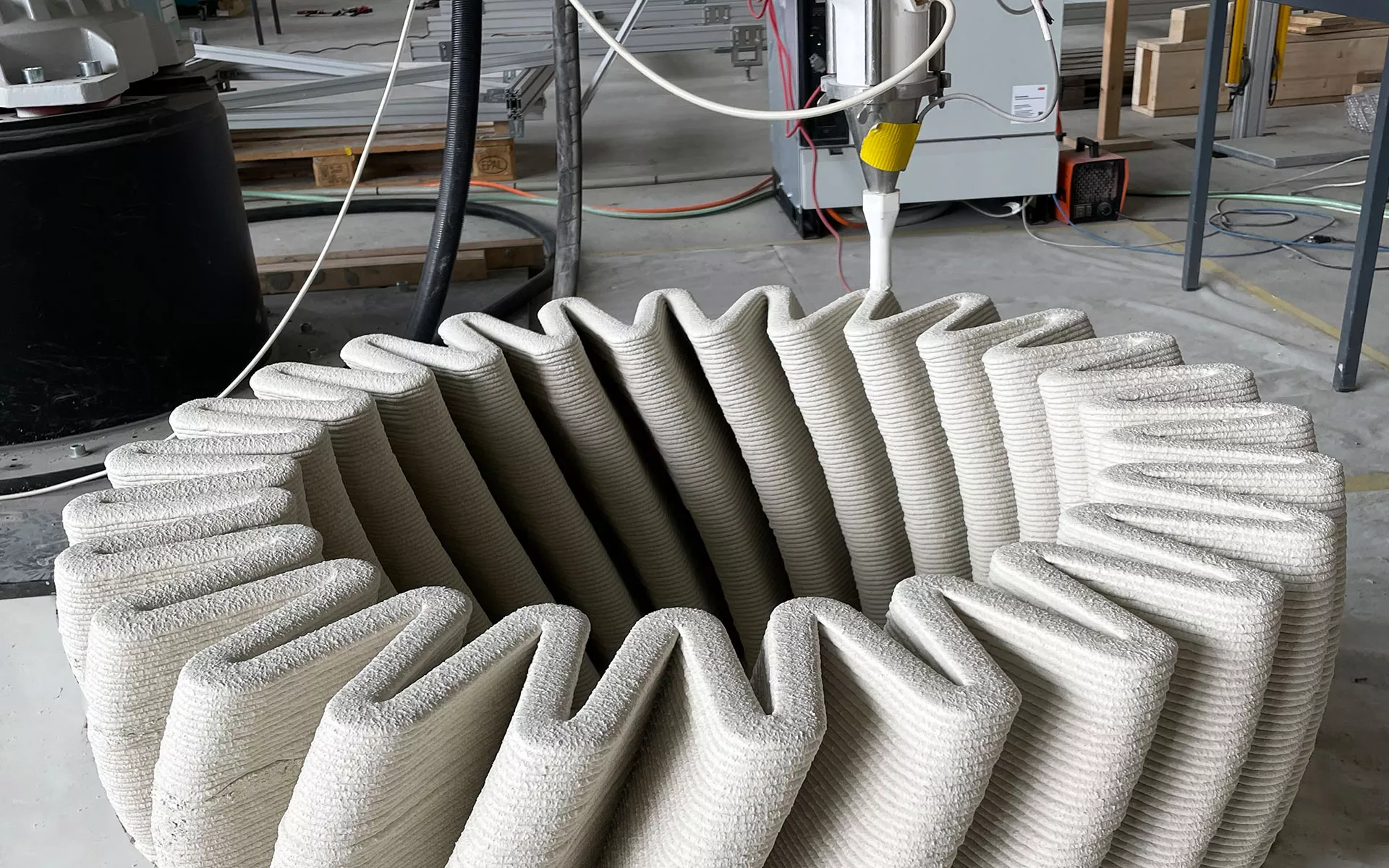
The Tour Blanche also aims to demonstrate the many possibilities offered by computer-aided design and digital manufacturing. In the years to come, these technologies will profoundly change construction. The robotized concrete extrusion process enables layers of concrete to be applied only where needed. This cuts concrete consumption in half, as no formwork is required. The use of this technology also offers modular structures that can be fabricated on site, considerably reducing transportation. What’s more, the Tour Blanche is designed for easy dismantling, so that it can be rebuilt elsewhere.

The tower is made up of 104 3D-printed columns that support the structure and form the façade. Although 3D-printed in concrete, the tower is by no means neglectful of aesthetics and finish. Each of the columns features two ornaments: a horizontal ornament linked to the concrete extrusion printing process, and a spiral texture that accentuates the building’s height.

The post Michael Hansmeyer’s Spectacular 3D-Printed White Tower appeared first on Designer Daily: graphic and web design blog.

Michael Hansmeyer’s Spectacular 3D-Printed White Tower

Post pobrano z: Michael Hansmeyer’s Spectacular 3D-Printed White Tower

Architect Michael Hansmeyer unveils the first images of the Tour Blanche. The 29-meter-high tower will be installed in the Swiss village of Mulegns. The Tour Blanche is entirely 3D-printed using concrete. Its baroque-inspired spiral staircase and numerous columns are just a few of the many highlights.

A tower to revitalize a Swiss village

The primary aim of the Tour Blanche is to breathe new life into a Swiss village in decline. The idea is to promote tourism, with the tower hosting all kinds of cultural events. The tower comprises various rooms for exhibitions and other cultural uses. As for the large room at the top of the White Tower, it contains a floating stage that can accommodate 45 visitors. This hall was designed to host concerts and theatrical performances. What’s more, its spectacular architecture and high-tech design are bound to attract crowds.

The details of the columns and the filigree appearance of the lightweight concrete add effects to the overall architecture of the tower. Shadows and light play both inside and outside the tower. The aim is to make it a beacon along the Col du Julier road.

Innovation at the heart of Tour Blanche manufacturing

The Tour Blanche also aims to demonstrate the many possibilities offered by computer-aided design and digital manufacturing. In the years to come, these technologies will profoundly change construction. The robotized concrete extrusion process enables layers of concrete to be applied only where needed. This cuts concrete consumption in half, as no formwork is required. The use of this technology also offers modular structures that can be fabricated on site, considerably reducing transportation. What’s more, the Tour Blanche is designed for easy dismantling, so that it can be rebuilt elsewhere.

The tower is made up of 104 3D-printed columns that support the structure and form the façade. Although 3D-printed in concrete, the tower is by no means neglectful of aesthetics and finish. Each of the columns features two ornaments: a horizontal ornament linked to the concrete extrusion printing process, and a spiral texture that accentuates the building’s height.

The post Michael Hansmeyer’s Spectacular 3D-Printed White Tower appeared first on Designer Daily: graphic and web design blog.

UMI, A Creative Minimalist Seat

Post pobrano z: UMI, A Creative Minimalist Seat

Ukrainian designer Ross Sorokovyi unveils an original creation, designed for the Mudu studio. The UMI armchair comes in two pieces of different widths, which can be used alone or assembled. This minimalist, rounded seat invites users to make it their own.

Interaction at the heart of UMI

By proposing two formats for this creation, the designer encourages us to play with it. Each seat can be assembled to create a very long seat, or a smaller one by combining two smaller pieces. By reversing their direction, you can also create a space where two people face each other. What’s more, different colors are available for each armchair format. This offers even greater personalization. Do you prefer monochrome seating or a combination of bright colors?

UMI is a real invitation to interaction. You can imagine these chairs in shared spaces such as waiting rooms or coworking areas. Indeed, the design and shape of the seat are not conducive to stretching out to one’s full length. Rather, it’s a piece for leaning back quickly while remaining upright.

A curvaceous seat

UMI has a very minimalist appearance. It’s a simple cylinder that curves to provide one part for sitting and another for resting your back. This familiar shape is reminiscent of a magnet. The seat rests on 4 cylindrical feet. The result is a coherent whole, with very soft shapes. These shapes are unusual for a sofa or armchair, particularly as it’s rare to see such large voids in seating. Here, the void is an integral part of the design, giving it its distinctive look. Whether extended, short or a combination of the two, UMI becomes the centerpiece of the space in which it is placed.

The post UMI, A Creative Minimalist Seat appeared first on Designer Daily: graphic and web design blog.

UMI, A Creative Minimalist Seat

Post pobrano z: UMI, A Creative Minimalist Seat

Ukrainian designer Ross Sorokovyi unveils an original creation, designed for the Mudu studio. The UMI armchair comes in two pieces of different widths, which can be used alone or assembled. This minimalist, rounded seat invites users to make it their own.

Interaction at the heart of UMI

By proposing two formats for this creation, the designer encourages us to play with it. Each seat can be assembled to create a very long seat, or a smaller one by combining two smaller pieces. By reversing their direction, you can also create a space where two people face each other. What’s more, different colors are available for each armchair format. This offers even greater personalization. Do you prefer monochrome seating or a combination of bright colors?

UMI is a real invitation to interaction. You can imagine these chairs in shared spaces such as waiting rooms or coworking areas. Indeed, the design and shape of the seat are not conducive to stretching out to one’s full length. Rather, it’s a piece for leaning back quickly while remaining upright.

A curvaceous seat

UMI has a very minimalist appearance. It’s a simple cylinder that curves to provide one part for sitting and another for resting your back. This familiar shape is reminiscent of a magnet. The seat rests on 4 cylindrical feet. The result is a coherent whole, with very soft shapes. These shapes are unusual for a sofa or armchair, particularly as it’s rare to see such large voids in seating. Here, the void is an integral part of the design, giving it its distinctive look. Whether extended, short or a combination of the two, UMI becomes the centerpiece of the space in which it is placed.

The post UMI, A Creative Minimalist Seat appeared first on Designer Daily: graphic and web design blog.

7 Social Media Marketing Tips For A Successful Brand

Post pobrano z: 7 Social Media Marketing Tips For A Successful Brand

Social media marketing is something that brands can simply not ignore. If they want to get an edge in this highly competitive market, then they need to have a robust strategy for social media by their side. To do so, you must stay updated with social media trends.

So, to help you out, we’ll give you the top 7 social media marketing tips you need to consider. However, you should remember that social media marketing strategies aren’t just a one-time thing. There is an ongoing process that you need to focus on.

The spending for social media ads reached $207.10 billion in 2023. As brands continue to spend more and more money on social media marketing, they must do it correctly. That being said, let’s go over the social media marketing tips to help your brand out.

1. Have a Proper Plan from the Start

A social media calendar will give you a proper roadmap for your content posting throughout the month. With a social media calendar, you can launch your marketing campaigns in a well-coordinated manner. You can also have a proper schedule for posting content from time to time. Various online tools and platforms are available to create a social media calendar without going through any trouble. You can also get assistance from a reputable social media marketing company to create a calendar.

2. Don’t Divert All Your Attention Towards All Platforms

Today, there are various platforms available for social media users other than Facebook and Instagram. So, if you start spending your social media marketing budget on each one of them, the funds will soon run out. Ideally, you need to pick the social media platform your target audience prefers. For instance, Gen Z will most likely spend most of its time on Snapchat and TikTok. Therefore, it would make sense to divert a higher level of your efforts there.

3. Come Up With Out Of the Box Solutions

Another great thing that can help you with social media marketing efforts is coming up with unique ideas. It ensures that you have a competitive advantage over other brands in the market. Not only that, but coming up with new ideas would also help you build a strong brand identity. You can conduct a new and unique contest where you give away gifts to your customers.

4. Allocate Some Time to Connect with Your Customers

Taking a few minutes daily to connect and engage with your customers can go a long way. It will be a creative way to increase the engagement for your brand, allowing you to increase your overall recognition and improve your reputation. Furthermore, paying close attention to your competitors’ actions is also essential. This way, you can learn the strategies the other companies are using to gain an advantage over other players in the market.

5. Ensure Complete Consistency

One of the biggest mistakes that brands make is that they don’t post engaging content consistently. If you want to keep your target audience engaged, then you need to have the right strategy. Along with that, you need to be consistent with your efforts. Even if you are not getting the desired results in the starting phase, you should stick with your plan. Things will start turning around for good once you start posting content more frequently.

6. Keep Up with the Trends

Social media is rapidly evolving, and getting the hang of the new trends early on will give you the first-mover advantage. Therefore, keep an eye on the latest trends that would allow you to make the most of your efforts. You can make relevant adjustments to your social media marketing strategy once you find out what works well with your target audience. Experimenting with new things can get you the desired results you need.

7. Set Clear KPIs and Track Them

Last but not least, it is important for you to set KPIs (Key Performance Indicators) and then track them. These performance metrics will help you determine whether your marketing efforts are effective. You can monitor the following metrics:

  • Reach
  • Impressions
  • Conversions
  • Comments
  • Click-through rates

As a result, it would help you determine which of your strategies are working. You can then make the relevant adjustments to your marketing strategies to improve the return on your efforts.

Having the right social media strategy by your side will allow your business to experience exponential growth; make sure to incorporate the tips mentioned in this article to get started with your social media marketing efforts correctly.

The post 7 Social Media Marketing Tips For A Successful Brand appeared first on Designer Daily: graphic and web design blog.

7 Social Media Marketing Tips For A Successful Brand

Post pobrano z: 7 Social Media Marketing Tips For A Successful Brand

Social media marketing is something that brands can simply not ignore. If they want to get an edge in this highly competitive market, then they need to have a robust strategy for social media by their side. To do so, you must stay updated with social media trends.

So, to help you out, we’ll give you the top 7 social media marketing tips you need to consider. However, you should remember that social media marketing strategies aren’t just a one-time thing. There is an ongoing process that you need to focus on.

The spending for social media ads reached $207.10 billion in 2023. As brands continue to spend more and more money on social media marketing, they must do it correctly. That being said, let’s go over the social media marketing tips to help your brand out.

1. Have a Proper Plan from the Start

A social media calendar will give you a proper roadmap for your content posting throughout the month. With a social media calendar, you can launch your marketing campaigns in a well-coordinated manner. You can also have a proper schedule for posting content from time to time. Various online tools and platforms are available to create a social media calendar without going through any trouble. You can also get assistance from a reputable social media marketing company to create a calendar.

2. Don’t Divert All Your Attention Towards All Platforms

Today, there are various platforms available for social media users other than Facebook and Instagram. So, if you start spending your social media marketing budget on each one of them, the funds will soon run out. Ideally, you need to pick the social media platform your target audience prefers. For instance, Gen Z will most likely spend most of its time on Snapchat and TikTok. Therefore, it would make sense to divert a higher level of your efforts there.

3. Come Up With Out Of the Box Solutions

Another great thing that can help you with social media marketing efforts is coming up with unique ideas. It ensures that you have a competitive advantage over other brands in the market. Not only that, but coming up with new ideas would also help you build a strong brand identity. You can conduct a new and unique contest where you give away gifts to your customers.

4. Allocate Some Time to Connect with Your Customers

Taking a few minutes daily to connect and engage with your customers can go a long way. It will be a creative way to increase the engagement for your brand, allowing you to increase your overall recognition and improve your reputation. Furthermore, paying close attention to your competitors’ actions is also essential. This way, you can learn the strategies the other companies are using to gain an advantage over other players in the market.

5. Ensure Complete Consistency

One of the biggest mistakes that brands make is that they don’t post engaging content consistently. If you want to keep your target audience engaged, then you need to have the right strategy. Along with that, you need to be consistent with your efforts. Even if you are not getting the desired results in the starting phase, you should stick with your plan. Things will start turning around for good once you start posting content more frequently.

6. Keep Up with the Trends

Social media is rapidly evolving, and getting the hang of the new trends early on will give you the first-mover advantage. Therefore, keep an eye on the latest trends that would allow you to make the most of your efforts. You can make relevant adjustments to your social media marketing strategy once you find out what works well with your target audience. Experimenting with new things can get you the desired results you need.

7. Set Clear KPIs and Track Them

Last but not least, it is important for you to set KPIs (Key Performance Indicators) and then track them. These performance metrics will help you determine whether your marketing efforts are effective. You can monitor the following metrics:

  • Reach
  • Impressions
  • Conversions
  • Comments
  • Click-through rates

As a result, it would help you determine which of your strategies are working. You can then make the relevant adjustments to your marketing strategies to improve the return on your efforts.

Having the right social media strategy by your side will allow your business to experience exponential growth; make sure to incorporate the tips mentioned in this article to get started with your social media marketing efforts correctly.

The post 7 Social Media Marketing Tips For A Successful Brand appeared first on Designer Daily: graphic and web design blog.

How to Pick the Perfect Name for Your Business

Post pobrano z: How to Pick the Perfect Name for Your Business

Choosing the right name for your business is a crucial decision that can greatly impact its success. Your business’s name is the first thing potential customers will learn about your brand, and it’s what will set the tone for your entire identity. It’s not just a label; it’s your first impression. In this comprehensive guide, we’ll walk you through the process of selecting the perfect name for your business, step by step.

I. Start with a Clear Vision

Before diving into the creative process of brainstorming names, it’s essential to have a clear vision for your business. Consider the nature of your products or services, your target audience, and your long-term goals. A well-defined vision will serve as the foundation for a name that resonates with your business’s essence.

II. Brainstorming: Get Creative

Now, it’s time to let your creativity flow. Gather a team of trusted individuals or work on your own, but don’t rush the brainstorming process. Consider what makes your business unique, the emotions you want to evoke, and any keywords that relate to your industry. The more ideas you generate, the better your chances of finding that perfect name.

III. Research Your Competition

To stand out in the market, you must be aware of your competition. Conduct thorough research on other businesses in your niche to avoid name similarities that could lead to legal issues or confusion among customers. Make a list of your competitors’ names, and use this as a reference to ensure your name is distinct.

IV. Test the Name Availability

Before you decide on your business name, it is important to check if it’s available. Checking the company name availability in Hong Kong, or a specific location, will help you avoid trademark infringement. Use online resources or consult with a legal expert to ensure that the name you’ve chosen is available for registration. This step is vital to prevent any legal disputes down the road.

V. Keep It Simple and Memorable

Simplicity and memorability are key factors in selecting a business name. Avoid overly complex or lengthy names that are difficult to remember or spell. A concise, easy-to-pronounce name is more likely to stick in the minds of potential customers, making your brand more accessible and recognizable.

VI. Check Domain Availability

In today’s digital age, an online presence is essential. Before finalizing your business name, check if the corresponding domain name is available. A consistent brand name across your website and other online platforms is crucial for building a strong online presence.

VII. Consider Future Expansion

Think long-term. Your business may start small, but you should consider potential future expansion. A name that is too niche might limit your growth opportunities. Keep it broad enough to encompass future endeavors while still reflecting your current focus.

VIII. Avoid Trendy Names

While it might be tempting to choose a trendy name to appear current, remember that trends come and go. A name that’s in vogue today might seem outdated in a few years. Opt for a timeless name that can stand the test of time.

IX. Seek Feedback

Seeking feedback is an invaluable step in the process of naming your business. It offers you fresh perspectives and the opportunity to fine-tune your ideas. Friends, family, and colleagues can provide insights you might have overlooked and help you identify any potential issues with the name. Constructive criticism can be a powerful tool in refining your choices and ensuring that the name you select resonates with a broader audience. Additionally, seeking feedback is an inclusive approach that can help build a sense of ownership and excitement among those who are part of your business journey, as they feel their input is valued in the decision-making process.

X. Legal Considerations

Before you finalize your business name, it’s imperative to delve into the realm of legal considerations. Protecting your brand’s identity is of paramount importance, and this involves conducting thorough research to ensure your chosen name doesn’t infringe on existing trademarks or copyrights. Failing to do so can lead to costly legal battles, damage to your brand’s reputation, and potential financial setbacks. Consulting with a legal expert or trademark attorney can provide you with invaluable guidance, helping you navigate the complex legal landscape and granting you the peace of mind that your business name is legally sound and secure. Legal considerations are not an area to cut corners, as they are pivotal to safeguarding your brand’s integrity and future success.

Selecting the perfect name for your business is a crucial step in your entrepreneurial journey. It’s a decision that demands time, creativity, and thorough research. By following the steps outlined in this guide, you can increase your chances of choosing a name that resonates with your brand, is legally sound, and has the potential to become a memorable and successful business name. Remember, a great name is the first step toward building a strong and recognizable brand identity.

The post How to Pick the Perfect Name for Your Business appeared first on Designer Daily: graphic and web design blog.