Wszystkie wpisy, których autorem jest admin

How Can Good Design Lead to Good Business?

Post pobrano z: How Can Good Design Lead to Good Business?

One of the key elements of a good product is a good design. Unfortunately,
many people think that a design is only about the aesthetic value and
therefore, often overlook it. As a business manager, one thing you need to bear
in mind is that the look of your product will send a message to your customers.
Whether we are buying a product on Amazon or choosing a dating, one of the
factors that affect our choice is the aesthetic value of a product.  If you are wondering how the look affects the
business, there are proven reasons on why a nice look matters.

1. Creating a strong first impression

An aesthetically pleasing product will often
consist of colors, textures, shapes, forms, images, and space in a harmonious
and well-balanced manner.  A key part of
a design is a nicely made logo as this is what will help you stand out from the
competition. Unfortunately, while the majority of business owners understand
the importance
of a great logo
, they don’t always take this as a priority.

In this digital era, customers decide in a few
seconds. It is the seconds that make or break the sale. A good visual
appearance will create a good first impression and will influence the customer
positively when they are trying to make a buying decision.

2. Helping your business to stand out

There is no business that has no competition.
If you would like to win the heart of your prospective customers, you will need
to ensure that you have an impressive and modern design. Next time you visit a
supermarket, try to look at the product that will catch your eyes; it will
definitely be the one that is aesthetically pleasing. If you are attracted to a
product with a phenomenal design, why can’t you replicate the same result with
your product?

Humans are biased towards the products that
are aesthetically pleasing. When other factors held constant, we consider such
products to be better.

3. Consistency in your brand

When the word Coca Cola is mentioned, what
comes to your mind first is mostly their logo. This means the logo is more than
just a design element and is a key
part of their brand
. The fact that this logo is so memorable means we
cannot imagine it changing. Therefore, if you would like to create a cohesive
brand, you need to have consistency in your brand.

If your brand is inconsistent, this will look
disorganized and chaotic. No person will want to be part of such a business.
When you have consistency in your brand, this will result in good business.

4. Building customer relationships

One factor that affects relationships is
emotions. With a great design, it is possible to create emotional connections
with your customers, and this will result in better business.  You can use the visual display of your brand
to create an emotional and memorable connection to your brand.

How to use the design in
business

To have a great design, you will need to use
visual cues to send the right message to customers. There are a few tips you
can use to do that. These include:

1. Consider your mission

What is the goal of your business? This is the
first question you should answer first before creating the design. Writing a
mission statement is a key part of the process. Ensure that your mission
statement is inspirational as this will be the guiding light in making
decisions at all levels. If you do not know how to write a mission statement,
all you need to do is to ask someone “Please, write
essay for me
”.

2. Understand your customers

Consider why customers choose your products or
services over those of the competitor. What exactly are you trying to help
customers solve? If you are offering online education products, you can make
use of web analytics to get this information. Focus surveys and groups can
prove to be quite helpful. You can also speak to partners, retailers,
salespeople, and distributors to get the customer’s feedback.

3. Stand out from the competition

No matter the industry, you are in; it can
help to understand your competition. When thinking of good design, you should
carry out a competitive analysis to figure out how you are going to stand out
from the competition. For instance, you will notice that many of the companies
that offer writing
services have lots of reviews. So, to set yourself apart, make sure you have a sleek
website design
that attracts students. Also, have an expert do a
competitive analysis.

4. Start the process

If you already have a product, you will be
doing a redesign. You need to be cautious as this can end up making the
customers uncomfortable. Consider whether customers are fully attached to the
product. Remember that design is more than just aesthetics. Even though a
beautiful product can lender your product legitimate, the goal should be to
make your product stand out.

Conclusion

When you do your design well, it will be
possible to improve your growth and also enhance your ROI.

Quality WordPress Themes are Not Easy to Find – We’ve Found 15 of the Best Money Can Buy

Post pobrano z: Quality WordPress Themes are Not Easy to Find – We’ve Found 15 of the Best Money Can Buy

What to do before you start
working on your planned online business project? You need to think about what
it’s going to look like and how it will capture customers. Then, it’s simply a
matter of making your vision a reality.

That’s not a simple task – unless,
of course, you go about it in the right way. The right way assumes a knowledge
in site administration; something you may lack. You can let the WordPress CMS
take care of site administration for you.

That still leaves you with the
necessity of finding a theme. This theme should adequately address the UX your
online presence is going to provide.

Picking any old theme that’s rated
somewhere between average and good simply won’t cut it. What you really want is
a theme with website building capabilities that will blow your mind.

Why not make it easy for yourself
by choosing among these top WordPress themes? We’ve selected them for your 2019
web-building adventures.

1. Be Theme

 If your forthcoming website-building project happens to be your first one, Be Theme has all the features needed to build virtually any website type for any given purpose. If you’re an experienced web designer serving a diverse clientele, this multipurpose WordPress theme still makes the most sense.

Be Theme is a premium WordPress theme in terms
of performance, flexibility, website-building features, and support.  The
flexibility Be Theme offers can be traced directly to its library of more than
400 professionally designed pre-built websites. They cover more than 30
different website types and business niche categories, they conform to the
latest design standards and trends for each category, plus they can be
installed with a single click and are completely customizable. In short, they
give you outstanding results and will save you a ton of time in the process.

And that is just the tip of the iceberg. Be’s
40 core features include the popular Muffin Builder, a new Header Builder,
shortcodes, grid options, and a host of design elements and special effects.

A top choice.

2. Jupiter X

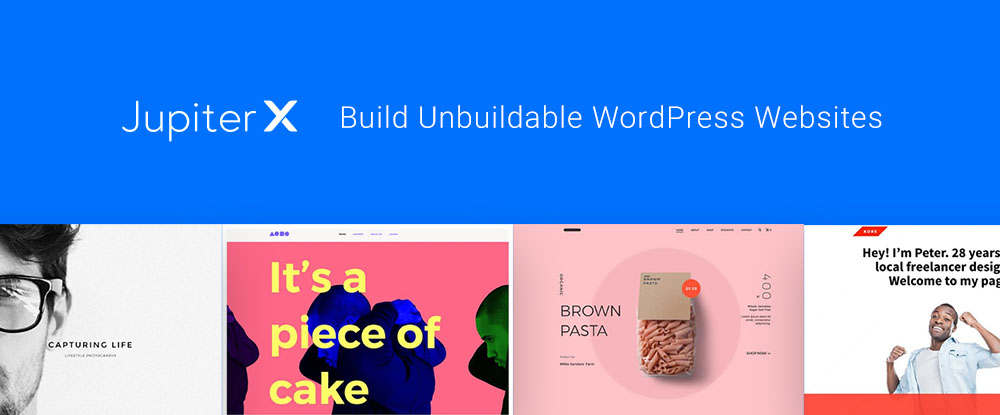
Jupiter X gives you a fast, lightweight, super-extendible, and super-friendly way to build virtually any type of website you can envision. Its visual editor lets you customize your design down to the smallest of details, and with the help of the Elementor page builder and WordPress customizer technology you’re provided with seamless and limitless control of your design, both at the global and in-page levels.

You can design your headers and footers from scratch and for the first
time you can customize previously untouchable WooCommerce shop elements such as
your shopping cart, product list, product single, and checkout pages.

Also, for the first time you can completely reinvent the look of your
blog list, portfolio list, and blog single page and customize your single post
by turning on or off selected blog elements.

Jupiter X is a makeover of the popular Jupiter WordPress theme used by
more than 100,000 web designers and other customers. Its ready-made website and
section templates will make your life so much easier.

3. Uncode – Creative Multiuse WordPress Theme

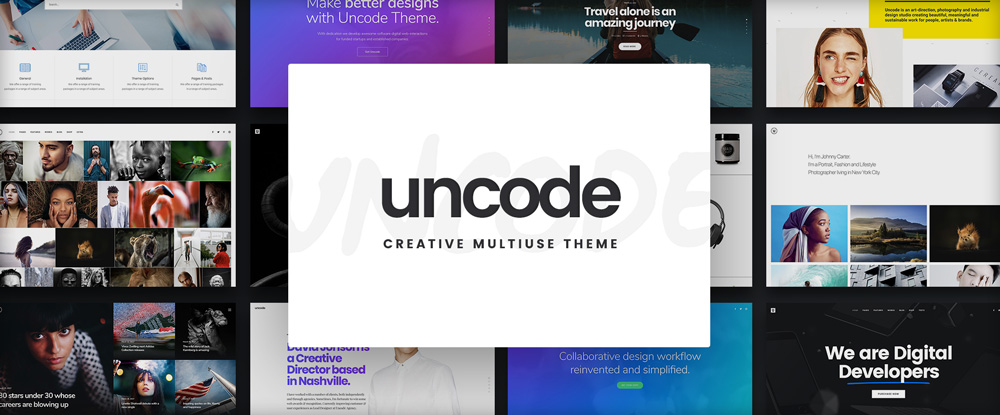
Uncode’s authors decided early on that the best way to design a theme that would enable designers to create high-performance, pixel-perfect websites would be to create a theme that featured the same characteristics. They accomplished this by devoting meticulous attention to detail during the design process – and it shows.

Start with one of Uncode’s 30+ customizable
design concepts, apply this theme’s hierarchical options and adaptive grid
systems, slide scroll or snap scroll features, and the improved admin feature
and you’re well on your way. The specially-tailored Visual Composer page
builder will help you along, as will Uncode’s selections of
professional-looking layouts and WooCommerce features.

The list goes on, but it you want a quick look
at what Uncode can do for you, or you’re in need of a little inspiration, check
out their showcase of user-created websites.

Spoiler: Prepare to be impressed.

4. Avada

A powerful website-building toolkit, unlimited design options, and a responsive framework together with top-notch support combine to make Avada a number 1 best-seller, a position it’s held for the past 5 years. This highly-trusted WordPress theme gives you the opportunity to create virtually any website design or style.

Avada’s professionally-designed demos help get
any project off to a fast start and its multiple design options enable you to
complete projects without custom coding.

5. The Gem

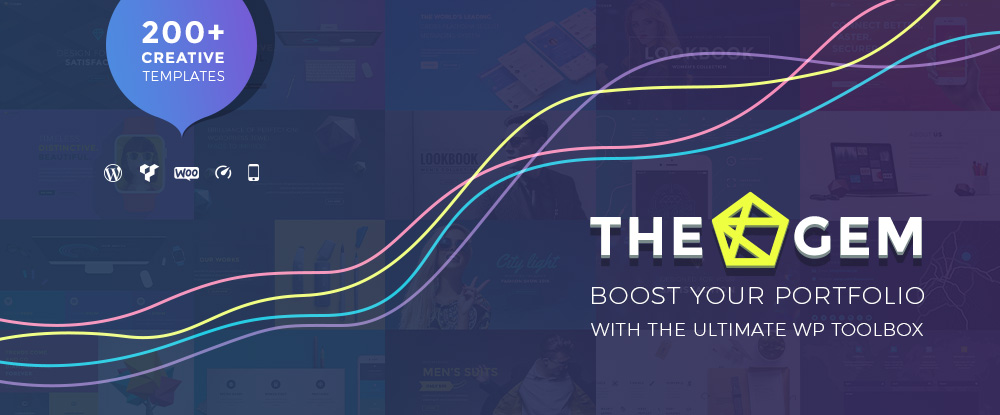
The Gem is visually stimulating, it’s responsive, it provides a robust platform for the development of all types and varieties of modern websites, and its users will tell you it’s the ultimate WordPress toolbox – a veritable Swiss Army knife of web design and development tools.

Whether it’s one pagers, portfolios, multipage
business or creative websites. TheGem does it all with its 70+ design concepts,
200 demos, and even a ready-to-go fashion store!

6. Houzez – Highly Customizable Real Estate WordPress Theme

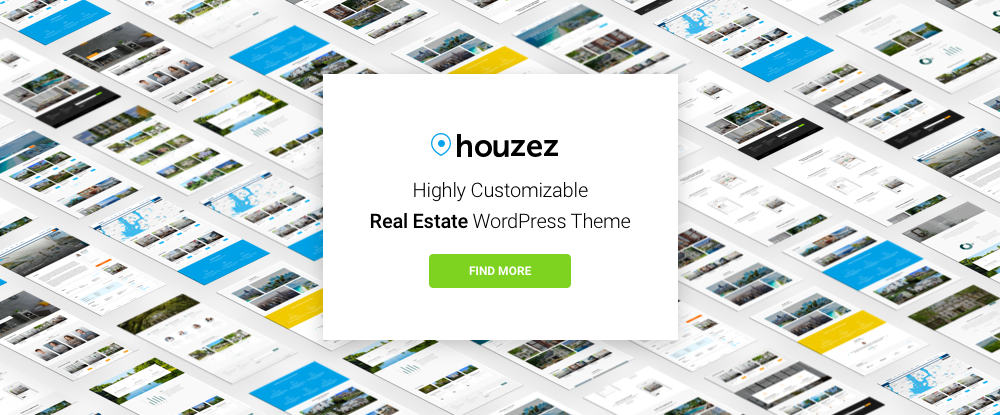
Multipurpose themes are generally good
choices for most purposes, but there are instances where only a specialty theme
can do. One such instance is the real estate sector in which there is a
definite need for special features and functionality that only a theme like
Houzez can provide.

Advanced search capabilities, multiple
listings and pay options, and a property management system are but a few of
Houzez’ highlights.

7. Enfold

This fast, professionally designed WordPress theme is easy to work with for all skill levels. Your ability to envision what you want is the only skill you need to bring to the table. Its flexible template system, drag and drop Layout Builder, and demo selection combine to make page building a fast and easy exercise.

Enfold also features a wealth of design
options and interactive elements to help you create award-winning sites.

8. Cesis | Responsive Multi-Purpose WordPress Theme

Cesis’s Template Builder, Header and Footer Builders and Frontend Editor combine to make creating an awesome website a straightforward, step-by-step process.

Its valuable selection of pre-made
customizable demos will enable any project to get off to a fast start, plus
Cesis is fast and SEO and WooCommerce ready and you can count on excellent
support.

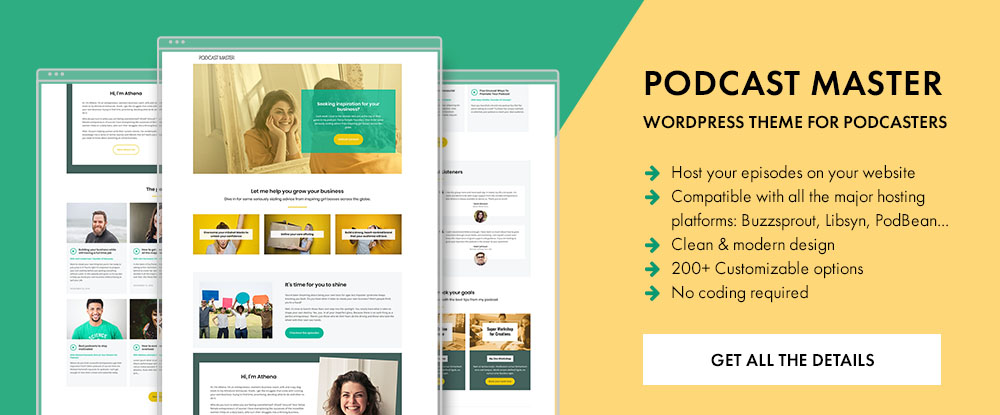
9.  Podcast Master

With its clean and modern design and more than 200 customizable options, Podcast Master has everything needed to podcast effortlessly and efficiently.

No coding is required, this drag and drop
WordPress theme is WooCommerce compatible, 100% responsive, and it’s compatible
with all major hosting platforms including Buzzsprout, Libsyn, PodBean,
Simplecast, and Spreaker.

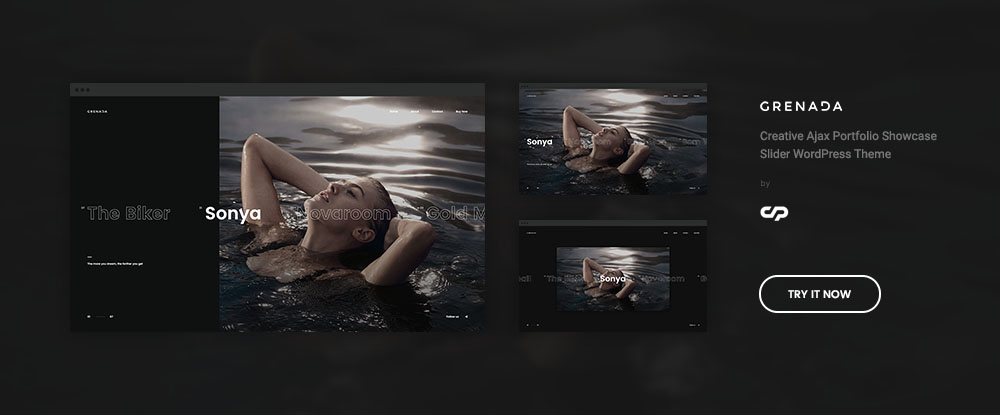
10. Grenada – Creative Ajax Portfolio Showcase Slider Theme

Grenada offers a design approach that will enable you to create portfolio designs that competitors would have to struggle mightily to replicate – unless of course those competitors also had this portfolio builder in their design toolkit.

Grenada’s secret is in part due to its set of
portfolio sliders and Ajax page load feature. Grenada is Gutenberg compatible
and fully responsive.

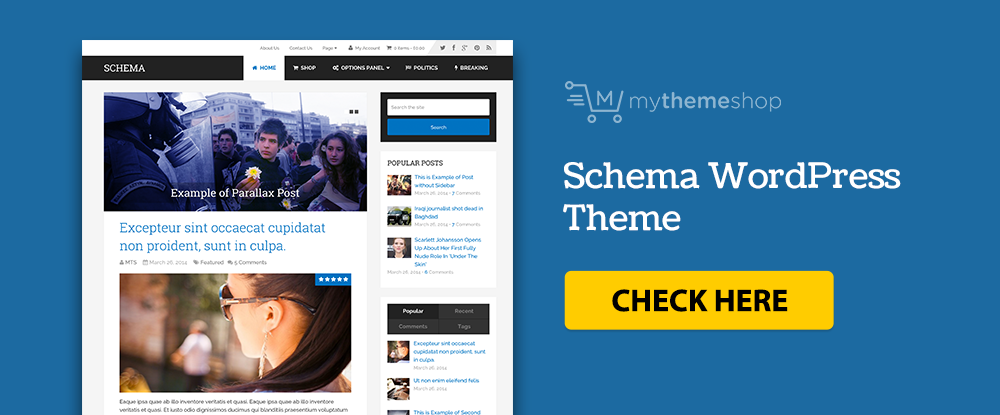
11. Schema

Optimizing a website for the search engines is not the simplest of design tasks. Add Schema to your design toolbox and SEO quickly becomes much easier. Schema theme does the necessary work for you.

This WP theme checks for clean code and page
load times, it’s AdSense optimized, and it guides search engines through your
site content element by content element to help them find what they’re looking
for.

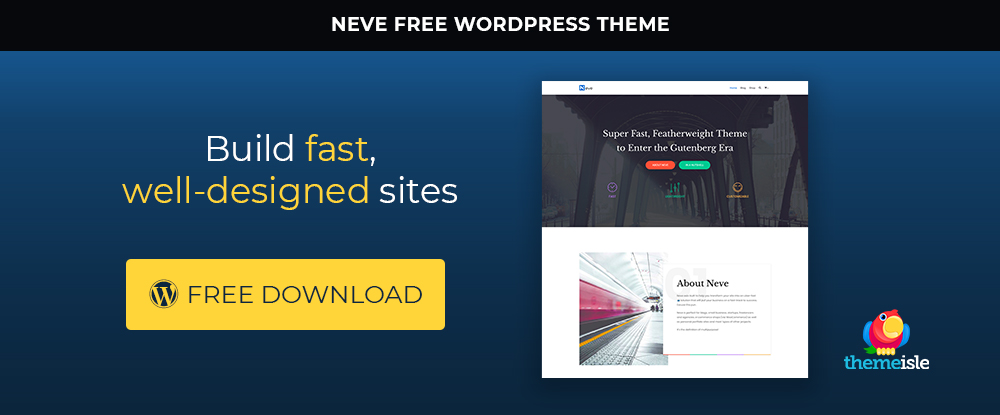
12. Neve

Building a well-designed site and building one fast are usually competing objectives. Neve is a WordPress theme that helps you do both. Start with one of the pre-built one-click-install demos, or start from scratch with your favorite page-builder to quickly achieve your goal. With full AMP support Neve will help you deliver your content faster, on any device.

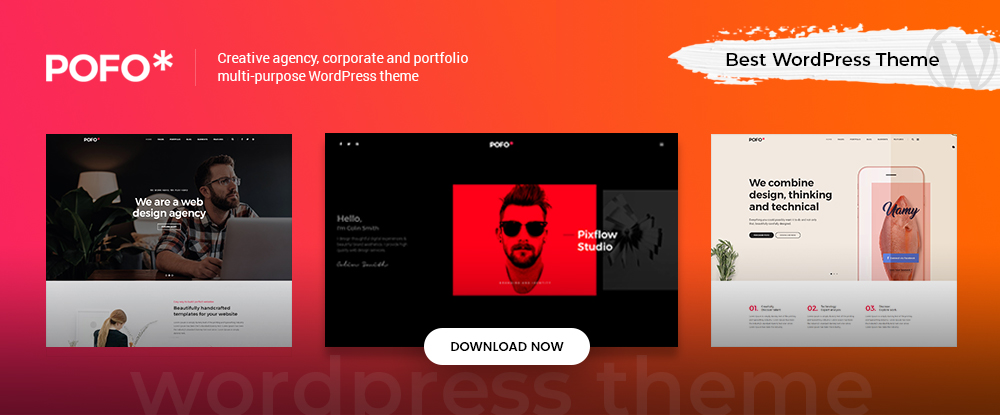
13. Pofo

The ability to display an outstanding online portfolio can be critical to the business success of creative agencies, teams, and individuals. Creating high-quality portfolios for these and other business types is what Pofo does best.

Key elements in this WP theme’s package include
Ajax page load for quick performance and creative portfolio sliders designed to
fully engage visitors. Pofo is fully responsive, WP 5.x compatible, and
supportive of video background design elements.

14. ForumPress

The design features needed to create an online forum are either insufficient or totally absent in most themes. With ForumPress, it takes but a few seconds to set up a user forum.

Powered by the bbPress plugin, Forum Press
makes fitting the forum you create to the community your website serves and
tweaking it to match your business’s brand a simple task.

15. Leadinjection – Landing Page Theme

Once a website is up and running, it’s almost inevitable that changes to it will eventually be required, and they often involve a lot of work. Leadinjection is a specialty landing page WP theme that makes creating and attaching new landing pages a quick and easy task.

Leadinjection is easy to install and customize,
it allows you to create lead capture forms without help from a developer, and
its WordPress multisite compatible.

Conclusion

Selecting from our list of top-quality WordPress themes should be easy. Are you a beginning web designer or one that has a diverse clientele? A multipurpose theme might serve you best. Do you need a specialty theme that provides features most WP themes lack? You might find it here.

Maybe it’s simply the luxury of being able to
choose among the best of the best WP themes for 2019 that appeals to you.
Whatever your need may be – happy shopping!

STAR Apps: A New Generation of Front-End Tooling for Development Workflows

Post pobrano z: STAR Apps: A New Generation of Front-End Tooling for Development Workflows

Product teams from AirBnb and New York Times to Shopify and Artsy (among many others) are converging on a new set of best practices and technologies for building the web apps that their businesses depend on. This trend reflects core principles and solve underlying problems that we may share, so it is worth digging deeper.

Some of that includes:

Naming things is hard, and our industry has struggled to name this new generation of tooling for web apps. The inimitable Orta Theroux calls it an Omakase; I slimmed it down and opted for a simpler backronym pulled from letters in the tooling outlined above: STAR (Design Systems, TypeScript, Apollo, and React).

Czytaj dalej STAR Apps: A New Generation of Front-End Tooling for Development Workflows →

Intro to React Hooks

Post pobrano z: Intro to React Hooks

Hooks make it possible to organize logic in components, making them tiny and reusable without writing a class. In a sense, they’re React’s way of leaning into functions because, before them, we’d have to write them in a component and, while components have proven to be powerful and functional in and of themselves, they have to render something on the front end. That’s all fine and dandy to some extent, but the result is a DOM that is littered with divs that make it gnarly to dig through through DevTools and debug.

Well, React Hooks change that. Instead of relying on the top-down flow of components or abstracting components in various ways, like higher-order components, we can call and manage flow inside of a component. Dan Abramov explains it well in his Making Sense of React post:

Hooks apply the React philosophy (explicit data flow and composition) inside a component, rather than just between the components. That’s why I feel that Hooks are a natural fit for the React component model.

Unlike patterns like render props or higher-order components, Hooks don’t introduce unnecessary nesting into your component tree. They also don’t suffer from the drawbacks of mixins.

The rest of Dan’s post provides a lot of useful context for why the React team is moving in this direction (they’re now available in React v16.7.0-alpha) and the various problems that hooks are designed to solve. The React docs have an introduction to hooks that, in turn, contains a section on what motivated the team to make them. We’re more concerned with how the heck to use them, so let’s move on to some examples!

The important thing to note as we get started is that there are nine hooks currently available, but we’re going to look at what the React docs call the three basic ones: useState(), useEffect, and setContext(). We’ll dig into each one in this post with a summary of the advanced hooks at the end.

Defining state with useState()

If you’ve worked with React at any level, then you’re probably familiar with how state is generally defined: write a class and use this.state to initialize a class:

class SomeComponent extends React.component {
  constructor(props)
  super(props);
  this.state = {
    name: Barney Stinson // Some property with the default state value    
  }
}

React hooks allow us to scrap all that class stuff and put the useState() hook to use instead. Something like this:

import { useState } from 'react';
    
function SomeComponent() {
  const [name, setName] = useState('Barney Stinson'); // Defines state variable (name) and call (setName) -- both of which can be named anything
}

Say what?! That’s it! Notice that we’re working outside of a class. Hooks don’t work inside of a class because they’re used in place of them. We’re using the hook directly in the component:

import { useState } from 'react';
    
function SomeComponent() {
  const [name, setName] = useState('Barney Stinson');
  
  return
    <div>
      <p>Howdy, {name}</p>
    </div>
}

Oh, you want to update the state of name? Let’s add an input and submit button to the output and call setName to update the default name on submission.

import { useState } from 'react'
    
function SomeComponent() {
  const [input, setValue] = useState("");
  const [name, setName] = useState('Barney Stinson');
  
  handleInput = (event) => {
    setValue(event.target.value);
  }
  
  updateName = (event) => {
    event.preventDefault();
    setName(input);
    setValue("");
  }
  
  return (
    <div>
      <p>Hello, {name}!</p>
      <div>
        <input type="text" value={input} onChange={handleInput} />
        <button onClick={updateName}>Save</button>
      </div>
    </div>
  )
}

See the Pen React Hook: setState Example by Geoff Graham (@geoffgraham) on CodePen.

Notice something else in this example? We’re constructing two different states (input and name). That’s because the useState() hook allows managing multiple states in the same component! In this case, input is the property and setValue holds the state of the input element, which is called by the handleInput function then triggers the updateName function that takes the input value and sets it as the new name state.

Create side effects with useEffect()

So, defining and setting states is all fine and dandy, but there’s another hook called useEffect() that can be used to—you guessed it—define and reuse effects directly in a component without the need for a class or the need to use both redundant code for each lifecycle of a method (i.e. componentDidMount, componentDidUpdate, and componentWillUnmount).

When we talk about effects, we’re referring to things like API calls, updates to the DOM, and event listeners, among other things. The React documentation cites examples like data fetching, setting up subscriptions, and changing the DOM as possible use cases for this hook. Perhaps the biggest differentiator from setState() is that useEffect() runs after render. Think of it like giving React an instruction to hold onto the function that passes and then make adjustments to the DOM after the render has happened plus any updates after that. Again, the React documentation spells it out nicely:

By default, it runs both after the first render and after every update. […] Instead of thinking in terms of “mounting” and “updating”, you might find it easier to think that effects happen “after render”. React guarantees the DOM has been updated by the time it runs the effects.

Right on, so how do we run these effects? Well, we start off by importing the hook the way we did for setState().

import { useEffect } from 'react';

In fact, we can call both setState() and useEffect() in the same import:

import { useState, useEffect } from 'react';

Or, construct them:

const { useState, useEffect } = React;

So, let’s deviate from our previous name example by hooking into an external API that contains user data using axios inside the useEffect() hook then renders that data into a list of of users.

First, let’s bring in our hooks and initialize the App.

const { useState, useEffect } = React

const App = () => {
  // Hooks and render UI
}

Now, let’s put setState() to define users as a variable that contains a state of setUsers that we’ll pass the user data to once it has been fetched so that it’s ready for render.

const { useState, useEffect } = React

const App = () => {
  const [users, setUsers] = useState([]);
  // Our effects come next
}

Here’s where useEffect() comes into play. We’re going to use it to connect to an API and fetch data from it, then map that data to variables we can call on render.

const { useState, useEffect } = React

const App = () => {
  const [users, setUsers] = useState([]);
  
  useEffect(() => {
    // Connect to the Random User API using axios
    axios("https://randomuser.me/api/?results=10")
      // Once we get a response, fetch name, username, email and image data
      // and map them to defined variables we can use later.
      .then(response =>
        response.data.results.map(user => ({
          name: `{user.name.first} ${user.name.last}`,
          username: `{user.login.username}`,
          email: `{user.email}`,
          image: `{user.picture.thumbnail}`
        }))
      )
      // Finally, update the `setUsers` state with the fetched data
      // so it stores it for use on render
      .then(data => {
        setUsers(data);
      });
  }, []);
  
  // The UI to render
}

OK, now let’s render our component!

const { useState, useEffect } = React

const App = () => {
  const [users, setUsers] = useState([]);

  useEffect(() => {
    axios("https://randomuser.me/api/?results=10")
      .then(response =>
        response.data.results.map(user => ({
          name: `{user.name.first} ${user.name.last}`,
          username: `{user.login.username}`,
          email: `{user.email}`,
          image: `{user.picture.thumbnail}`
        }))
      )
      .then(data => {
        setUsers(data);
      });
  }, []);
  
  return (
    <div className="users">
      {users.map(user => (
        <div key={user.username} className="users__user">
          <img src={user.image} className="users__avatar" />
          <div className="users__meta">
            <h1>{user.name}</h1>
            <p>{user.email}</p>
          </div>
        </div>
      ))}
    </div>
  )
}

Here’s what that gets us:

See the Pen React Hook: setEffect example by Geoff Graham (@geoffgraham) on CodePen.

It’s worth noting that useEffect() is capable of so, so, so much more, like chaining effects and triggering them on condition. Plus, there are cases where we need to cleanup after an effect has run—like subscribing to an external resource—to prevent memory leaks. Totally worth running through the detailed explanation of effects with cleanup in the React documentation.

Context and useContext()

Context in React makes it possible to pass props down from a parent component to a child component. This saves you from the hassle of prop drilling. However, you could only make use of context in class components, but now you can make use of context in functional components using useContext() . Let’s create a counter example, we will pass the state and functions which will be used to increase or decrease the count from the parent component to child component using useContext(). First, let’s create our context:

const CountContext = React.createContext();

We’ll declare the count state and increase/decrease methods of our counter in our App component and set up the wrapper that will hold the component. We’ll put the context hook to use in the actual counter component in just a bit.

const App = () => {
  // Use `setState()` to define a count variable and its state
  const [count, setCount] = useState(0);
  
  // Construct a method that increases the current `setCount` variable state by 1 with each click
  const increase = () => {
    setCount(count + 1);
  };
  
  // Construct a method that decreases the current `setCount` variable state by 1 with each click.
  const decrease = () => {
    setCount(count - 1);
  };

  // Create a wrapper for the counter component that contains the provider that will supply the context value.
  return (
    <div>
      <CountContext.Provider
        // The value is takes the count value and updates when either the increase or decrease methods are triggered.
        value={{ count, increase, decrease }}
      >
        // Call the Counter component we will create next
        <Counter />
      </CountContext.Provider>
    </div>
  );
};

Alright, onto the Counter component! useContext() accepts an object (we’re passing in the CountContext provider) and allows us to tell React exactly what value we want (`count) and what methods trigger updated values (increase and decrease). Then, of course, we’ll round things out by rendering the component, which is called by the App.

const Counter = () => {
  const { count, increase, decrease } = useContext(CountContext);
  return (
    <div className="counter">
      <button onClick={decrease}>-</button>
      <span className="count">{count}</span>
      <button onClick={increase}>+</button>
    </div>
  );
};

And voilà! Behold our mighty counter with the count powered by context objects and values.

See the Pen React hooks – useContext by Kingsley Silas Chijioke (@kinsomicrote) on CodePen.

Wrapping up

We’ve merely scratched the surface of what React hooks are capable of doing, but hopefully this gives you a solid foundation. For example, there are even more advanced hooks that are available in addition to the basic ones we covered in this post. Here’s a list of those hooks with the descriptions offered by the documentation so you can level up now that you’re equipped with the basics:

Hook Description
userReducer() An alternative to useState. Accepts a reducer of type (state, action) => newState, and returns the current state paired with a dispatch method.
useCallback() Returns a memoized callback. Pass an inline callback and an array of inputs. useCallback will return a memoized version of the callback that only changes if one of the inputs has changed.
useMemo() Returns a memoized value. Pass a “create” function and an array of inputs. useMemo will only recompute the memoized value when one of the inputs has changed.
useRef() useRef returns a mutable ref object whose .current property is initialized to the passed argument (initialValue). The returned object will persist for the full lifetime of the component.
useImperativeMethods useImperativeMethods customizes the instance value that is exposed to parent components when using ref. As always, imperative code using refs should be avoided in most cases. useImperativeMethods should be used with forwardRef.
useLayoutEffect The signature is identical to useEffect, but it fires synchronously after all DOM mutations. Use this to read layout from the DOM and synchronously re-render. Updates scheduled inside useLayoutEffect will be flushed synchronously, before the browser has a chance to paint.

The post Intro to React Hooks appeared first on CSS-Tricks.

Does it mutate?

Post pobrano z: Does it mutate?

This little site by Remy Sharp’s makes it clear whether or not a JavaScript method changes the original array (aka mutates) or not.

I was actually bitten by this the other day. I needed the last element from an array, so I remembered .pop() and used it.

const arr = ["doe", "ray", "mee"];
const last = arr.pop();
// mee, but array is now ["doe", "ray"]

This certainly worked great right away, but I didn’t realize the original array had changed and it caused a problem. Instead, I had to find the non-mutating alternative:

const arr = ["doe", "ray", "mee"];
const last = arr.slice(-1);
// ["mee"], arr is unchanged

Related: Array Explorer

Direct Link to Article — Permalink

The post Does it mutate? appeared first on CSS-Tricks.
Angular, Autoprefixer, IE11, and CSS Grid Walk into a Bar…

Post pobrano z: Angular, Autoprefixer, IE11, and CSS Grid Walk into a Bar…

I am attracted to the idea that you shouldn’t care how the code you author ends up in the browser. It’s already minified. It’s already gzipped. It’s already transmogrified (real word!) by things that polyfill it, things that convert it into code that older browsers understand, things that make it run faster, things that strip away unused bits, and things that break it into chunks by technology far above my head.

The trend is that the code we author is farther and farther away from the code we write, and like I said, I’m attracted to that idea because generally, the purpose of that is to make websites faster for users.

But as Dave notes, when something goes wrong…

As toolchains grow and become more complex, unless you are expertly familiar with them, it’s very unclear what transformations are happening in our code. Tracking the differences between the input and output and the processes that code underwent can be overwhelming. When there’s a problem, it’s increasingly difficult to hop into the assembly line and diagnose the issue and often there’s not an precise fix.

Direct Link to Article — Permalink

The post Angular, Autoprefixer, IE11, and CSS Grid Walk into a Bar… appeared first on CSS-Tricks.