Post pobrano z: The Blog Starter

Post pobrano z: The Blog Starter
Post pobrano z: Your Guide to Standard US and International Flyer and Poster Sizes
Standard paper sizes can be confusing. If your head’s in a whirl trying to pick the right size for your flyer or poster, we’ve got you covered.
Here you’ll find all the most commonly used standard sizes for flyers and posters in the US and Canada (known as the ANSI standard) and internationally (ISO 216).

Don’t start designing your flyer or poster before you’ve checked out the size guide below. Skip ahead to find links to poster and flyer design tutorials for Photoshop and InDesign, so you can start creating awesome layouts right away!
You can find out more about sizing with making impactful flyers in Adobe Photoshop, one of our many Envato Tuts+ courses.
These are the standard sizes for flyers used across the States and Canada.
This is a small flyer size, at 5.5 by 8.5 inches (139.5 x 216 mm), usually used for non-folded promotional flyers. It’s also very cheap to print.

Equivalent to a US Letter page size, at 8.5 by 11 inches (216 x 279.5 mm), this flyer is widely used across the States and Canada and is considered the industry standard.
This versatile size can be folded in half (to create a half-fold flyer), twice (to create a tri-fold, z-fold or gate-fold flyer) or three times (to create a four-panel accordion fold).

The tabloid format can, as its name implies, be used for small-format newspapers, but it can also be folded to create a large format flyer. It measures in at 11 by 17 inches (279.5 x 432 mm).


These are the standard sizes for posters used in the USA and Canada.
These two poster sizes, 18 by 24 inches (457 x 609.5 mm) and 19 by 27 inches (482.5 x 686 mm), are commonly used in colleges and schools and are the perfect size for showcasing charts or photographs.

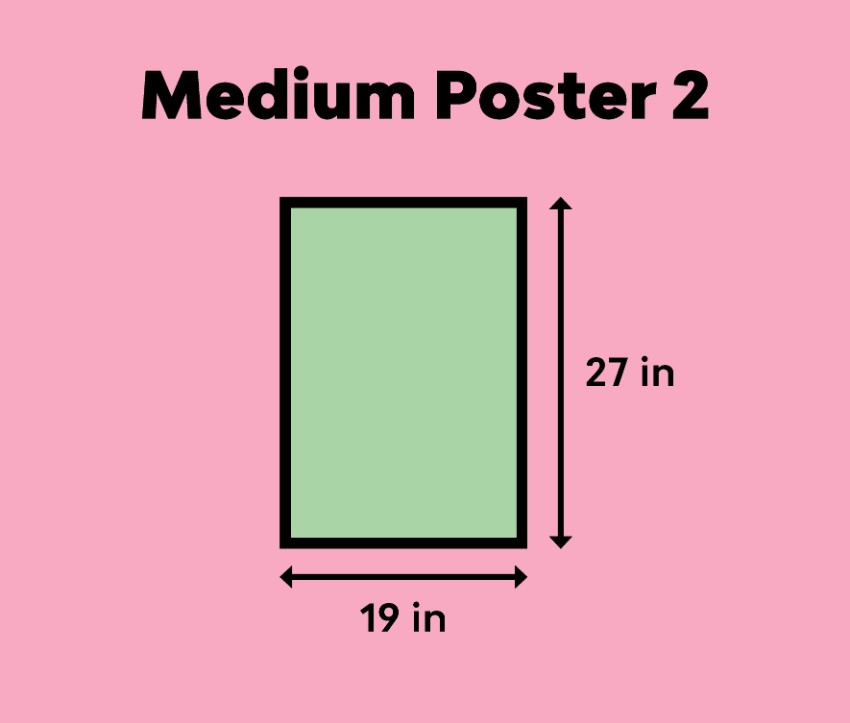
These large poster sizes, 24 by 36 inches (609.5 x 914.5 mm) and 27 by 39 inches (686 x 990.5 mm), are used for marketing and outdoor advertising. They are also commonly used at trade shows and exhibitions, and in retail as well.


This is traditionally the standard movie poster size in the US. It’s used to promote new film releases—you’ll see the one sheet size, 27 by 40 inches (686 x 1016 mm), at theaters and posted up in retail areas.


These are the standard sizes for flyers used internationally (except Canada and the United States [see above], Mexico, Colombia, and the Dominican Republic).
DL stands for ‘dimension lengthwise’. This compact flyer size is one-third of a sheet of A4 (99 x 210 mm). The DL term can be confusing, as this means that the flyer is designed to fit inside a DL envelope (which is a bit larger, at 110 by 120 mm).
This format is tall and slim, and it works well for pamphlets promoting a single offer.

Slightly wider than a DL size, at 148 by 210 mm, this petite size is also often used for pamphlets and cheap-to-print flyers.

Moving up the A-format scale, A4 (210 by 297 mm) is the European sister of the Letter size in the US. This size can be folded in various ways, and it can also be printed from most home and office printers.


These are the standard sizes for posters used internationally.
The sizes for posters move upwards through the A sizes. Because A3 (297 by 420 mm) can be printed from many home and office printers, you’ll see this size used for school, college, and community posters.

Twice the size of an A3 sheet at 420 by 594 mm, A2 is used for marketing purposes and to promote music events.

A large A-size at 594 by 841 mm, this can be used for a wide variety of purposes.

A generous poster size at 841 by 1189 mm, again this is used widely for marketing and advertising purposes.

This standard US movie poster size, which measures up at 27 by 40 inches (686 x 1016 mm), is sometimes used to promote movies in some other countries, such as the UK and Australia.


Choosing a suitable size for your flyer or poster doesn’t need to put your head in a spin. You’re sure to find a paper size to suit you from the options above.
Now that you’ve discovered the right size for your flyer, it’s time to start designing!
This short course is a great all-round introduction to making impactful flyers in Adobe Photoshop:


Post pobrano z: Your Guide to Standard US and International Flyer and Poster Sizes
Standard paper sizes can be confusing. If your head’s in a whirl trying to pick the right size for your flyer or poster, we’ve got you covered.
Here you’ll find all the most commonly used standard sizes for flyers and posters in the US and Canada (known as the ANSI standard) and internationally (ISO 216).
Don’t start designing your flyer or poster before you’ve checked out the size guide below. Skip ahead to find links to poster and flyer design tutorials for Photoshop and InDesign, so you can start creating awesome layouts right away!
You can find out more about sizing with making impactful flyers in Adobe Photoshop, one of our many Envato Tuts+ courses.
These are the standard sizes for flyers used across the States and Canada.
This is a small flyer size, at 5.5 by 8.5 inches (139.5 x 216 mm), usually used for non-folded promotional flyers. It’s also very cheap to print.
Equivalent to a US Letter page size, at 8.5 by 11 inches (216 x 279.5 mm), this flyer is widely used across the States and Canada and is considered the industry standard.
This versatile size can be folded in half (to create a half-fold flyer), twice (to create a tri-fold, z-fold or gate-fold flyer) or three times (to create a four-panel accordion fold).
The tabloid format can, as its name implies, be used for small-format newspapers, but it can also be folded to create a large format flyer. It measures in at 11 by 17 inches (279.5 x 432 mm).
These are the standard sizes for posters used in the USA and Canada.
These two poster sizes, 18 by 24 inches (457 x 609.5 mm) and 19 by 27 inches (482.5 x 686 mm), are commonly used in colleges and schools and are the perfect size for showcasing charts or photographs.
These large poster sizes, 24 by 36 inches (609.5 x 914.5 mm) and 27 by 39 inches (686 x 990.5 mm), are used for marketing and outdoor advertising. They are also commonly used at trade shows and exhibitions, and in retail as well.
This is traditionally the standard movie poster size in the US. It’s used to promote new film releases—you’ll see the one sheet size, 27 by 40 inches (686 x 1016 mm), at theaters and posted up in retail areas.
These are the standard sizes for flyers used internationally (except Canada and the United States [see above], Mexico, Colombia, and the Dominican Republic).
DL stands for ‘dimension lengthwise’. This compact flyer size is one-third of a sheet of A4 (99 x 210 mm). The DL term can be confusing, as this means that the flyer is designed to fit inside a DL envelope (which is a bit larger, at 110 by 120 mm).
This format is tall and slim, and it works well for pamphlets promoting a single offer.
Slightly wider than a DL size, at 148 by 210 mm, this petite size is also often used for pamphlets and cheap-to-print flyers.
Moving up the A-format scale, A4 (210 by 297 mm) is the European sister of the Letter size in the US. This size can be folded in various ways, and it can also be printed from most home and office printers.
These are the standard sizes for posters used internationally.
The sizes for posters move upwards through the A sizes. Because A3 (297 by 420 mm) can be printed from many home and office printers, you’ll see this size used for school, college, and community posters.
Twice the size of an A3 sheet at 420 by 594 mm, A2 is used for marketing purposes and to promote music events.
A large A-size at 594 by 841 mm, this can be used for a wide variety of purposes.
A generous poster size at 841 by 1189 mm, again this is used widely for marketing and advertising purposes.
This standard US movie poster size, which measures up at 27 by 40 inches (686 x 1016 mm), is sometimes used to promote movies in some other countries, such as the UK and Australia.
Choosing a suitable size for your flyer or poster doesn’t need to put your head in a spin. You’re sure to find a paper size to suit you from the options above.
Now that you’ve discovered the right size for your flyer, it’s time to start designing!
This short course is a great all-round introduction to making impactful flyers in Adobe Photoshop:
Post pobrano z: Your Guide to Standard US and International Flyer and Poster Sizes
Standard paper sizes can be confusing. If your head’s in a whirl trying to pick the right size for your flyer or poster, we’ve got you covered.
Here you’ll find all the most commonly used standard sizes for flyers and posters in the US and Canada (known as the ANSI standard) and internationally (ISO 216).
Don’t start designing your flyer or poster before you’ve checked out the size guide below. Skip ahead to find links to poster and flyer design tutorials for Photoshop and InDesign, so you can start creating awesome layouts right away!
You can find out more about sizing with making impactful flyers in Adobe Photoshop, one of our many Envato Tuts+ courses.
These are the standard sizes for flyers used across the States and Canada.
This is a small flyer size, at 5.5 by 8.5 inches (139.5 x 216 mm), usually used for non-folded promotional flyers. It’s also very cheap to print.
Equivalent to a US Letter page size, at 8.5 by 11 inches (216 x 279.5 mm), this flyer is widely used across the States and Canada and is considered the industry standard.
This versatile size can be folded in half (to create a half-fold flyer), twice (to create a tri-fold, z-fold or gate-fold flyer) or three times (to create a four-panel accordion fold).
The tabloid format can, as its name implies, be used for small-format newspapers, but it can also be folded to create a large format flyer. It measures in at 11 by 17 inches (279.5 x 432 mm).
These are the standard sizes for posters used in the USA and Canada.
These two poster sizes, 18 by 24 inches (457 x 609.5 mm) and 19 by 27 inches (482.5 x 686 mm), are commonly used in colleges and schools and are the perfect size for showcasing charts or photographs.
These large poster sizes, 24 by 36 inches (609.5 x 914.5 mm) and 27 by 39 inches (686 x 990.5 mm), are used for marketing and outdoor advertising. They are also commonly used at trade shows and exhibitions, and in retail as well.
This is traditionally the standard movie poster size in the US. It’s used to promote new film releases—you’ll see the one sheet size, 27 by 40 inches (686 x 1016 mm), at theaters and posted up in retail areas.
These are the standard sizes for flyers used internationally (except Canada and the United States [see above], Mexico, Colombia, and the Dominican Republic).
DL stands for ‘dimension lengthwise’. This compact flyer size is one-third of a sheet of A4 (99 x 210 mm). The DL term can be confusing, as this means that the flyer is designed to fit inside a DL envelope (which is a bit larger, at 110 by 120 mm).
This format is tall and slim, and it works well for pamphlets promoting a single offer.
Slightly wider than a DL size, at 148 by 210 mm, this petite size is also often used for pamphlets and cheap-to-print flyers.
Moving up the A-format scale, A4 (210 by 297 mm) is the European sister of the Letter size in the US. This size can be folded in various ways, and it can also be printed from most home and office printers.
These are the standard sizes for posters used internationally.
The sizes for posters move upwards through the A sizes. Because A3 (297 by 420 mm) can be printed from many home and office printers, you’ll see this size used for school, college, and community posters.
Twice the size of an A3 sheet at 420 by 594 mm, A2 is used for marketing purposes and to promote music events.
A large A-size at 594 by 841 mm, this can be used for a wide variety of purposes.
A generous poster size at 841 by 1189 mm, again this is used widely for marketing and advertising purposes.
This standard US movie poster size, which measures up at 27 by 40 inches (686 x 1016 mm), is sometimes used to promote movies in some other countries, such as the UK and Australia.
Choosing a suitable size for your flyer or poster doesn’t need to put your head in a spin. You’re sure to find a paper size to suit you from the options above.
Now that you’ve discovered the right size for your flyer, it’s time to start designing!
This short course is a great all-round introduction to making impactful flyers in Adobe Photoshop:
Post pobrano z: Your Guide to Standard US and International Flyer and Poster Sizes
Standard paper sizes can be confusing. If your head’s in a whirl trying to pick the right size for your flyer or poster, we’ve got you covered.
Here you’ll find all the most commonly used standard sizes for flyers and posters in the US and Canada (known as the ANSI standard) and internationally (ISO 216).
Don’t start designing your flyer or poster before you’ve checked out the size guide below. Skip ahead to find links to poster and flyer design tutorials for Photoshop and InDesign, so you can start creating awesome layouts right away!
You can find out more about sizing with making impactful flyers in Adobe Photoshop, one of our many Envato Tuts+ courses.
These are the standard sizes for flyers used across the States and Canada.
This is a small flyer size, at 5.5 by 8.5 inches (139.5 x 216 mm), usually used for non-folded promotional flyers. It’s also very cheap to print.
Equivalent to a US Letter page size, at 8.5 by 11 inches (216 x 279.5 mm), this flyer is widely used across the States and Canada and is considered the industry standard.
This versatile size can be folded in half (to create a half-fold flyer), twice (to create a tri-fold, z-fold or gate-fold flyer) or three times (to create a four-panel accordion fold).
The tabloid format can, as its name implies, be used for small-format newspapers, but it can also be folded to create a large format flyer. It measures in at 11 by 17 inches (279.5 x 432 mm).
These are the standard sizes for posters used in the USA and Canada.
These two poster sizes, 18 by 24 inches (457 x 609.5 mm) and 19 by 27 inches (482.5 x 686 mm), are commonly used in colleges and schools and are the perfect size for showcasing charts or photographs.
These large poster sizes, 24 by 36 inches (609.5 x 914.5 mm) and 27 by 39 inches (686 x 990.5 mm), are used for marketing and outdoor advertising. They are also commonly used at trade shows and exhibitions, and in retail as well.
This is traditionally the standard movie poster size in the US. It’s used to promote new film releases—you’ll see the one sheet size, 27 by 40 inches (686 x 1016 mm), at theaters and posted up in retail areas.
These are the standard sizes for flyers used internationally (except Canada and the United States [see above], Mexico, Colombia, and the Dominican Republic).
DL stands for ‘dimension lengthwise’. This compact flyer size is one-third of a sheet of A4 (99 x 210 mm). The DL term can be confusing, as this means that the flyer is designed to fit inside a DL envelope (which is a bit larger, at 110 by 120 mm).
This format is tall and slim, and it works well for pamphlets promoting a single offer.
Slightly wider than a DL size, at 148 by 210 mm, this petite size is also often used for pamphlets and cheap-to-print flyers.
Moving up the A-format scale, A4 (210 by 297 mm) is the European sister of the Letter size in the US. This size can be folded in various ways, and it can also be printed from most home and office printers.
These are the standard sizes for posters used internationally.
The sizes for posters move upwards through the A sizes. Because A3 (297 by 420 mm) can be printed from many home and office printers, you’ll see this size used for school, college, and community posters.
Twice the size of an A3 sheet at 420 by 594 mm, A2 is used for marketing purposes and to promote music events.
A large A-size at 594 by 841 mm, this can be used for a wide variety of purposes.
A generous poster size at 841 by 1189 mm, again this is used widely for marketing and advertising purposes.
This standard US movie poster size, which measures up at 27 by 40 inches (686 x 1016 mm), is sometimes used to promote movies in some other countries, such as the UK and Australia.
Choosing a suitable size for your flyer or poster doesn’t need to put your head in a spin. You’re sure to find a paper size to suit you from the options above.
Now that you’ve discovered the right size for your flyer, it’s time to start designing!
This short course is a great all-round introduction to making impactful flyers in Adobe Photoshop:
Post pobrano z: Your Guide to Standard US and International Flyer and Poster Sizes
Standard paper sizes can be confusing. If your head’s in a whirl trying to pick the right size for your flyer or poster, we’ve got you covered.
Here you’ll find all the most commonly used standard sizes for flyers and posters in the US and Canada (known as the ANSI standard) and internationally (ISO 216).
Don’t start designing your flyer or poster before you’ve checked out the size guide below. Skip ahead to find links to poster and flyer design tutorials for Photoshop and InDesign, so you can start creating awesome layouts right away!
You can find out more about sizing with making impactful flyers in Adobe Photoshop, one of our many Envato Tuts+ courses.
These are the standard sizes for flyers used across the States and Canada.
This is a small flyer size, at 5.5 by 8.5 inches (139.5 x 216 mm), usually used for non-folded promotional flyers. It’s also very cheap to print.
Equivalent to a US Letter page size, at 8.5 by 11 inches (216 x 279.5 mm), this flyer is widely used across the States and Canada and is considered the industry standard.
This versatile size can be folded in half (to create a half-fold flyer), twice (to create a tri-fold, z-fold or gate-fold flyer) or three times (to create a four-panel accordion fold).
The tabloid format can, as its name implies, be used for small-format newspapers, but it can also be folded to create a large format flyer. It measures in at 11 by 17 inches (279.5 x 432 mm).
These are the standard sizes for posters used in the USA and Canada.
These two poster sizes, 18 by 24 inches (457 x 609.5 mm) and 19 by 27 inches (482.5 x 686 mm), are commonly used in colleges and schools and are the perfect size for showcasing charts or photographs.
These large poster sizes, 24 by 36 inches (609.5 x 914.5 mm) and 27 by 39 inches (686 x 990.5 mm), are used for marketing and outdoor advertising. They are also commonly used at trade shows and exhibitions, and in retail as well.
This is traditionally the standard movie poster size in the US. It’s used to promote new film releases—you’ll see the one sheet size, 27 by 40 inches (686 x 1016 mm), at theaters and posted up in retail areas.
These are the standard sizes for flyers used internationally (except Canada and the United States [see above], Mexico, Colombia, and the Dominican Republic).
DL stands for ‘dimension lengthwise’. This compact flyer size is one-third of a sheet of A4 (99 x 210 mm). The DL term can be confusing, as this means that the flyer is designed to fit inside a DL envelope (which is a bit larger, at 110 by 120 mm).
This format is tall and slim, and it works well for pamphlets promoting a single offer.
Slightly wider than a DL size, at 148 by 210 mm, this petite size is also often used for pamphlets and cheap-to-print flyers.
Moving up the A-format scale, A4 (210 by 297 mm) is the European sister of the Letter size in the US. This size can be folded in various ways, and it can also be printed from most home and office printers.
These are the standard sizes for posters used internationally.
The sizes for posters move upwards through the A sizes. Because A3 (297 by 420 mm) can be printed from many home and office printers, you’ll see this size used for school, college, and community posters.
Twice the size of an A3 sheet at 420 by 594 mm, A2 is used for marketing purposes and to promote music events.
A large A-size at 594 by 841 mm, this can be used for a wide variety of purposes.
A generous poster size at 841 by 1189 mm, again this is used widely for marketing and advertising purposes.
This standard US movie poster size, which measures up at 27 by 40 inches (686 x 1016 mm), is sometimes used to promote movies in some other countries, such as the UK and Australia.
Choosing a suitable size for your flyer or poster doesn’t need to put your head in a spin. You’re sure to find a paper size to suit you from the options above.
Now that you’ve discovered the right size for your flyer, it’s time to start designing!
This short course is a great all-round introduction to making impactful flyers in Adobe Photoshop:
Post pobrano z: Your Guide to Standard US and International Flyer and Poster Sizes
Standard paper sizes can be confusing. If your head’s in a whirl trying to pick the right size for your flyer or poster, we’ve got you covered.
Here you’ll find all the most commonly used standard sizes for flyers and posters in the US and Canada (known as the ANSI standard) and internationally (ISO 216).
Don’t start designing your flyer or poster before you’ve checked out the size guide below. Skip ahead to find links to poster and flyer design tutorials for Photoshop and InDesign, so you can start creating awesome layouts right away!
You can find out more about sizing with making impactful flyers in Adobe Photoshop, one of our many Envato Tuts+ courses.
These are the standard sizes for flyers used across the States and Canada.
This is a small flyer size, at 5.5 by 8.5 inches (139.5 x 216 mm), usually used for non-folded promotional flyers. It’s also very cheap to print.
Equivalent to a US Letter page size, at 8.5 by 11 inches (216 x 279.5 mm), this flyer is widely used across the States and Canada and is considered the industry standard.
This versatile size can be folded in half (to create a half-fold flyer), twice (to create a tri-fold, z-fold or gate-fold flyer) or three times (to create a four-panel accordion fold).
The tabloid format can, as its name implies, be used for small-format newspapers, but it can also be folded to create a large format flyer. It measures in at 11 by 17 inches (279.5 x 432 mm).
These are the standard sizes for posters used in the USA and Canada.
These two poster sizes, 18 by 24 inches (457 x 609.5 mm) and 19 by 27 inches (482.5 x 686 mm), are commonly used in colleges and schools and are the perfect size for showcasing charts or photographs.
These large poster sizes, 24 by 36 inches (609.5 x 914.5 mm) and 27 by 39 inches (686 x 990.5 mm), are used for marketing and outdoor advertising. They are also commonly used at trade shows and exhibitions, and in retail as well.
This is traditionally the standard movie poster size in the US. It’s used to promote new film releases—you’ll see the one sheet size, 27 by 40 inches (686 x 1016 mm), at theaters and posted up in retail areas.
These are the standard sizes for flyers used internationally (except Canada and the United States [see above], Mexico, Colombia, and the Dominican Republic).
DL stands for ‘dimension lengthwise’. This compact flyer size is one-third of a sheet of A4 (99 x 210 mm). The DL term can be confusing, as this means that the flyer is designed to fit inside a DL envelope (which is a bit larger, at 110 by 120 mm).
This format is tall and slim, and it works well for pamphlets promoting a single offer.
Slightly wider than a DL size, at 148 by 210 mm, this petite size is also often used for pamphlets and cheap-to-print flyers.
Moving up the A-format scale, A4 (210 by 297 mm) is the European sister of the Letter size in the US. This size can be folded in various ways, and it can also be printed from most home and office printers.
These are the standard sizes for posters used internationally.
The sizes for posters move upwards through the A sizes. Because A3 (297 by 420 mm) can be printed from many home and office printers, you’ll see this size used for school, college, and community posters.
Twice the size of an A3 sheet at 420 by 594 mm, A2 is used for marketing purposes and to promote music events.
A large A-size at 594 by 841 mm, this can be used for a wide variety of purposes.
A generous poster size at 841 by 1189 mm, again this is used widely for marketing and advertising purposes.
This standard US movie poster size, which measures up at 27 by 40 inches (686 x 1016 mm), is sometimes used to promote movies in some other countries, such as the UK and Australia.
Choosing a suitable size for your flyer or poster doesn’t need to put your head in a spin. You’re sure to find a paper size to suit you from the options above.
Now that you’ve discovered the right size for your flyer, it’s time to start designing!
This short course is a great all-round introduction to making impactful flyers in Adobe Photoshop:
Post pobrano z: 25 Paintings That Caught My Eye in 2018
Painting is a language to express the feeling which is left incomplete when tried to explain with words. Painting is the art of using brushes and other tools for applying colors and pigments to a firm base, creating wonders. Painting is a form of art that has a long history that extends back to the very ancient times in all places and cultures around the world. This form of art played an important role but today, I’m going to show you how the paintings we know and love changed over the years and that modern painting is the next big thing.
Post pobrano z: Blue Beanie Day 2018
Another year!
You better not cry, you better not shout, I’m telling you why: @BlueBeanieDay is coming Nov. 30! Start sharing your #bbd photos, links, articles, and videos now: https://t.co/3US4vHBsDR#a11y #WebStandards #InclusiveDesign #ProgressiveEnhancement pic.twitter.com/AiV3ktRqka
— zeldman (@zeldman) October 24, 2018
I feel the same this year as I have in the past. Web standards, as an overall idea, has entirely taken hold and won the day. That’s worth celebrating, as the web would be kind of a joke without them. So now, our job is to uphold them. We need to cry foul when we see a browser go rogue and ship an API outside the standards process. That version of competition is what could lead the web back to a dark place where we’re creating browser-specific versions. That becomes painful, we stop doing it, and slowly, the web loses.
Direct Link to Article — Permalink
The post Blue Beanie Day 2018 appeared first on CSS-Tricks.
Post pobrano z: Blue Beanie Day 2018
Another year!
You better not cry, you better not shout, I’m telling you why: @BlueBeanieDay is coming Nov. 30! Start sharing your #bbd photos, links, articles, and videos now: https://t.co/3US4vHBsDR#a11y #WebStandards #InclusiveDesign #ProgressiveEnhancement pic.twitter.com/AiV3ktRqka
— zeldman (@zeldman) October 24, 2018
I feel the same this year as I have in the past. Web standards, as an overall idea, has entirely taken hold and won the day. That’s worth celebrating, as the web would be kind of a joke without them. So now, our job is to uphold them. We need to cry foul when we see a browser go rogue and ship an API outside the standards process. That version of competition is what could lead the web back to a dark place where we’re creating browser-specific versions. That becomes painful, we stop doing it, and slowly, the web loses.
Direct Link to Article — Permalink
The post Blue Beanie Day 2018 appeared first on CSS-Tricks.


