
Wszystkie wpisy, których autorem jest admin

Kickei, caldos y tacos


MRU Cougars


STARZ Counterpart Main Title
Post pobrano z: STARZ Counterpart Main Title

CNN Colorscope: Pink
Post pobrano z: CNN Colorscope: Pink

In this Motionographer showcase, we take a closer look at Giant Ant’s recent contribution to the CNN Colorscope series with their film Pink.
School of Motion Cinema 4D Basecamp
Post pobrano z: School of Motion Cinema 4D Basecamp

Mobile Phone Anachronism / Une copie qui manque de noblesse?
Post pobrano z: Mobile Phone Anachronism / Une copie qui manque de noblesse?
 |
 |
| THE ORIGINAL? Livraria cultura Multimedia Store – 2017 “The latest smartphones are here” Source : Coloribus Agency : Candy Shop Curitiba (Brazil) |
LESS ORIGINAL Davivienda Bank– 2018 “Anyone can live in the future” Source : Coloribus Agency : Leo Burnett Bogota (Colombia) |
Title: 13 Must-Do Checks Before Launching Your WordPress Website
Post pobrano z: Title: 13 Must-Do Checks Before Launching Your WordPress Website
You worked hard on your WordPress website and now you are about to launch it. The big day is right around the corner!
But there are a lot of things that can go wrong. Are you aware of all of them? You probably aren’t if this is your first ever launch.
That is why I decided to outline 13 things that you need to check before you launch your website…
1. Domain considerations
Okay, so it’s something I shouldn’t even have to say, but I still see a lot of people making this mistake – get your own domain name (don’t use .wordpress.com)!
Domain names are extremely affordable so you don’t have any reason not to get one. For example, at Hostinger you can get a cheap domain for $8.99/year. Please do yourself and your business a favor and get a proper domain name!
2. Make sure you have a backup
You know how life is. Things are going well… Until they aren’t. You never know what might happen, which is why it’s important to have a recent backup of your website at all times. BackupBuddy is a great plugin for backing up your site, restoring it, or moving it to a different hosting provider.
3. Build good looking website
People like to say that content is king. But think about it. When you land on a website that has a terrible design, how often do you stick around long enough to check out their content? If you are like most people, your answer is “Never”. So don’t ruin all the hard work you put into creating great content by underestimating the importance of design. Make sure that your website looks great!
4. Check Images, Videos, Sliders
Okay, so you made sure that your website looks good, but before you launch it, I suggest you go through everything one more time just to make sure that all the images and videos are working properly. Also, add a WordPress slider to your homepage, it will really liven it up!
5. Setup Email for Your WordPress Site
Many people use their personal emails for their blogs, but I don’t recommend it, because as you get more popular your inbox will be flooded with inquiries from your readers. Create a separate email account that is dedicated to the blog.
6. Make sure the contact form is working
Having a contact form is important because it provides your readers with a way to reach you. Use CaptainForm plugin to create a simple contact form and add it to your site. Just don’t forget to test it before the launch!
7. E-commerce Websites
Are you creating an ecommerce website using WordPress? Then you’ll need an easy way to process payments. Stripe works great for that. Simply install a payment plugin and add “Buy Now” buttons. You are ready to sell!
8. Build a knowledge base
Your customers will have questions… a lot of them! If you don’t want to spend all your waking hours on customer support, you should create a knowledge database. Install the KnowAll Theme and add the most frequently asked questions to it. It will save you tons of time in the long run!
9. Setup social media accounts
When it comes to social media, you want to hit the ground running, which is why it’s important to setup your social media accounts prior to the launch. I recommend you to start with Facebook and Twitter. Once you have grown these a bit, you can branch out to other social networks, such as Instagram and Pinterest.
10. Use social media schedule tool
Things are going to get busy once you launch your website. It’s very easy to neglect your social media profiles when there are so many other pressing matters that need your attention. That’s why you should use Viraltag to schedule and recycle your posts on various social networks. Put it on autopilot and watch your profiles grow!
11. Want to earn from affiliates?
Are you aware that you don’t actually need to have your own product to start earning money from day one? You can become an affiliate, sell other people’s products, and earn a commission. It can be a very lucrative business model. For example, you could become an iGaming affiliate and use VegasHero.co – WordPress Affiliate themes & plugins – to add monetized games to your website. There are plenty of opportunities like that, you just need to look!
12. Make sure you take care of analytics

Data is extremely important because that is what allows you to make good decisions in your business. That’s why you need to set up Google Analytics before the launch. That way you’ll have all the metrics you need from day one.
13. Make sure Yoast is running
Do you want people to be able to find you on Google? Well, then you better make sure that each of your posts is optimized for search engines, not just for the readers. Yoast SEO plugin can be incredibly helpful in that regard. Do you already have it running? Make sure that you do!
Conclusion
I know that you are already busy. There are many things that you need to do before the launch. However, please do yourself a favor, and run the checks that I recommended. It will make the launch day go much smoother!
Designing a mobile app? These tips will help you
Post pobrano z: Designing a mobile app? These tips will help you
Mobile navigation is one of the essential aspects of mobile application design. In a time when many of us use mobile phone applications to carry out online tasks, the ability to use an application quickly and efficiently makes all the difference. A mobile application should work intuitively in a way that provides you with what you need when you need it.
However, designing an effective mobile navigation system for a mobile application can be complex. Hardware and software are continually changing and evolving. Phones come in different strengths and sizes.
And unlike a desktop or laptop, mobile screens are small, and therefore each area or aspect of a screen becomes increasingly more important. For this reason, navigation systems should be minimal.
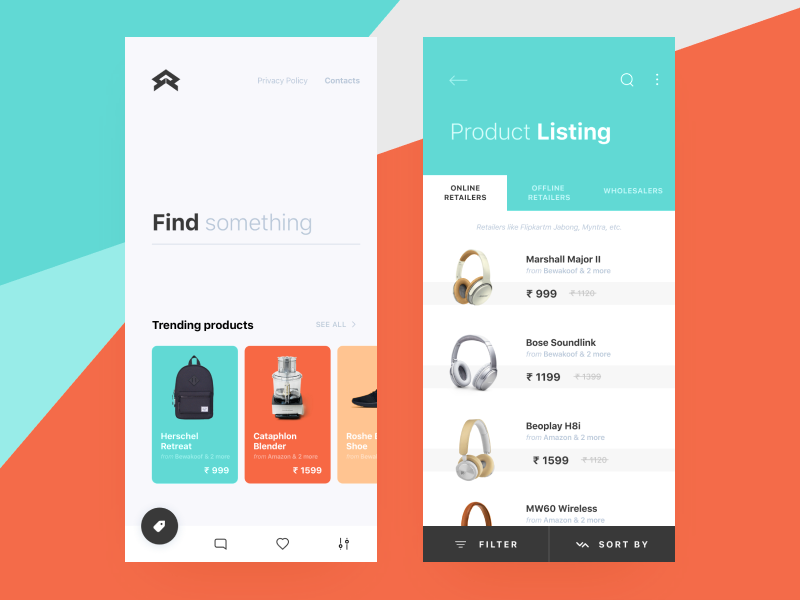
When a user opens up an application, they need to be able to understand where to go, and how to get there. If they cannot do this, you will lose them.
This means that designing an effective navigation system for a mobile application is crucial.
Get to know your audience
Without understanding who will be using your design, it can often be difficult to gain insight into how to begin designing.
Audience research assists with making better choices when working towards a design. It will also assist with gaining consensus on how these designs should be implemented.
If you are unsure where to start, get some UI design inspiration by looking at the competition.
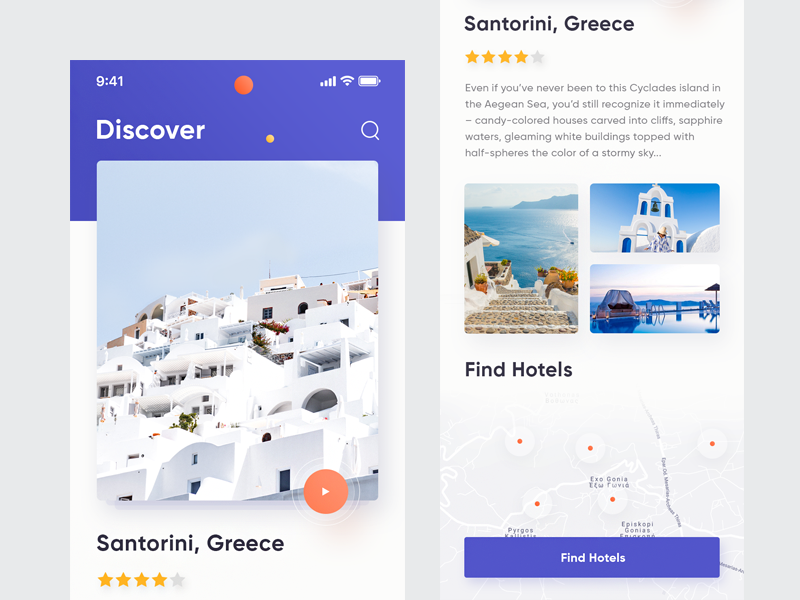
Without an effective navigation system, the website or application will suffer. However, creating an interface which will be effective across different interfaces or screen sizes may not always be easy.
You, as a designer, have to balance business goals with technical constraints, stakeholder strategy, content needs and user behavior.
The Principles of Mobile Navigation
Mobile is different
Although desktop computers are seen to be more powerful than a small screened computer like a mobile phone, smartphones are more powerful than desktops in that they work quickly, are highly personal, and are carried with us.
A smartphone has sensors which can detect location, movement, acceleration, orientation, proximity, traffic conditions and much more.
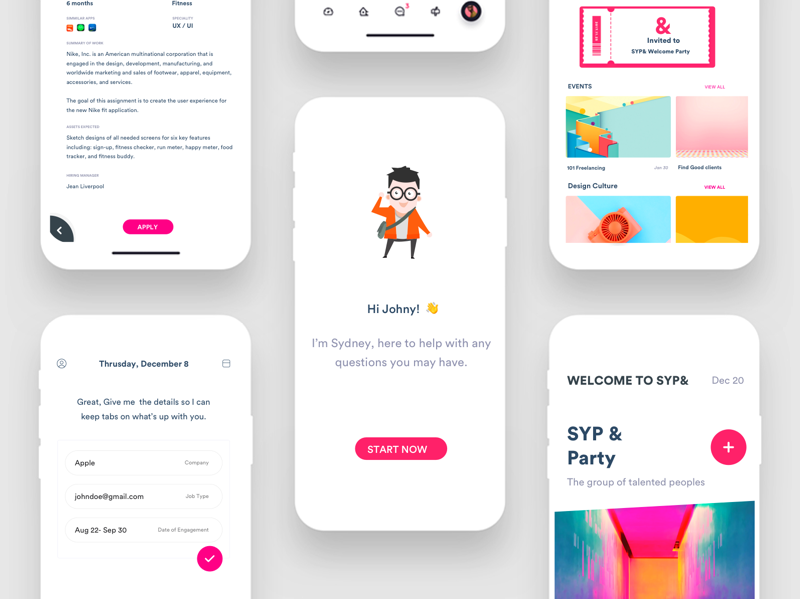
A mobile phone is very different to a desktop computer. So, when designing for a mobile phone, take the following points into consideration:
- Go Zen: edit your features carefully, only including those which will assist the app to work intuitively, and with efficiency.
- Be unique: With so many applications to choose from, add a special interface, which will motivate a user to pick yours.
- Be effective: Mobile phones are very personal. We use and interact with them constantly. Apps that are fun, efficient, reliable and delightful to use bring pleasure. People will become attached to the experience.
Mobile devices have their own contexts
It’s important for designers to understand when and why we use mobile phones. This enables an enjoyable application experience.
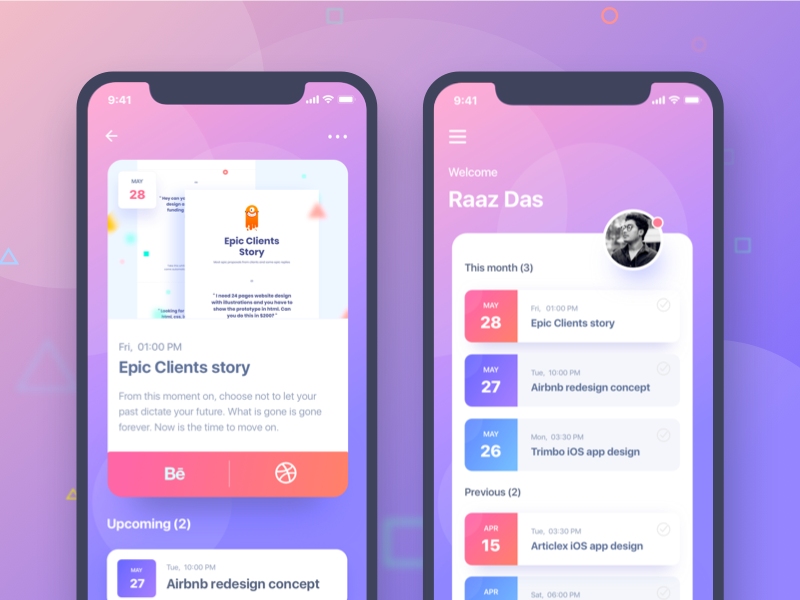
Mobile phones are often used to carry out micro-tasks such as banking, checking a location, searching for recipes or booking tickets. Understanding when people use phones adds to creating a valuable experience. Most people use phones when they are bored, busy and lost.
Bored
Waiting at an airport, traveling by train or passing time often provide opportunities for phone use. People may often play games or search for information. A mobile app can provide a fun or playful experience which a person might become immersed in. In this context, applications can be geared towards longer time sessions.
Busy
Carrying out tasks while in a rush or during a quick break means they need to be efficient and often might be carried out with only one hand in a busy environment. Bold design is important.
Lost
People in unfamiliar surroundings or who are searching for somewhere new in a familiar surrounding might be considered to use a phone while lost. Create an application which wouldn’t use too much battery power, and which can be extended to offline support.
Guidelines for creating a Mobile Application
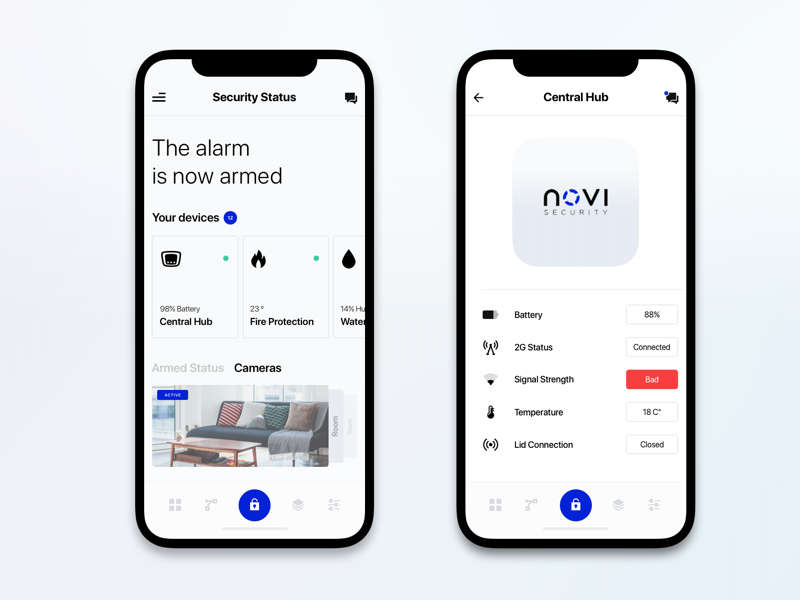
If the interaction between the user and the app is not instant, then the app will not have an audience. If a user uses the app, there needs to be an instant response, even while the app may process this input.
Style: An app which is both attractive and intuitive will be extremely valuable. Place a lot of attention into the finer details of how the app is styled to give it a gorgeous interface.
Thumbs: Ensure your user will be able to use thumbs to get your app to work. Even in a two-handed grip, your user will likely use thumbs to get the app to work.
Scrolling: Try to avoid a scrolling screen, which can be frustrating and unreliable when in a hurry.
Targets: Thumbs present large areas when working on a small screen. Consider what this means for the various features or targets of your app.
What size would you need numbers or letters to be? Where do you space your features? Planning carefully helps. It wouldn’t be helpful to place a return and send button close together on an SMS application, for example.
Navigation models
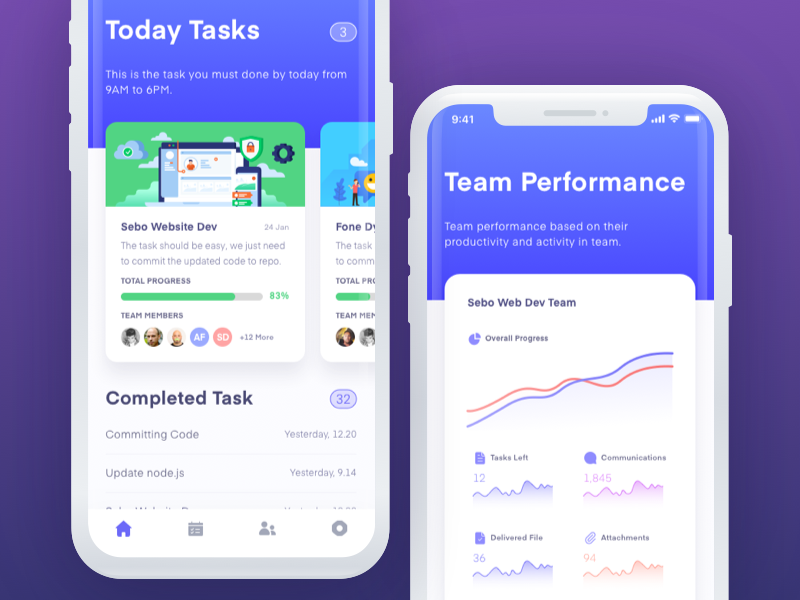
There are many navigation models for mobile apps. Choose one which will be most effective for your application.
None: Most helpful for isolated screen utility apps.
Tab Bar: Three to six content areas.
Drill Down: Content placed in a hierarchy.
Design interactions to be tappable
With a mobile interface, the user won’t be clicking on options or instructions. Instead, the user taps a screen.
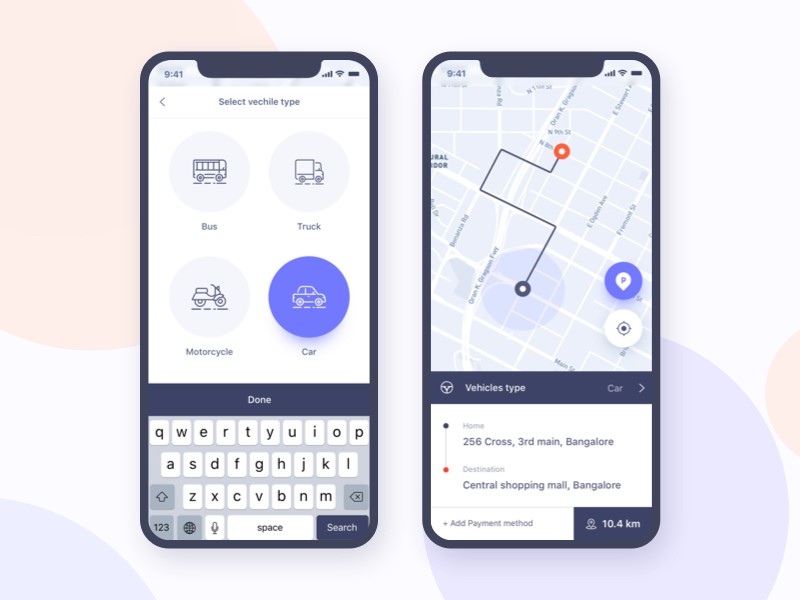
Therefore, improving the quality of this interaction will improve the user experience. Ensure that your app doesn’t respond to accidental tapping or touch, as this will frustrate the user.
Create buttons which are large enough, and spaced widely enough to create a usable interface, but not too far apart that they become unreachable.
User-friendly keyboards
Assist your user with typing keyboards which are easy to use, and which is most useful for the information being submitted.
If your application requires a lot of typing, ensure that it can be used in landscape position to enable a larger keyboard.
Gestures
If your app enables the use of gestures, such as a screen swipe to turn a page, you might have to decide how to reveal their availability to the user.
Two-handed gestures are often difficult for a user, and not an essential part of your app. Most apps use controls which can be used with a single finger.
The benefits of designing for mobile
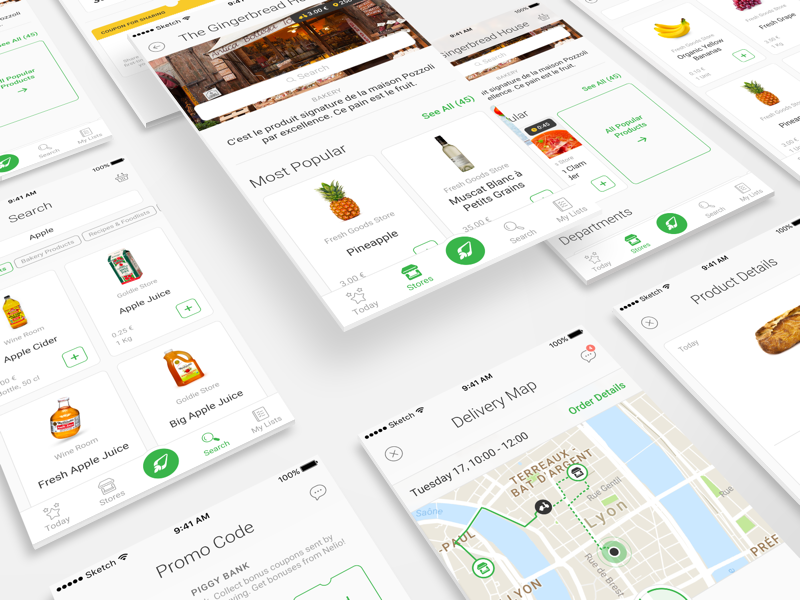
Apart from not being left behind as people use smaller screens to carry out everyday tasks, there are other benefits to embracing a mobile-first approach:
- Mobile users needs are met.
- This allows designers to focus on content, structure and navigation details.
- Web pages become easier to navigate, which improves the overall experience. This assists visitors with wanting to visit a site.
- A mobile first approach produces fresh concepts and clean designs.
Conclusion
In order to create an effective design for a mobile application, a different perspective is needed. Mobile applications need to be simple, responsive and intuitive. This is important when designing for clients.
Designing for the small screen can be challenging. Not all design concepts can be implemented on smaller screens. Different sizes or technical capabilities of phones means that designs are often complicated.
There is no single solution to designing for mobile apps. Instead, focusing on what your audience needs, and providing effective and well thought out designs to enable pleasurable user experiences is crucial.
By conducting research and exploring how a mobile app interacts with users, a designer can provide a quality product which offers value and efficiency.
AMP News
Post pobrano z: AMP News
AMP is controversial, to say the least. Dave and I did a show on it about a year ago that to me felt fairly balanced in addressing some of the issues. Let’s cover some recent news and responses.
One thing that isn’t usually controversial: it’s fast. AMP pages are damn performant. Even that, though, is contentious. Ferdy Christant notes:
Technically correct AMP pages will perform very similar to any non-horrible web page.
The difference between AMP performing instantly and getting numbers ranging from 2–8s as seen above have to be explained.
Part of that answer you can probably guess: the cache is simply very fast. It’s hard to compete with a Google-class CDN.
You don’t need AMP to have a fast website.
FYI @CityLab article pages load faster than @nytimes AMP pages. Just to show you do not need AMP to have fast loading pages #webperf pic.twitter.com/34YboEBwLP
— Michael Donohoe (@donohoe) February 23, 2018
The most controversial bit is that carrot offered for using AMP: the search results news carousel. The carousel is extremely prominent in Google search results, and AMP is a one-way ticket to get in. You could make a site faster than AMP, but that doesn’t meet the criteria for entry. Tim Kadlec:
there has been no indication of any attempt to address the first issue, that of incentivization and premium placement. In fact, not only has there been no attempt to fix it, it appears the AMP team is doubling-down on those incentives instead.
Doubling-down, as in, AMP stories will be released soon and will also enjoy premium placement on Google. Every indication is that the primary desire of people reaching for AMP is the preferential search results treatment. Gina Trapani:
In my experience people are motivated to use AMP… I’ve seen this from our clients…mostly because of SEO. They want it in that top stories carousel, they want that lightning bolt of approval in regular search results which is happening now.
Of course, Google can do whatever they want. They are an independent company and if they wanna tell us that we have to use a special format to have benefits on their platform, then that’s the way it is. It doesn’t mean we have to be happy about it. Hundreds of people have signed the AMP letter, which calls for two changes:
- Instead of granting premium placement in search results only to AMP, provide the same perks to all pages that meet an objective, neutral performance criterion such as Speed Index. Publishers can then use any technical solution of their choice.
- Do not display third-party content within a Google page unless it is clear to the user that they are looking at a Google product. It is perfectly acceptable for Google to launch a “news reader” but it is not acceptable to display a page that carries only third-party branding on what is actually a Google URL, nor to require that third party to use Google’s hosting in order to appear in search results.
Ethan Marcotte is concerned:
absent action from some sort of regulatory body, I’m not sure what influence you or I could exert to change the trajectory of AMP
…but thinks we could perhaps collectively have influence. Jeremy Keith has called some of the messaging behind AMP an outright lie:
I don’t think the developers working on the AMP format are intentionally deceptive (although they are engaging in some impressive cognitive gymnastics). The AMP ecosystem, on the other hand, that’s another story—the preferential treatment of Google-hosted AMP pages in the carousel and in search results; that’s messed up.
Jeremy also notes that the power Google is exerting here is worrisome. Part of the stated motivation is trying to fix the web. Taking a stand, as it were.
I remember feeling very heartened to see WikiPedia, Google and others take a stand on January 18th, 2012 (against SOPA and PIPA). But I also remember feeling uneasy. In this particular case, companies were lobbying for a cause I agreed with. But what if they were lobbying for a cause I didn’t agree with? Large corporations using their power to influence politics seems like a very bad idea. Isn’t it still a bad idea, even if I happen to agree with the cause?
Cloudflare quite rightly kicked The Daily Stormer off their roster of customers. Then the CEO of Cloudflare quite rightly wrote this in a company-wide memo:
Literally, I woke up in a bad mood and decided someone shouldn’t be allowed on the Internet. No one should have that power.
There’s an uncomfortable tension here.
AMP is also expanding to other technology, notably email. Well, Gmail, that is. Fast, well-rendering, interactive emails seem like a hugely positive thing. Perhaps predictably at this point, people in that industry have similar concerns. Jason Rodriguez:
I’m an email guy. I’ve written three books on email, spoken at a bunch of conferences on the topic, and help build tools for other email folks at my day job. I love seeing the email platform grow and evolve. I love seeing people working on interesting ideas that make email more valuable for the subscribers that receive them.
So, you’d think I’d be thrilled by Google’s announcement about adding dynamic content and interactivity to Gmail with AMP for Email. You’d be wrong.
Jason’s primary concern being that instead of improving support for what we already have, they’ve invented a new format and called it open-sourced, but have full control over it. However, with far more blockers in the way (e.g. ESPs not supporting the new MIME type) and less carrots to offer, it seems like a long shot it will happen.
I know I’ve covered a lot of negative news here, but that’s mostly what I’ve been seeing. Strangely enough, I feel more interested in watching how this all shakes out than I am motivated to weigh in on either side.
AMP News is a post from CSS-Tricks