A lot of (web) developers use a local .dev TLD for their own development. … In those cases, if you browse to http://site.dev, you’ll be redirect[ed] to https://site.dev, the HTTPS variant.
That means your local development machine needs to;
Be able to serve HTTPs
Have self-signed certificates in place to handle that
Have that self-signed certificate added to your local trust store (you can’t dismiss self-signed certificates with HSTS, they need to be 'trusted’ by your computer)
This is probably generally A Good Thing™, but it is a little obnoxious to be forced into it on Chrome. They knew exactly what they were doing when they snatched up the .dev TLD. Isn’t HSTS based on the entire domain though, not just the TLD?
Every week, we’ll give you an overview of the best deals for designers, make sure you don’t miss any by subscribing to our deals feed. You can also follow the recently launched website Type Deals if you are looking for free fonts or font deals.
Paper Kingdom Design Toolbox
Paper Kingdom is an extensive design toolbox created to help you in mastering the cutest hand-crafted paper style. Crafted with love, with Photoshop and Illustrator tools and assets included, it’s a matter of a few clicks to create unique and eye-catching paper designs and illustrations! Just check the included pre-made scenes to see for yourself – no topic is beyond this pack: Nature, Space, Naval, City and Underwater landscapes can be created from scratch with no sweat.
With a name like Cabinet of Curiosities, you just know there’s going to be something sweet in that bundle! And you’d be right. Culled together from 28 individual collections, you’ll get 336 gorgeous graphics full of rose gold, naturally textured and mixed with fabulous digital graphics inspired by the natural world. Suitable for print projects, this is one time you do want your curiosity to get the best of you.
In need of some fresh fonts to liven things up? Not to worry! This latest Mighty Deal from Putra Khan offers up 7 Fabulous Handmade Fonts for 1 super low price. Packed with tons of glyphs including upper and lowercase characters, you’ll also get multi-lingual support, stylistic alternates, swashes and more to make your next project truly shine.
Give your website (or your clients’ websites) a major facelift with this collection of 8 premium WordPress themes from MatchThemes. Super easy to customize, you can adjust these themes to include whatever you need. They’re also all built on a responsive design, so there’s no need to worry how they’ll look on different screen sizes including mobile.
Looking to pull the wool over your latest project’s eyes? Then be sure to snag this Mighty Deal chock full of 65 hi-res patterns and textures that will convert your ordinary designs into wool and yarn. The Woolly Design Kit will allow you to craft a whole new look for your designs.
In my course, Mastering Script Lettering, I showed you how to create beautiful script lettering by hand. But what if you want to convert your hand lettering into vector format?
In this video from the course, I show you exactly how to do that in Adobe Illustrator. Watch the video above to see the full vectoring process, and here’s a summary of the main steps:
Start by scanning your lettering and opening the image in Photoshop.
Adjust the levels and contrast so that you can see your lettering more clearly.
Bring it into Illustrator and make it 10% Opacity so that you can trace over it.
Vector each letter separately, so that you can later move the shapes around if need be.
Use the Pen Tool to trace each letter, placing anchor points on the „extrema”, the furthest points on each letter. You can see a full timelapse of my vectoring process in the video to get a clearer idea of how this works.
Also use the shape tools wherever possible—for example, I used the Ellipse Tool to create a circle for the „g” and then altered it to fit the letterform.
Go back through at the end, correcting any inconsistencies and making adjustments.
Watch the Full Course
The full course, Mastering Script Lettering, teaches you script lettering from the basics right up to advanced techniques. You’ll learn techniques such as:
angle
speed
weight
contrast
kerning
flourishing
vectoring
and more!
You can take this course straight away with a subscription to Envato Elements. For a single low monthly fee, you get access not only to this course, but also to our growing library of over 1,000 video courses and industry-leading eBooks on Envato Tuts+.
Plus you now get unlimited downloads from the huge Envato Elements library of 300,000+ photos and 34,000+ design assets and templates. Create with unique fonts, photos, graphics and templates, and deliver better projects faster.
Welcome
back to our series on art history! From the dreamy paintings of the Impressionist era, we
now venture onward to the early-20th-century art movement of Cubism.
Let’s see how history significantly affected the art of this time.
Cubism began during the early 1900s in Paris, France. At the time, artists Pablo Picasso and Georges Braque joined forces to explore this radical style of cube-inspired painting.
But the public wasn’t quite ready to let go of the past.
While most artists were still following the flowy trends of the Impressionist movement, Picasso and Braque worked tirelessly to build a philosophy around Cubism. Their work was seen as bizarre and maddening, but it only reflected their intense passion for analyzing objects, shapes, and colors.
Luckily, they never gave in to the naysayers, because now we have more amazing art styles like Futurism, Dada, and Art Deco as a result.
Let’s learn more about this movement by looking into the minds of the world’s Cubists.
Early Cubism
One of the most recognized names in art is Pablo Picasso. A Spanish painter with a passion for exploring many mediums, Picasso was fascinated with geometry during the earlier years of Cubism.
He and fellow Cubist Georges Braque took apart objects and analyzed them in terms of volume, shape, and color. They played with flat visuals that looked glaringly different from their peers, and developed paper collage work which explored three-dimensional planes.
Their work was very similar too. They both created monotone paintings of different subjects like love, music, and still life. Historians saw Cubism as a way to stamp out ambiguity. It forced the viewer to internalize the subject matter by limiting the color palette.
At the same time as Picasso and Braque’s discoveries, other artists were emerging as well.
High Cubism
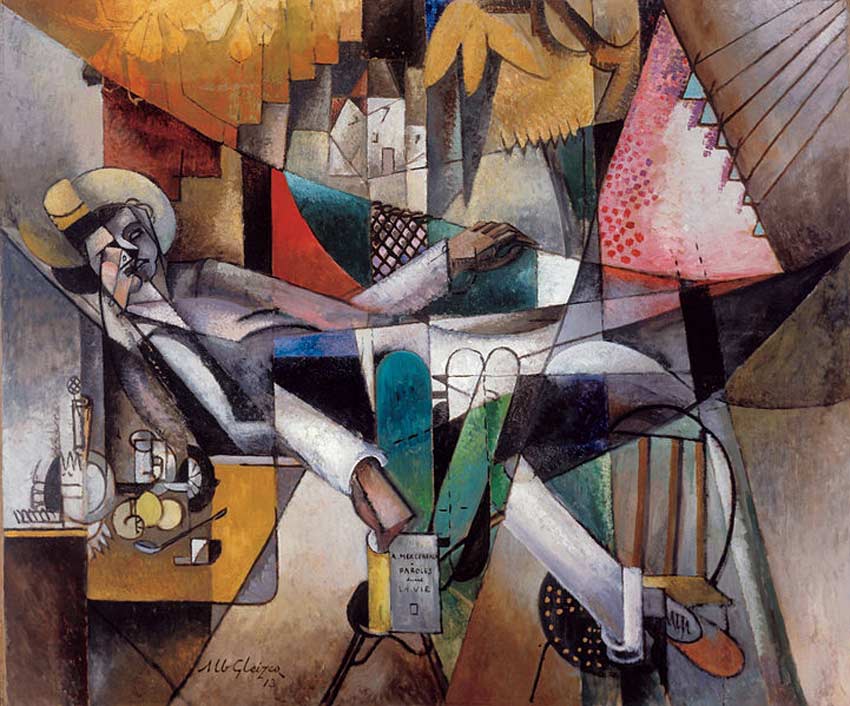
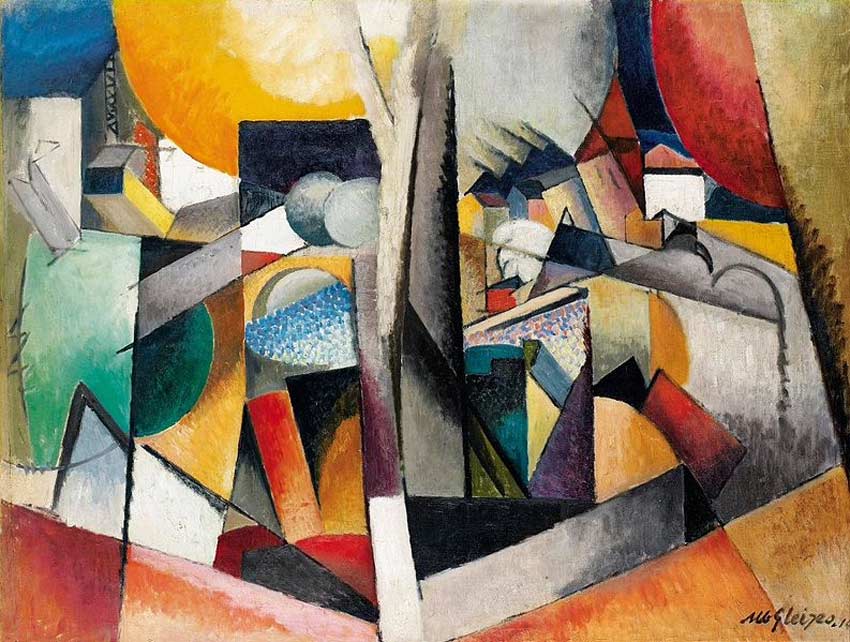
High Cubism came after 1909 when artists who mostly exhibited in non-academic salons in Paris explored a similar cube-inspired style. The group wanted to emphasize research into the expression of form in opposition to the realistic colors of the Neo-Impressionist movement.
Artists at this time included André Lhote, Jean Metzinger, and Albert Gleizes. In contrast to earlier Cubists, these artists allowed the Impressionist era to influence their work. They painted vibrant geometric explorations of self-portraits and war-related themes.
Soon the rules of art were pushed even further. The Section d’Or was a group of artists, sculptors, and critics associated with Cubism who believed that the movement was simply a continuation of the love for the golden ratio. They created abstract art with the purpose of skewing their subjects.
Art became even more abstract after 1914. Artists now began to emphasize overlapping planes and flat surfaces. Crystal Cubism, as it became, was created by artists who desperately needed to escape the realities of the Great War.
Though many artists continued to push through with Cubism, it started to decline after 1925. As a result of a shift towards more conservative values, artists dropped the bold colors and shapes for more conservative French styles. Today, it remains a major influence on modern art history.
Minimalism is nothing new. Artists have been adoring the simplicity of geometric shapes since way before the invention of modern design software. Though controversial at first, the art world responded to Cubism with many diverse art styles for years to come. Its wide range of culture and influence is a
true testament to
the evolution of art. And I hope you continue to learn more about these
amazing timelines on your own.
For more amazing tales of 20th century Cubism, dive into the links below for further reading. And
join me next month when we discuss the Harlem Renaissance.
What better way to celebrate ten years of Envato Tuts+, than with a fantastic selection of freebies and resources for our community? Join us as we take a look at how Tuts+ has changed over the last ten years, and share a selection of free courses, templates, eBooks, graphics, and lots more.
Want to jump straight to the freebies? Just click the banner to join our newsletter and get the first item in your inbox!
10 Years of Tuts+
Not many of you will remember when Tuts+ used to look like this! But at its core, Tuts+ remains focused on exactly the same thing we started out doing. We’re teaching technical and creative skills, helping people grow in their careers. In the past decade, we’ve:
Published over 24,000 tutorials (and 15,000 translations)
Published over 1,000 video courses
Grown from one topic (Photoshop) to nine topics
Re-built our entire platform three times (with countless re-designs!)
Grown our team from one, to fourteen, fantastic editors and experts
Worked with over 1,800 talented instructors and translators
10 Days of Freebies
This month, we’re doing something a bit special to celebrate the ten year anniversary of Envato Tuts+. We’ll have a selection of „10” themed content in Design & Illustration, as well as a fantastic promotion featuring ten days of freebies.
What will we be giving away? We don’t want to spoil the surprise, but you can look forward to a selection of:
Free courses and videos
Graphics, backgrounds, icons, and brushes
Presentation templates
Exclusive eBooks
And much more!
Just join our Tuts+ newsletter to get started. You’ll receive a daily email for the next ten days, with a different freebie to download (or watch) every day. The first one will land in your inbox straight away! Here’s a sneak peek at some of what you can expect:
Thank You!
We’ve had an incredible ten years creating tutorials, courses, eBooks, quizzes, learning guides, and so much more. We know it’s had a wonderful impact on many of you, changed lives, and helped further countless careers.
Thank you for reading Tuts+, subscribing to watch our courses, commenting, sharing, and being part of Envato’s incredible community of creators.
Last week, right after the launch of the iPhone X, GraphicPear very quickly released a mockup version of the smartphone. In fact, it was there in less than a day.
So if you are looking to modernize the apps or websites previews for your clients, go download the iPhone X PSD mockup on GraphicPear, it’s free!