Some might be happy with a couch and a laptop. Others, meanwhile, want something else to fuel their creativity.
Unfortunately, home creative spaces aren’t the easiest thing in the world to conjure up. Sure, take to any creative design agency and your mind will be blitzed with inspiration – but all of this comes at a price. A big price.
There are certainly some elements of a home creative space that are more important than others and the following shows a breakdown of the most important aspects.
Bookshelf speakers
If you’re like 99% of creative minds out there – you need just one thing to fuel your work. This comes in the form of music.
While phones may have become hugely capable in terms of their music-playing ability – they just don’t cut it for day-to-day use. Instead, you need a more specific solution, something along the lines of bookshelf speakers from Q Acoustics.
Let there be light
While the first suggestion looked at a type of product, the next is going to look at the light factor in more detail. In other words, you simply have to find a way to let more light creep into your room – it’s the bread and butter of creativity.
You might find the odd person who gets a spark from a blacked out room but on the whole, these people are few and far between. Instead, natural light is key and if you can’t get this, try and invest the bulk of your budget into decent overhead and task lighting which will just make your deals so much easier.
Just roll with it
This next suggestion isn’t going to appeal to every reader, but rolling carts can be an absolute godsend for anyone working in the creative industry at home. Particularly if your home is small, and you are sharing with the rest of the family, the ability to wheel in your supplies at will can be second to none.
It means that your work can travel with you around the house and in relation to families again, this can be key.
The display factor
It doesn’t matter how big your space is, you need somewhere within there to show off your best work. Just like natural light can fuel your creativity, so can your past creations.
It doesn’t matter whether you are a web designer or an artist – have somewhere to display your best work. The best suggestions tend to come in the form of magnetic rails, or maybe picture wires for artists, which can allow you to chop and change your display at a whim.
Accept that it might take baby steps
Unless you are awash with money, you aren’t going to get your dream studio straight away. Instead, you will have to chip away and build it gradually.
As such, you need to hold onto your dream. Keep taking small steps to keep your workspace alive, and keep working towards the end goal. Again, by sticking to such a philosophy, you can fuel your inspiration even more.
We’re all looking to improve our vector illustration skills, and if your focus is on learning illustration or icon design, then getting familiar with how to use Adobe Illustrator to create isometric drawings will improve your technical illustration skills greatly. Learning how to use Illustrator to create isometric diagrams, set up isometric grids, and design isometric cubes are fundamental skills that you can build upon.
We’ve assembled a collection of tutorials that will teach you the basics of creating isometric illustrations in Illustrator, as well as intermediate tutorials that teach you how to create complex technical illustrations, and then a few tutorials that show you how to get creative with isometric in Illustrator (such as building isometric retro illustrations and vibrant pattern-based isometric cityscapes). Get ready to take your skills with vector drawing at an angle to the next level.
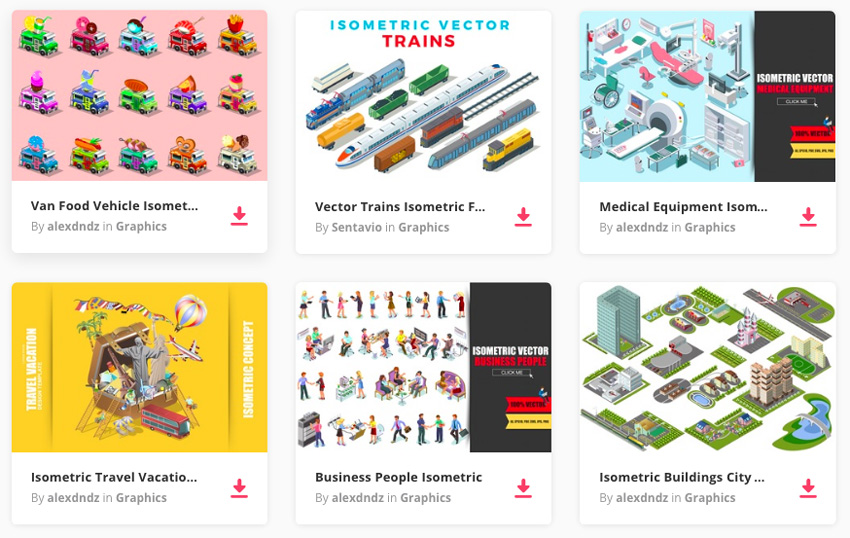
If you’re looking for some great-looking assets to add to your designs, you can find a fantastic selection of isometric vectors over on Envato Elements.
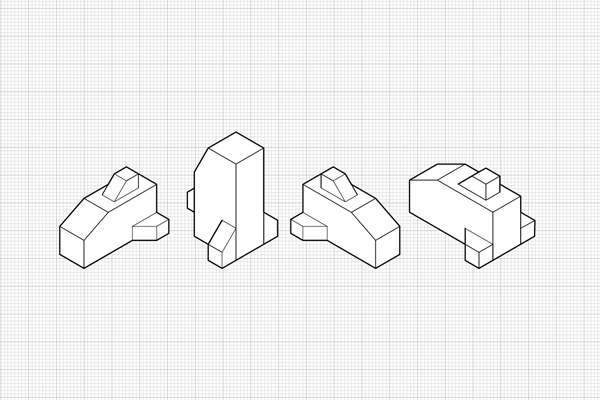
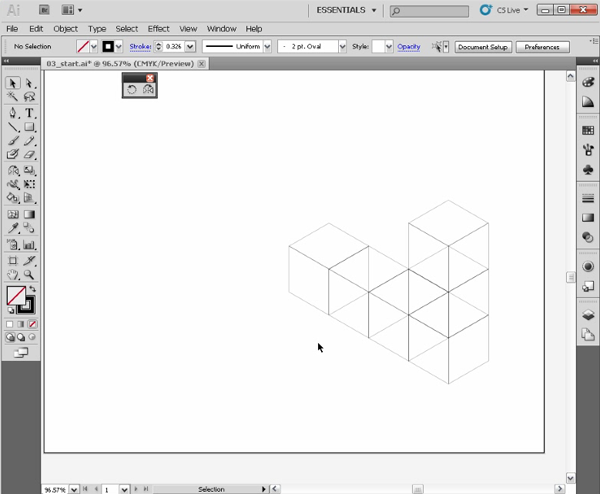
This is the first in a series of tutorials Cody Walker wrote for us here on Vectortuts+ on isometric illustration. Isometric projects allow artists to quickly draw objects accurately without having to use perspective. They are often used in technical illustrations. Learn how to get started with isometric in illustrator by creating some simple objects on an isometric grid that demonstrate technical illustration techniques.
This is the second in a series of tutorials Cody Walker wrote for us here on Vectortuts+ on isometric illustration. The method demonstrated here is more advanced and shows how to build complex objects that are curved without the need for an isometric grid. Learn how to use the method scale, shear, rotate, or SSR. This tutorial follows a solid technical illustration process and demonstrates how to create a detailed, exploded diagram of an electric guitar in Adobe Illustrator.
This is the final post in a series of tutorials Cody Walker wrote for us here on Vectortuts+ on isometric illustration. Learn how to create exploded isometrics, which are referred to more commonly as assembly drawings. This type of vector drawing is often used in manuals to show how parts of complex objects fit together. This is an advanced technical illustration tutorial for creating complex, isometric diagrams in Illustrator.
Mark Oliver shows us how to create retro illustrations on isometric planes. This work is gorgeous. Learn how he works from sketch through vector in Illustrator, and then adds a worn image for the final vintage graphic touch. In this tutorial you’ll take a creative drawing and work it through an isometric grid in Illustrator, as well as vector build techniques, to create this stylized isometric illustration.
Aaron Miller shows us how to use Illustrator’s 3D tools to make a character-based scene that is full of happiness and creativity. Learn to bring dimension to flat imagery. Using this technique makes creating isometric illustrations easy. He shows how you can create isometric characters and scenes in Illustrator that are full of life. Learn to plan the scene, build the vector shapes, map art to the 3D shapes, and more.
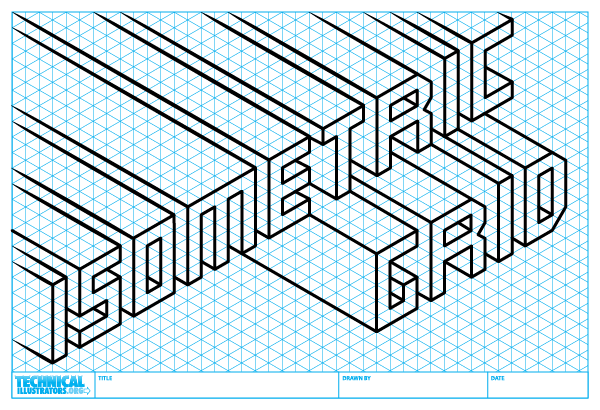
This tutorial over on TechnicalIllustrators.org is great for beginners. It shows how to quickly set up an isometric grid in Illustrator. This allows you to print out and sketch isometric illustrations on them, using them directly in Illustrator or even another vector program. Sample grids are available for free download as well.
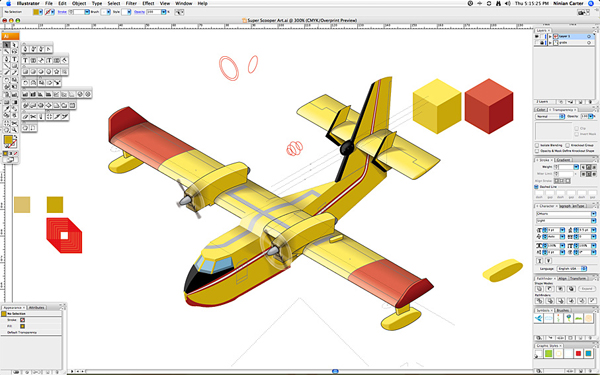
Ninian Carter shares his processes for producing a complex isometric illustration of a water-bomber aircraft in Adobe Illustrator. This advanced Illustrator tutorial demonstrates a professional technical illustration workflow. Learn to skew graphics on an isometric plane, and build up the details of the vector work step by step.
Learn how to use Adobe Illustrator to create a custom 3D typeface based on an isometric grid. Isometric-based letters are the perfect way to reflect structure in a display typeface, as Steven Bonner discovered with a commission for a magazine feature on contemporary architecture. He shows you how to draw, color and light your letters to create a three-dimensional architectural scene. This tutorial is an excellent blend of technical illustration and creative techniques.
The design agency 2xanadu shows us how to create a complex repeating pattern that combines an interesting mix of technical illustration, isometric Illustrator methods, and creative ingenuity. It’s made up of modern cityscape elements, as well as anime style characters strewn about. The process covers working with an isometric grid, starting with a sketch, creating the linework in Illustrator, and finishing by coloring vibrantly in Photoshop.
Mac Krebernik shows us how to use a slightly modified isometric grid in Illustrator to compose a small lego brick. You’ll then learn how to create a typeface by snapping the bricks together, much like when you were a kid playing with the real blocks themselves.
In this video tutorial from Digitaltutors.com, learn how to create an isometric grid and draw objects based on it. This is a great Illustrator tutorial for beginners to get started with the basics of technical illustration skills utilizing isometric Illustrator techniques.
Learn how to create an isometric cube in Illustrator without the help of 3D tools. You’ll learn how to use basic shapes and the Pathfinder to make more complex structures, such as tables and bookcases. No need for advanced understanding of isometric projection or technical illustration skills. You can get started now with this beginner Illustrator video tutorial on isometric cube construction.
More Isometric Tutorials From Envato Tuts+
Can’t get enough? Check out more tutorials from the Design & Illustration section here on Envato Tuts+ dedicated to teaching you about the incredible world of isometric art. Or check out our series on creating Isometric Pixel Art in Adobe Photoshop.
Additional Illustrator Tutorial Collections Here on Envato Tuts+
Jump into more comprehensive roundups on various type of Illustrator tutorials. Learn how to advance your self-promotional work, Illustrator brush work, poster design skills, master InDesign tools, and boost your artistic skills.
Need a faster solution? Browse our amazing selection of Isometric Elements and Generators available through Envato Elements. Create awesome maps and infographics quickly and check out some of our favorites listed below!
Create insane 3D worlds with just a few short clicks. This incredible isometric map generator features realistic buildings, roads, and other design elements to create your own amazing maps. Download this package to explore the vast library of real-world add-ons.
If you prefer a city with a more modern design then check out this isometric city template instead. This pack features colorful houses, cars, and trees with a sleek, minimalist design. Use these graphics for websites, infographics, or games, and enjoy customizing these well-organized vector files.
Need a few icons to jazz up your designs? Then check out this super cool set of 100% vector isometric icons. These icons feature 15 different realistic icons you can use for your websites, social media accounts, and so much more!
Step up your game with this awesome package of seven different business-themed isometric designs. These designs feature several business concepts you can use for your presentations, infographics, and more. Create exciting presentations for school or work and impress your coworkers with these incredible graphics.
Build the city of your dreams for your awesome games with this cool isometric set. This package features 25 icons with all the buildings, landmarks, and shops you need to make your environment shine. It’s suitable for games and more, and you’ll want to take advantage of this set right away!
Whether you are launching a business, starting a blog or building an online portfolio, the design of your website will largely determine the success of your project. A solid online presence is crucial, and the best websites make sure that visitors are happy to stick around.
However, it’s not just a case of looking good. The devil is in the detail, and a first-class website is both extremely eye-catching and technically sound. For maximum success when launching your online endeavor, make sure your website ticks all the following boxes.
Make it fast
Creating a winning website is all about ensuring a user-friendly experience. Nothing hinders this more than a painfully slow load time – in fact, research shows a direct link between slow page response and website abandonment. It doesn’t matter how beautiful your website is, or how fancy the graphics are; if it doesn’t load quickly, no one will stick around long enough to see it. Elements that affect website speed include things like image size, how “clean” your code is and even how many different types of fonts you use. Free website checker tools like this one from 1&1 can help you to check the speed of your website, and also provide pointers for areas of improvement.
Keep navigation simple
Visitors to your site will quickly get frustrated if it’s difficult to navigate. Too many menus and submenus, excessive scrolling and elusive contact details are all major culprits when it comes to confusing navigation, so aim to keep it simple. Try to categorize all sections as logically as possible, in a way that makes them easy to find, and keep menu headings clear and visible. It is also a good idea to include a search function – that way, visitors to your site can instantly find exactly what they’re looking for.
Optimize for visibility
It is not just the user you need to impress; your website also needs to be a hit with Google. This means getting to grips with SEO – incorporating relevant keywords, embedding the right meta tags into your code and building up social signals by making it easy to share your content via Facebook and Twitter. Ultimately, a few SEO-based tweaks can help to improve your website’s ranking in the Google search results – which is of course, crucial for catching the attention of potential visitors.
Cater to mobile
The mobile web is here to stay, and optimization for mobile devices is an absolute must. If your site doesn’t load properly on mobile devices, you will instantly limit your appeal – especially as a growing number of internet users surf exclusively on their phones. Mobile-friendly sites can also expect preferential treatment from Google, whose algorithms have been adapted to favor mobile-optimized search results. Responsive web design is one way to ensure that the layout of your site adapts to different screen sizes, be it a smartphone, tablet or desktop. Fortunately, many pre-made web design templates are automatically optimized for mobile, so ensuring high performance across all devices should not be too tricky.
Tighten up security
Another crucial factor when it comes to online success is security. Regardless of whether or not you are trying to sell anything, security is paramount to gaining trust and creating a professional image. One way to secure your site is through an SSL layer – or Secure Sockets Layer – which ensures the secure transmission of data between your server and your website visitor’s browser. It also confirms that you are the legitimate owner of the website, and the “https” prefix to your URL provides an instantly recognizable marker of security. As internet users become increasingly savvy in matters of security, distinguishing your site as legitimate and trustworthy is more important than ever.
Be unique
Last but not least, your website design should be unique. Of course, it’s important to have all the technicalities in place, but the overall aesthetic should reflect everything that your website is about. Use images, font, and color to create something unique and appeal to your target audience. Whether your message is fun and lighthearted or a little more corporate, the design of your site can be used to express this.
Post pobrano z: IX White Square Ad Festival Announces the Jury IX International Advertising Festival «White Square», one of the leading creative events in communications industry of Eastern Europe, will take place in Minsk on April 27-29. The image of a boxing ring has become the key idea of Festival’s corporate identity this year. The tagline of IX White Square Festival is «Creativity Wins». In late […]