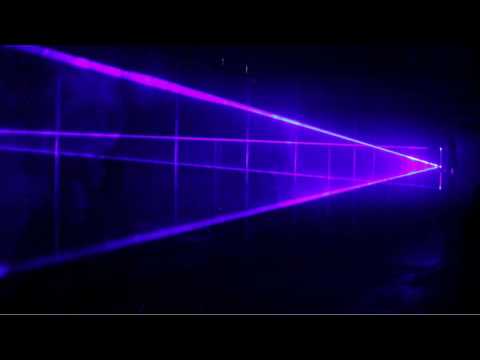
Speed of Light celebrates the tenth anniversary of broadband in
the UK with a series of installations by United Visual Artists. The
installations explore the themes of communication and modernity.
Stripped back to its materials, fibre optic is a thin strand of glass,
with nothing more than a flickering beam of light. UVA has used this
beam as the starting point for its work. The installations dramatise
the experience of using fibre-optic communication, re-imagining it as
an immersive environment.
The work has been commissioned by
Virgin Media and begins with an input from the audience, which is
transferred into a pathway of light, leading through the atmospheric
environment of the Bargehouse. The continuous line of light evolves
through each installation in turn shifting in intensity and form.
Post pobrano z: Andy Ward rocks Don’t pass up revisiting the delightfully and well designed Andy Ward website. Genial pres and as always, excellent projects from this talented illustrator.
Post pobrano z: Ubiquitous Display The Flyfire project sets out to explore the capabilities of this
display system by using a large number of self-organizing micro
helicopters. Each helicopter contains small LEDs and acts as a smart
pixel. Through precisely controlled movements, the helicopters perform
elaborate and synchronized motions and form an elastic display surface
for any desired scenario.
Synchroballistic photography (also known as strip or streak photography) is a technique used to photograph fast moving subjects by moving the film during the exposure past a narrow slit—similar to moving your hand on a photocopier or scanner.
I pulled these images as a reference for a recent project, and although they’ve been around a while, I thought they deserved a second look.
Lola Dupré is a Scotish artist living in Glasgow. All her works are made by hand, with paper and scissors. Also sometimes include pen and occasionally paint.
Post pobrano z: Interview: Documentary Photographer Boogie on the Life/Death of the American Dream For nearly 20 years, Serbian-born photographer Boogie
has documented the lives of people marginalized by society, and those
living on the fringe. He has photographed gang members and drug addicts
in Brooklyn’s housing projects; neo-Nazi skinheads in Serbia; and
transsexual prostitutes in Sao Paulo, Brazil — gaining unfettered
access into worlds where outsiders are normally greeted with violence,
suspicion, or a combination of the two.
In a new interview series produced exclusively for True/Slant (via Annals of Americus), Boogie discusses everything from the death of the American dream and parenthood to life in post-crash America and what it means to be happy.


 For nearly 20 years, Serbian-born photographer Boogie


