Archiwum kategorii: Web Tools

How to Create a Vintage Fade Effect Photoshop Action

Post pobrano z: How to Create a Vintage Fade Effect Photoshop Action

Final product image
What You’ll Be Creating

In this tutorial, you will learn how to create a vintage Photoshop effect using such Photoshop effects as smart filters, adjustment layers, and overlay textures.

Follow along with us over on our Envato Tuts+ YouTube channel:

If you want to create this fade Photoshop effect in a few simple clicks, check my Faded Presets, with different overlay textures and a greater number of color photo effects.

Photoshop faded preset promo image

Or discover a huge range of vintage photo effects for Photoshop:

Tutorial Assets

The following assets were used during the production of this tutorial:

1. How to Prepare the Document

Step 1

Press Control-N to create a new document and use the following settings: 3000 x 2000 px; 300 dpi.

creating a new document

Step 2

Go to File > Place and put your image inside the document.

placing the image inside photoshop

Step 3

Resize your image to the borders of the document and hit Enter.

resizing the image to the borders

Step 4

After that, Right-Click on the layer and then Convert to Smart Object.

converting the image to a smart object

2. How to Create a Vintage Photo Effect

Step 1

Select the smart object and then go to Filter > Noise > Add Noise and use the following settings:

  • Amount: 2%
  • Distribution: Uniform
  • Monochromatic: On
adding a noise effect

Step 2

After that, go to Filter > Filter Gallery > Texture > Grain. Use the following settings:

  • Intensity: 15
  • Contrast: 59
  • Grain Type: Regular
creating a grain filter

Step 3

Place the overlay texture above the smart object and change the Blending Mode of this new layer to Screen.

changing the blending mode of the layer

3. How to Create a Fade Photo Effect

Step 1

Now let’s start to create our fade effect. Go to Layer > New Fill Layer > Gradient.

creating a gradient fill layer

Step 2

Double Click on the Gradient Fill layer and use the following settings:

  • Style: Linear
  • Angle: 135°
  • Color: #f7ff00; Location:  0%.
  • Color: #912a00; Location: 100%.
setting up colors for the first gradient fill layer

Step 3

Change the Blending Mode of the gradient fill to Soft Light and the Opacity to 35%.

changing the blending mode and opacity of gradient fill

Step 4

Create another gradient fill layer with the following settings:

  • Style: Linear
  • Angle: -3,58°
  • Color: #252b45; Location:  0%; Opacity: 0%.
  • Color: #f7ae8e; Location: 100%.; Opacity: 100%.
creating colors for second gradient fill

Step 5

Change the Blending Mode of the gradient fill to Hard Light and the Opacity to 35%.

changing the blending mode and opacity of second gradient fill

Step 6

Go to Layer > New Adjustment Layer > Gradient Map and then Double Click on the gradient map icon and create a gradient with the following settings:

  • Color: #313059Location: 0%.
  • Color: #4c4b75Location: 29%.
  • Color: #ba6167Location: 55%.
  • Color: #ff7038Location: 93%.
creating gradient map overlay

Step 7

Change the Blending Mode of the gradient map to Soft Light and the Opacity to 60%.

changing the blending mode of the layer

Step 8

Create another gradient map with the following settings:

  • Color: #1a535dLocation: 0%.
  • Color: #32d49dLocation: 100%.
creating a gradient map overlay

Step 9

Change the Blending Mode of the gradient map to Overlay and the Opacity to 25%.

changing the blending mode and opacity of the gradient map

Step 10

After that, go to Layer > New Adjustment Layer > Curves and use the following settings:

creating curves layer

Step 11

Go to Layer > New Adjustment Layer > Brightness/Contrast and create a new layer with the following settings: 

  • Brightness: 5
  • Contrast: 35
creating adjutments layer

Step 12

Now we need to create the last gradient fill with the following settings:

  • Style: Linear
  • Angle: 45°
  • Color: #313067; Location:  0%;.
  • Color: #b03d11; Location: 100%;
creating the last gradient fill layer

Step 13

Change the Opacity of the layer to 15%.

changing the opacity of the gradient fill

Awesome Work, You’re Now Done!

In this way, we can create an atmospheric-looking image using overlay textures, adjustment layers, and gradients. Feel free to contact me for any help with the techniques we covered.

Final result

If you want to create similar effects using Photoshop actions, you can also check my Faded Presets. This fade effect Photoshop action has a great number of overlay textures and plenty of color Photoshop effects.

Photoshop faded preset promo image

If you’d like to know more about vintage effect Photoshop techniques, check these tutorials:

How to Create a Vintage Fade Effect Photoshop Action

Post pobrano z: How to Create a Vintage Fade Effect Photoshop Action

Final product image
What You’ll Be Creating

In this tutorial, you will learn how to create a vintage Photoshop effect using such Photoshop effects as smart filters, adjustment layers, and overlay textures.

Follow along with us over on our Envato Tuts+ YouTube channel:

If you want to create this fade Photoshop effect in a few simple clicks, check my Faded Presets, with different overlay textures and a greater number of color photo effects.

Photoshop faded preset promo image

Or discover a huge range of vintage photo effects for Photoshop:

Tutorial Assets

The following assets were used during the production of this tutorial:

1. How to Prepare the Document

Step 1

Press Control-N to create a new document and use the following settings: 3000 x 2000 px; 300 dpi.

creating a new document

Step 2

Go to File > Place and put your image inside the document.

placing the image inside photoshop

Step 3

Resize your image to the borders of the document and hit Enter.

resizing the image to the borders

Step 4

After that, Right-Click on the layer and then Convert to Smart Object.

converting the image to a smart object

2. How to Create a Vintage Photo Effect

Step 1

Select the smart object and then go to Filter > Noise > Add Noise and use the following settings:

  • Amount: 2%
  • Distribution: Uniform
  • Monochromatic: On
adding a noise effect

Step 2

After that, go to Filter > Filter Gallery > Texture > Grain. Use the following settings:

  • Intensity: 15
  • Contrast: 59
  • Grain Type: Regular
creating a grain filter

Step 3

Place the overlay texture above the smart object and change the Blending Mode of this new layer to Screen.

changing the blending mode of the layer

3. How to Create a Fade Photo Effect

Step 1

Now let’s start to create our fade effect. Go to Layer > New Fill Layer > Gradient.

creating a gradient fill layer

Step 2

Double Click on the Gradient Fill layer and use the following settings:

  • Style: Linear
  • Angle: 135°
  • Color: #f7ff00; Location:  0%.
  • Color: #912a00; Location: 100%.
setting up colors for the first gradient fill layer

Step 3

Change the Blending Mode of the gradient fill to Soft Light and the Opacity to 35%.

changing the blending mode and opacity of gradient fill

Step 4

Create another gradient fill layer with the following settings:

  • Style: Linear
  • Angle: -3,58°
  • Color: #252b45; Location:  0%; Opacity: 0%.
  • Color: #f7ae8e; Location: 100%.; Opacity: 100%.
creating colors for second gradient fill

Step 5

Change the Blending Mode of the gradient fill to Hard Light and the Opacity to 35%.

changing the blending mode and opacity of second gradient fill

Step 6

Go to Layer > New Adjustment Layer > Gradient Map and then Double Click on the gradient map icon and create a gradient with the following settings:

  • Color: #313059Location: 0%.
  • Color: #4c4b75Location: 29%.
  • Color: #ba6167Location: 55%.
  • Color: #ff7038Location: 93%.
creating gradient map overlay

Step 7

Change the Blending Mode of the gradient map to Soft Light and the Opacity to 60%.

changing the blending mode of the layer

Step 8

Create another gradient map with the following settings:

  • Color: #1a535dLocation: 0%.
  • Color: #32d49dLocation: 100%.
creating a gradient map overlay

Step 9

Change the Blending Mode of the gradient map to Overlay and the Opacity to 25%.

changing the blending mode and opacity of the gradient map

Step 10

After that, go to Layer > New Adjustment Layer > Curves and use the following settings:

creating curves layer

Step 11

Go to Layer > New Adjustment Layer > Brightness/Contrast and create a new layer with the following settings: 

  • Brightness: 5
  • Contrast: 35
creating adjutments layer

Step 12

Now we need to create the last gradient fill with the following settings:

  • Style: Linear
  • Angle: 45°
  • Color: #313067; Location:  0%;.
  • Color: #b03d11; Location: 100%;
creating the last gradient fill layer

Step 13

Change the Opacity of the layer to 15%.

changing the opacity of the gradient fill

Awesome Work, You’re Now Done!

In this way, we can create an atmospheric-looking image using overlay textures, adjustment layers, and gradients. Feel free to contact me for any help with the techniques we covered.

Final result

If you want to create similar effects using Photoshop actions, you can also check my Faded Presets. This fade effect Photoshop action has a great number of overlay textures and plenty of color Photoshop effects.

Photoshop faded preset promo image

If you’d like to know more about vintage effect Photoshop techniques, check these tutorials:

Indigenous Artists Around the World: Jacque Njeri

Post pobrano z: Indigenous Artists Around the World: Jacque Njeri

Welcome to our Indigenous Artists Around the World series, which features both popular and little-known artists from the hundreds of indigenous communities across the globe. 

According to the United Nations, there are an estimated 370–500 million indigenous people in the world, spread across 90 countries. Though they can be found in all geographic regions and represent 5,000 different cultures, many of us know precious little about their rich lives and cultures. Well, what better way to expand our knowledge of these communities than through their artists?

Today, join us as we kick off our series with the work of an amazing Kikuyu artist from Kenya, Jacque Njeri.

From the series MaaSci by Kikuyu artist from Kenya Jacque Njeri

Welcome to our Indigenous Artist series, Jacque. Thank you so much for being here. Let’s start off with a bit of background. What indigenous group do you belong to? 

I am a Kikuyu born in Kenya.

From the series Genisis by Kikuyu artist from Kenya Jacque Njeri
From the series Genesis by Kikuyu artist from Kenya Jacque Njeri

According to the United Nations, Indigenous peoples created and speak the majority of the world’s 7,000 languages, but these languages are under threat with one dying every two weeks. Has your group retained its native tongue and how important is it that you maintain your own language? 

Maintaining my native tongue gives me an identity and sense of belonging. It connects me to my history and my culture and informs my work. 

For example in my latest work I draw on the Kikuyu myth of Gikuyu. The myth describes the origin of the tribe where Gikuyu the founder of the tribe was given land by God. While he descended upon it, a woman appeared and her name was Mumbi. Together they have more than nine daughters. The exact number is not mentioned as a survival mechanism for the continuity of the tribe. For example, if there was an attack and the known number was killed the rest would survive and this would ensure the continuity of the tribe. 

Each daughter’s name was used as the identity of each clan. They were the head, making the system matriarchal. Each clan had its own attributes inherited from their mother. For example, if the daughter had a singing ability it was believed that her clan would make great singers and their duty was to entertain when there were ceremonies in the community. 

In my new series, Genesis, I use the attributes as the embodiment of each artwork in a  futuristic interpretation of a matriarch.

From the series Genisis by Kikuyu artist from Kenya Jacque Njeri
From the series Genesis by Kikuyu artist from Kenya, Jacque Njeri

What a beautiful story and a good place to tell us how and why you got into art making?

I have always been interested in art for as long as I can remember. Growing up, I would always get in trouble for filling up my books with doodles. In high school I took art classes and that’s where my interest really piqued. I went on to pursue a Bachelors in Art and Design at the University of Nairobi and graduated in 2013. Art for me is a communication channel from the divine to the world and it comes in many forms. Life imitates art and the world is largely shaped by it.

Tell us a bit about your work, your style and what motivates you.

I am a digital artist who primarily uses Adobe Photoshop to create Afro-futuristic work. Afro-futurism is my simulation of an African future. I think projecting a future requires high imagination because it’s not a derivative of anything that we see day to day as opposed to historical work which references what we have seen before. It’s almost abstract in that sense and that’s what makes it interesting. There are tons of myths and legends from Africa that have yet to be told to the world, for example, the myth of Gikuyu which is a story of creation from a Kikuyu perspective.

From the series Genisis by Kikuyu artist from Kenya Jacque Njeri
From the series Genesis by Kikuyu artist from Kenya, Jacque Njeri

MaaSci  is another example of Afro-Futurism in my work. It is a digital collage series that explores a fellow indigenous people of Kenya, the Maasai, in Sci-Fi environments. 

From the series MaaSci by Kikuyu artist from Kenya Jacque Njeri

The Maasai live in the savannah and that’s the image associated with them but the project imagines the Maasai in outer space in diverse backgrounds.

From the series MaaSci by Kikuyu artist from Kenya Jacque Njeri

Tell us a bit more about the themes and issues you explore using this Afro-Futurist style?

I explore culture, feminism and female empowerment. As a woman, addressing women’s issues comes naturally. It’s an expression of what I go through and what I see women going through and a projection of narrative change. 

Despite being a forward-thinking country, pose the question 'When will Kenya be ready for a woman President?’ and the vile comments that arise from men and even women themselves gives a clear impression of the overall condition of women in our society. This of course stems from the cultural idea that women are to be led and lack the emotional stability to take on some roles.

From the series Genisis by Kikuyu artist from Kenya Jacque Njeri
From the series Genesis by Kikuyu artist from Kenya, Jacque Njeri

What was the best advice you can pass on to aspiring creatives?

The most critical advice I can give to other artists is this: Create every day! 

What a way to kick off our new series. Thank you so much, Jacque, for taking the time to answer my questions and share your stunning and inspiring work with us. You can see even more of Jacque’s work on her website, jacquenjeri.com, and look out for more intriguing articles highlighting other talented indigenous artists around the world.

Indigenous Artists Around the World: Jacque Njeri

Post pobrano z: Indigenous Artists Around the World: Jacque Njeri

Welcome to our Indigenous Artists Around the World series, which features both popular and little-known artists from the hundreds of indigenous communities across the globe. 

According to the United Nations, there are an estimated 370–500 million indigenous people in the world, spread across 90 countries. Though they can be found in all geographic regions and represent 5,000 different cultures, many of us know precious little about their rich lives and cultures. Well, what better way to expand our knowledge of these communities than through their artists?

Today, join us as we kick off our series with the work of an amazing Kikuyu artist from Kenya, Jacque Njeri.

From the series MaaSci by Kikuyu artist from Kenya Jacque Njeri

Welcome to our Indigenous Artist series, Jacque. Thank you so much for being here. Let’s start off with a bit of background. What indigenous group do you belong to? 

I am a Kikuyu born in Kenya.

From the series Genisis by Kikuyu artist from Kenya Jacque Njeri
From the series Genesis by Kikuyu artist from Kenya Jacque Njeri

According to the United Nations, Indigenous peoples created and speak the majority of the world’s 7,000 languages, but these languages are under threat with one dying every two weeks. Has your group retained its native tongue and how important is it that you maintain your own language? 

Maintaining my native tongue gives me an identity and sense of belonging. It connects me to my history and my culture and informs my work. 

For example in my latest work I draw on the Kikuyu myth of Gikuyu. The myth describes the origin of the tribe where Gikuyu the founder of the tribe was given land by God. While he descended upon it, a woman appeared and her name was Mumbi. Together they have more than nine daughters. The exact number is not mentioned as a survival mechanism for the continuity of the tribe. For example, if there was an attack and the known number was killed the rest would survive and this would ensure the continuity of the tribe. 

Each daughter’s name was used as the identity of each clan. They were the head, making the system matriarchal. Each clan had its own attributes inherited from their mother. For example, if the daughter had a singing ability it was believed that her clan would make great singers and their duty was to entertain when there were ceremonies in the community. 

In my new series, Genesis, I use the attributes as the embodiment of each artwork in a  futuristic interpretation of a matriarch.

From the series Genisis by Kikuyu artist from Kenya Jacque Njeri
From the series Genesis by Kikuyu artist from Kenya, Jacque Njeri

What a beautiful story and a good place to tell us how and why you got into art making?

I have always been interested in art for as long as I can remember. Growing up, I would always get in trouble for filling up my books with doodles. In high school I took art classes and that’s where my interest really piqued. I went on to pursue a Bachelors in Art and Design at the University of Nairobi and graduated in 2013. Art for me is a communication channel from the divine to the world and it comes in many forms. Life imitates art and the world is largely shaped by it.

Tell us a bit about your work, your style and what motivates you.

I am a digital artist who primarily uses Adobe Photoshop to create Afro-futuristic work. Afro-futurism is my simulation of an African future. I think projecting a future requires high imagination because it’s not a derivative of anything that we see day to day as opposed to historical work which references what we have seen before. It’s almost abstract in that sense and that’s what makes it interesting. There are tons of myths and legends from Africa that have yet to be told to the world, for example, the myth of Gikuyu which is a story of creation from a Kikuyu perspective.

From the series Genisis by Kikuyu artist from Kenya Jacque Njeri
From the series Genesis by Kikuyu artist from Kenya, Jacque Njeri

MaaSci  is another example of Afro-Futurism in my work. It is a digital collage series that explores a fellow indigenous people of Kenya, the Maasai, in Sci-Fi environments. 

From the series MaaSci by Kikuyu artist from Kenya Jacque Njeri

The Maasai live in the savannah and that’s the image associated with them but the project imagines the Maasai in outer space in diverse backgrounds.

From the series MaaSci by Kikuyu artist from Kenya Jacque Njeri

Tell us a bit more about the themes and issues you explore using this Afro-Futurist style?

I explore culture, feminism and female empowerment. As a woman, addressing women’s issues comes naturally. It’s an expression of what I go through and what I see women going through and a projection of narrative change. 

Despite being a forward-thinking country, pose the question 'When will Kenya be ready for a woman President?’ and the vile comments that arise from men and even women themselves gives a clear impression of the overall condition of women in our society. This of course stems from the cultural idea that women are to be led and lack the emotional stability to take on some roles.

From the series Genisis by Kikuyu artist from Kenya Jacque Njeri
From the series Genesis by Kikuyu artist from Kenya, Jacque Njeri

What was the best advice you can pass on to aspiring creatives?

The most critical advice I can give to other artists is this: Create every day! 

What a way to kick off our new series. Thank you so much, Jacque, for taking the time to answer my questions and share your stunning and inspiring work with us. You can see even more of Jacque’s work on her website, jacquenjeri.com, and look out for more intriguing articles highlighting other talented indigenous artists around the world.

Indigenous Artists Around the World: Jacque Njeri

Post pobrano z: Indigenous Artists Around the World: Jacque Njeri

Welcome to our Indigenous Artists Around the World series, which features both popular and little-known artists from the hundreds of indigenous communities across the globe. 

According to the United Nations, there are an estimated 370–500 million indigenous people in the world, spread across 90 countries. Though they can be found in all geographic regions and represent 5,000 different cultures, many of us know precious little about their rich lives and cultures. Well, what better way to expand our knowledge of these communities than through their artists?

Today, join us as we kick off our series with the work of an amazing Kikuyu artist from Kenya, Jacque Njeri.

From the series MaaSci by Kikuyu artist from Kenya Jacque Njeri

Welcome to our Indigenous Artist series, Jacque. Thank you so much for being here. Let’s start off with a bit of background. What indigenous group do you belong to? 

I am a Kikuyu born in Kenya.

From the series Genisis by Kikuyu artist from Kenya Jacque Njeri
From the series Genesis by Kikuyu artist from Kenya Jacque Njeri

According to the United Nations, Indigenous peoples created and speak the majority of the world’s 7,000 languages, but these languages are under threat with one dying every two weeks. Has your group retained its native tongue and how important is it that you maintain your own language? 

Maintaining my native tongue gives me an identity and sense of belonging. It connects me to my history and my culture and informs my work. 

For example in my latest work I draw on the Kikuyu myth of Gikuyu. The myth describes the origin of the tribe where Gikuyu the founder of the tribe was given land by God. While he descended upon it, a woman appeared and her name was Mumbi. Together they have more than nine daughters. The exact number is not mentioned as a survival mechanism for the continuity of the tribe. For example, if there was an attack and the known number was killed the rest would survive and this would ensure the continuity of the tribe. 

Each daughter’s name was used as the identity of each clan. They were the head, making the system matriarchal. Each clan had its own attributes inherited from their mother. For example, if the daughter had a singing ability it was believed that her clan would make great singers and their duty was to entertain when there were ceremonies in the community. 

In my new series, Genesis, I use the attributes as the embodiment of each artwork in a  futuristic interpretation of a matriarch.

From the series Genisis by Kikuyu artist from Kenya Jacque Njeri
From the series Genesis by Kikuyu artist from Kenya, Jacque Njeri

What a beautiful story and a good place to tell us how and why you got into art making?

I have always been interested in art for as long as I can remember. Growing up, I would always get in trouble for filling up my books with doodles. In high school I took art classes and that’s where my interest really piqued. I went on to pursue a Bachelors in Art and Design at the University of Nairobi and graduated in 2013. Art for me is a communication channel from the divine to the world and it comes in many forms. Life imitates art and the world is largely shaped by it.

Tell us a bit about your work, your style and what motivates you.

I am a digital artist who primarily uses Adobe Photoshop to create Afro-futuristic work. Afro-futurism is my simulation of an African future. I think projecting a future requires high imagination because it’s not a derivative of anything that we see day to day as opposed to historical work which references what we have seen before. It’s almost abstract in that sense and that’s what makes it interesting. There are tons of myths and legends from Africa that have yet to be told to the world, for example, the myth of Gikuyu which is a story of creation from a Kikuyu perspective.

From the series Genisis by Kikuyu artist from Kenya Jacque Njeri
From the series Genesis by Kikuyu artist from Kenya, Jacque Njeri

MaaSci  is another example of Afro-Futurism in my work. It is a digital collage series that explores a fellow indigenous people of Kenya, the Maasai, in Sci-Fi environments. 

From the series MaaSci by Kikuyu artist from Kenya Jacque Njeri

The Maasai live in the savannah and that’s the image associated with them but the project imagines the Maasai in outer space in diverse backgrounds.

From the series MaaSci by Kikuyu artist from Kenya Jacque Njeri

Tell us a bit more about the themes and issues you explore using this Afro-Futurist style?

I explore culture, feminism and female empowerment. As a woman, addressing women’s issues comes naturally. It’s an expression of what I go through and what I see women going through and a projection of narrative change. 

Despite being a forward-thinking country, pose the question 'When will Kenya be ready for a woman President?’ and the vile comments that arise from men and even women themselves gives a clear impression of the overall condition of women in our society. This of course stems from the cultural idea that women are to be led and lack the emotional stability to take on some roles.

From the series Genisis by Kikuyu artist from Kenya Jacque Njeri
From the series Genesis by Kikuyu artist from Kenya, Jacque Njeri

What was the best advice you can pass on to aspiring creatives?

The most critical advice I can give to other artists is this: Create every day! 

What a way to kick off our new series. Thank you so much, Jacque, for taking the time to answer my questions and share your stunning and inspiring work with us. You can see even more of Jacque’s work on her website, jacquenjeri.com, and look out for more intriguing articles highlighting other talented indigenous artists around the world.

Indigenous Artists Around the World: Jacque Njeri

Post pobrano z: Indigenous Artists Around the World: Jacque Njeri

Welcome to our Indigenous Artists Around the World series, which features both popular and little-known artists from the hundreds of indigenous communities across the globe. 

According to the United Nations, there are an estimated 370–500 million indigenous people in the world, spread across 90 countries. Though they can be found in all geographic regions and represent 5,000 different cultures, many of us know precious little about their rich lives and cultures. Well, what better way to expand our knowledge of these communities than through their artists?

Today, join us as we kick off our series with the work of an amazing Kikuyu artist from Kenya, Jacque Njeri.

From the series MaaSci by Kikuyu artist from Kenya Jacque Njeri

Welcome to our Indigenous Artist series, Jacque. Thank you so much for being here. Let’s start off with a bit of background. What indigenous group do you belong to? 

I am a Kikuyu born in Kenya.

From the series Genisis by Kikuyu artist from Kenya Jacque Njeri
From the series Genesis by Kikuyu artist from Kenya Jacque Njeri

According to the United Nations, Indigenous peoples created and speak the majority of the world’s 7,000 languages, but these languages are under threat with one dying every two weeks. Has your group retained its native tongue and how important is it that you maintain your own language? 

Maintaining my native tongue gives me an identity and sense of belonging. It connects me to my history and my culture and informs my work. 

For example in my latest work I draw on the Kikuyu myth of Gikuyu. The myth describes the origin of the tribe where Gikuyu the founder of the tribe was given land by God. While he descended upon it, a woman appeared and her name was Mumbi. Together they have more than nine daughters. The exact number is not mentioned as a survival mechanism for the continuity of the tribe. For example, if there was an attack and the known number was killed the rest would survive and this would ensure the continuity of the tribe. 

Each daughter’s name was used as the identity of each clan. They were the head, making the system matriarchal. Each clan had its own attributes inherited from their mother. For example, if the daughter had a singing ability it was believed that her clan would make great singers and their duty was to entertain when there were ceremonies in the community. 

In my new series, Genesis, I use the attributes as the embodiment of each artwork in a  futuristic interpretation of a matriarch.

From the series Genisis by Kikuyu artist from Kenya Jacque Njeri
From the series Genesis by Kikuyu artist from Kenya, Jacque Njeri

What a beautiful story and a good place to tell us how and why you got into art making?

I have always been interested in art for as long as I can remember. Growing up, I would always get in trouble for filling up my books with doodles. In high school I took art classes and that’s where my interest really piqued. I went on to pursue a Bachelors in Art and Design at the University of Nairobi and graduated in 2013. Art for me is a communication channel from the divine to the world and it comes in many forms. Life imitates art and the world is largely shaped by it.

Tell us a bit about your work, your style and what motivates you.

I am a digital artist who primarily uses Adobe Photoshop to create Afro-futuristic work. Afro-futurism is my simulation of an African future. I think projecting a future requires high imagination because it’s not a derivative of anything that we see day to day as opposed to historical work which references what we have seen before. It’s almost abstract in that sense and that’s what makes it interesting. There are tons of myths and legends from Africa that have yet to be told to the world, for example, the myth of Gikuyu which is a story of creation from a Kikuyu perspective.

From the series Genisis by Kikuyu artist from Kenya Jacque Njeri
From the series Genesis by Kikuyu artist from Kenya, Jacque Njeri

MaaSci  is another example of Afro-Futurism in my work. It is a digital collage series that explores a fellow indigenous people of Kenya, the Maasai, in Sci-Fi environments. 

From the series MaaSci by Kikuyu artist from Kenya Jacque Njeri

The Maasai live in the savannah and that’s the image associated with them but the project imagines the Maasai in outer space in diverse backgrounds.

From the series MaaSci by Kikuyu artist from Kenya Jacque Njeri

Tell us a bit more about the themes and issues you explore using this Afro-Futurist style?

I explore culture, feminism and female empowerment. As a woman, addressing women’s issues comes naturally. It’s an expression of what I go through and what I see women going through and a projection of narrative change. 

Despite being a forward-thinking country, pose the question 'When will Kenya be ready for a woman President?’ and the vile comments that arise from men and even women themselves gives a clear impression of the overall condition of women in our society. This of course stems from the cultural idea that women are to be led and lack the emotional stability to take on some roles.

From the series Genisis by Kikuyu artist from Kenya Jacque Njeri
From the series Genesis by Kikuyu artist from Kenya, Jacque Njeri

What was the best advice you can pass on to aspiring creatives?

The most critical advice I can give to other artists is this: Create every day! 

What a way to kick off our new series. Thank you so much, Jacque, for taking the time to answer my questions and share your stunning and inspiring work with us. You can see even more of Jacque’s work on her website, jacquenjeri.com, and look out for more intriguing articles highlighting other talented indigenous artists around the world.

Indigenous Artists Around the World: Jacque Njeri

Post pobrano z: Indigenous Artists Around the World: Jacque Njeri

Welcome to our Indigenous Artists Around the World series, which features both popular and little-known artists from the hundreds of indigenous communities across the globe. 

According to the United Nations, there are an estimated 370–500 million indigenous people in the world, spread across 90 countries. Though they can be found in all geographic regions and represent 5,000 different cultures, many of us know precious little about their rich lives and cultures. Well, what better way to expand our knowledge of these communities than through their artists?

Today, join us as we kick off our series with the work of an amazing Kikuyu artist from Kenya, Jacque Njeri.

From the series MaaSci by Kikuyu artist from Kenya Jacque Njeri

Welcome to our Indigenous Artist series, Jacque. Thank you so much for being here. Let’s start off with a bit of background. What indigenous group do you belong to? 

I am a Kikuyu born in Kenya.

From the series Genisis by Kikuyu artist from Kenya Jacque Njeri
From the series Genesis by Kikuyu artist from Kenya Jacque Njeri

According to the United Nations, Indigenous peoples created and speak the majority of the world’s 7,000 languages, but these languages are under threat with one dying every two weeks. Has your group retained its native tongue and how important is it that you maintain your own language? 

Maintaining my native tongue gives me an identity and sense of belonging. It connects me to my history and my culture and informs my work. 

For example in my latest work I draw on the Kikuyu myth of Gikuyu. The myth describes the origin of the tribe where Gikuyu the founder of the tribe was given land by God. While he descended upon it, a woman appeared and her name was Mumbi. Together they have more than nine daughters. The exact number is not mentioned as a survival mechanism for the continuity of the tribe. For example, if there was an attack and the known number was killed the rest would survive and this would ensure the continuity of the tribe. 

Each daughter’s name was used as the identity of each clan. They were the head, making the system matriarchal. Each clan had its own attributes inherited from their mother. For example, if the daughter had a singing ability it was believed that her clan would make great singers and their duty was to entertain when there were ceremonies in the community. 

In my new series, Genesis, I use the attributes as the embodiment of each artwork in a  futuristic interpretation of a matriarch.

From the series Genisis by Kikuyu artist from Kenya Jacque Njeri
From the series Genesis by Kikuyu artist from Kenya, Jacque Njeri

What a beautiful story and a good place to tell us how and why you got into art making?

I have always been interested in art for as long as I can remember. Growing up, I would always get in trouble for filling up my books with doodles. In high school I took art classes and that’s where my interest really piqued. I went on to pursue a Bachelors in Art and Design at the University of Nairobi and graduated in 2013. Art for me is a communication channel from the divine to the world and it comes in many forms. Life imitates art and the world is largely shaped by it.

Tell us a bit about your work, your style and what motivates you.

I am a digital artist who primarily uses Adobe Photoshop to create Afro-futuristic work. Afro-futurism is my simulation of an African future. I think projecting a future requires high imagination because it’s not a derivative of anything that we see day to day as opposed to historical work which references what we have seen before. It’s almost abstract in that sense and that’s what makes it interesting. There are tons of myths and legends from Africa that have yet to be told to the world, for example, the myth of Gikuyu which is a story of creation from a Kikuyu perspective.

From the series Genisis by Kikuyu artist from Kenya Jacque Njeri
From the series Genesis by Kikuyu artist from Kenya, Jacque Njeri

MaaSci  is another example of Afro-Futurism in my work. It is a digital collage series that explores a fellow indigenous people of Kenya, the Maasai, in Sci-Fi environments. 

From the series MaaSci by Kikuyu artist from Kenya Jacque Njeri

The Maasai live in the savannah and that’s the image associated with them but the project imagines the Maasai in outer space in diverse backgrounds.

From the series MaaSci by Kikuyu artist from Kenya Jacque Njeri

Tell us a bit more about the themes and issues you explore using this Afro-Futurist style?

I explore culture, feminism and female empowerment. As a woman, addressing women’s issues comes naturally. It’s an expression of what I go through and what I see women going through and a projection of narrative change. 

Despite being a forward-thinking country, pose the question 'When will Kenya be ready for a woman President?’ and the vile comments that arise from men and even women themselves gives a clear impression of the overall condition of women in our society. This of course stems from the cultural idea that women are to be led and lack the emotional stability to take on some roles.

From the series Genisis by Kikuyu artist from Kenya Jacque Njeri
From the series Genesis by Kikuyu artist from Kenya, Jacque Njeri

What was the best advice you can pass on to aspiring creatives?

The most critical advice I can give to other artists is this: Create every day! 

What a way to kick off our new series. Thank you so much, Jacque, for taking the time to answer my questions and share your stunning and inspiring work with us. You can see even more of Jacque’s work on her website, jacquenjeri.com, and look out for more intriguing articles highlighting other talented indigenous artists around the world.

Indigenous Artists Around the World: Jacque Njeri

Post pobrano z: Indigenous Artists Around the World: Jacque Njeri

Welcome to our Indigenous Artists Around the World series, which features both popular and little-known artists from the hundreds of indigenous communities across the globe. 

According to the United Nations, there are an estimated 370–500 million indigenous people in the world, spread across 90 countries. Though they can be found in all geographic regions and represent 5,000 different cultures, many of us know precious little about their rich lives and cultures. Well, what better way to expand our knowledge of these communities than through their artists?

Today, join us as we kick off our series with the work of an amazing Kikuyu artist from Kenya, Jacque Njeri.

From the series MaaSci by Kikuyu artist from Kenya Jacque Njeri

Welcome to our Indigenous Artist series, Jacque. Thank you so much for being here. Let’s start off with a bit of background. What indigenous group do you belong to? 

I am a Kikuyu born in Kenya.

From the series Genisis by Kikuyu artist from Kenya Jacque Njeri
From the series Genesis by Kikuyu artist from Kenya Jacque Njeri

According to the United Nations, Indigenous peoples created and speak the majority of the world’s 7,000 languages, but these languages are under threat with one dying every two weeks. Has your group retained its native tongue and how important is it that you maintain your own language? 

Maintaining my native tongue gives me an identity and sense of belonging. It connects me to my history and my culture and informs my work. 

For example in my latest work I draw on the Kikuyu myth of Gikuyu. The myth describes the origin of the tribe where Gikuyu the founder of the tribe was given land by God. While he descended upon it, a woman appeared and her name was Mumbi. Together they have more than nine daughters. The exact number is not mentioned as a survival mechanism for the continuity of the tribe. For example, if there was an attack and the known number was killed the rest would survive and this would ensure the continuity of the tribe. 

Each daughter’s name was used as the identity of each clan. They were the head, making the system matriarchal. Each clan had its own attributes inherited from their mother. For example, if the daughter had a singing ability it was believed that her clan would make great singers and their duty was to entertain when there were ceremonies in the community. 

In my new series, Genesis, I use the attributes as the embodiment of each artwork in a  futuristic interpretation of a matriarch.

From the series Genisis by Kikuyu artist from Kenya Jacque Njeri
From the series Genesis by Kikuyu artist from Kenya, Jacque Njeri

What a beautiful story and a good place to tell us how and why you got into art making?

I have always been interested in art for as long as I can remember. Growing up, I would always get in trouble for filling up my books with doodles. In high school I took art classes and that’s where my interest really piqued. I went on to pursue a Bachelors in Art and Design at the University of Nairobi and graduated in 2013. Art for me is a communication channel from the divine to the world and it comes in many forms. Life imitates art and the world is largely shaped by it.

Tell us a bit about your work, your style and what motivates you.

I am a digital artist who primarily uses Adobe Photoshop to create Afro-futuristic work. Afro-futurism is my simulation of an African future. I think projecting a future requires high imagination because it’s not a derivative of anything that we see day to day as opposed to historical work which references what we have seen before. It’s almost abstract in that sense and that’s what makes it interesting. There are tons of myths and legends from Africa that have yet to be told to the world, for example, the myth of Gikuyu which is a story of creation from a Kikuyu perspective.

From the series Genisis by Kikuyu artist from Kenya Jacque Njeri
From the series Genesis by Kikuyu artist from Kenya, Jacque Njeri

MaaSci  is another example of Afro-Futurism in my work. It is a digital collage series that explores a fellow indigenous people of Kenya, the Maasai, in Sci-Fi environments. 

From the series MaaSci by Kikuyu artist from Kenya Jacque Njeri

The Maasai live in the savannah and that’s the image associated with them but the project imagines the Maasai in outer space in diverse backgrounds.

From the series MaaSci by Kikuyu artist from Kenya Jacque Njeri

Tell us a bit more about the themes and issues you explore using this Afro-Futurist style?

I explore culture, feminism and female empowerment. As a woman, addressing women’s issues comes naturally. It’s an expression of what I go through and what I see women going through and a projection of narrative change. 

Despite being a forward-thinking country, pose the question 'When will Kenya be ready for a woman President?’ and the vile comments that arise from men and even women themselves gives a clear impression of the overall condition of women in our society. This of course stems from the cultural idea that women are to be led and lack the emotional stability to take on some roles.

From the series Genisis by Kikuyu artist from Kenya Jacque Njeri
From the series Genesis by Kikuyu artist from Kenya, Jacque Njeri

What was the best advice you can pass on to aspiring creatives?

The most critical advice I can give to other artists is this: Create every day! 

What a way to kick off our new series. Thank you so much, Jacque, for taking the time to answer my questions and share your stunning and inspiring work with us. You can see even more of Jacque’s work on her website, jacquenjeri.com, and look out for more intriguing articles highlighting other talented indigenous artists around the world.

Indigenous Artists Around the World: Jacque Njeri

Post pobrano z: Indigenous Artists Around the World: Jacque Njeri

Welcome to our Indigenous Artists Around the World series, which features both popular and little-known artists from the hundreds of indigenous communities across the globe. 

According to the United Nations, there are an estimated 370–500 million indigenous people in the world, spread across 90 countries. Though they can be found in all geographic regions and represent 5,000 different cultures, many of us know precious little about their rich lives and cultures. Well, what better way to expand our knowledge of these communities than through their artists?

Today, join us as we kick off our series with the work of an amazing Kikuyu artist from Kenya, Jacque Njeri.

From the series MaaSci by Kikuyu artist from Kenya Jacque Njeri

Welcome to our Indigenous Artist series, Jacque. Thank you so much for being here. Let’s start off with a bit of background. What indigenous group do you belong to? 

I am a Kikuyu born in Kenya.

From the series Genisis by Kikuyu artist from Kenya Jacque Njeri
From the series Genesis by Kikuyu artist from Kenya Jacque Njeri

According to the United Nations, Indigenous peoples created and speak the majority of the world’s 7,000 languages, but these languages are under threat with one dying every two weeks. Has your group retained its native tongue and how important is it that you maintain your own language? 

Maintaining my native tongue gives me an identity and sense of belonging. It connects me to my history and my culture and informs my work. 

For example in my latest work I draw on the Kikuyu myth of Gikuyu. The myth describes the origin of the tribe where Gikuyu the founder of the tribe was given land by God. While he descended upon it, a woman appeared and her name was Mumbi. Together they have more than nine daughters. The exact number is not mentioned as a survival mechanism for the continuity of the tribe. For example, if there was an attack and the known number was killed the rest would survive and this would ensure the continuity of the tribe. 

Each daughter’s name was used as the identity of each clan. They were the head, making the system matriarchal. Each clan had its own attributes inherited from their mother. For example, if the daughter had a singing ability it was believed that her clan would make great singers and their duty was to entertain when there were ceremonies in the community. 

In my new series, Genesis, I use the attributes as the embodiment of each artwork in a  futuristic interpretation of a matriarch.

From the series Genisis by Kikuyu artist from Kenya Jacque Njeri
From the series Genesis by Kikuyu artist from Kenya, Jacque Njeri

What a beautiful story and a good place to tell us how and why you got into art making?

I have always been interested in art for as long as I can remember. Growing up, I would always get in trouble for filling up my books with doodles. In high school I took art classes and that’s where my interest really piqued. I went on to pursue a Bachelors in Art and Design at the University of Nairobi and graduated in 2013. Art for me is a communication channel from the divine to the world and it comes in many forms. Life imitates art and the world is largely shaped by it.

Tell us a bit about your work, your style and what motivates you.

I am a digital artist who primarily uses Adobe Photoshop to create Afro-futuristic work. Afro-futurism is my simulation of an African future. I think projecting a future requires high imagination because it’s not a derivative of anything that we see day to day as opposed to historical work which references what we have seen before. It’s almost abstract in that sense and that’s what makes it interesting. There are tons of myths and legends from Africa that have yet to be told to the world, for example, the myth of Gikuyu which is a story of creation from a Kikuyu perspective.

From the series Genisis by Kikuyu artist from Kenya Jacque Njeri
From the series Genesis by Kikuyu artist from Kenya, Jacque Njeri

MaaSci  is another example of Afro-Futurism in my work. It is a digital collage series that explores a fellow indigenous people of Kenya, the Maasai, in Sci-Fi environments. 

From the series MaaSci by Kikuyu artist from Kenya Jacque Njeri

The Maasai live in the savannah and that’s the image associated with them but the project imagines the Maasai in outer space in diverse backgrounds.

From the series MaaSci by Kikuyu artist from Kenya Jacque Njeri

Tell us a bit more about the themes and issues you explore using this Afro-Futurist style?

I explore culture, feminism and female empowerment. As a woman, addressing women’s issues comes naturally. It’s an expression of what I go through and what I see women going through and a projection of narrative change. 

Despite being a forward-thinking country, pose the question 'When will Kenya be ready for a woman President?’ and the vile comments that arise from men and even women themselves gives a clear impression of the overall condition of women in our society. This of course stems from the cultural idea that women are to be led and lack the emotional stability to take on some roles.

From the series Genisis by Kikuyu artist from Kenya Jacque Njeri
From the series Genesis by Kikuyu artist from Kenya, Jacque Njeri

What was the best advice you can pass on to aspiring creatives?

The most critical advice I can give to other artists is this: Create every day! 

What a way to kick off our new series. Thank you so much, Jacque, for taking the time to answer my questions and share your stunning and inspiring work with us. You can see even more of Jacque’s work on her website, jacquenjeri.com, and look out for more intriguing articles highlighting other talented indigenous artists around the world.

A Guide to Standard US and International Flyer and Poster Sizes

Post pobrano z: A Guide to Standard US and International Flyer and Poster Sizes

Standard paper sizes can be confusing. If your head’s in a whirl trying to pick the right size for your flyer or poster, we’ve got you covered. 

Here you’ll find all the most commonly used standard sizes for flyers and posters in the US and Canada (known as the ANSI standard) and internationally (ISO 216). 

flyer and poster sizes

Don’t start designing your flyer or poster before you’ve checked out the size guide below. Skip ahead to find links to poster and flyer design tutorials for Photoshop and InDesign, so you can start creating awesome layouts right away!

You can find out more about sizing with our free course on the Envato Tuts+ YouTube channel, with Flyer Design in Photoshop.

US and Canada Sizes (ANSI) for Flyers

These are the standard sizes for flyers used across the States and Canada.

Half Sheet

This is a small flyer size, at 5.5 by 8.5 inches (139.5 x 216 mm), usually used for non-folded promotional flyers. It’s also very cheap to print. 

half sheet

Standard Flyer

Equivalent to a US Letter page size, at 8.5 by 11 inches (216 x 279.5 mm), this flyer is widely used across the States and Canada and is considered the industry standard. 

This versatile size can be folded in half (to create a half-fold flyer), twice (to create a tri-fold, z-fold or gate-fold flyer) or three times (to create a four-panel accordion fold).

standard flyer

Large Format Flyer (Tabloid)

The tabloid format can, as its name implies, be used for small-format newspapers, but it can also be folded to create a large format flyer. It measures in at 11 by 17 inches (279.5 x 432 mm).

large format flyer

US and Canada Sizes (ANSI) for Posters

These are the standard sizes for posters used in the USA and Canada.

Medium Posters

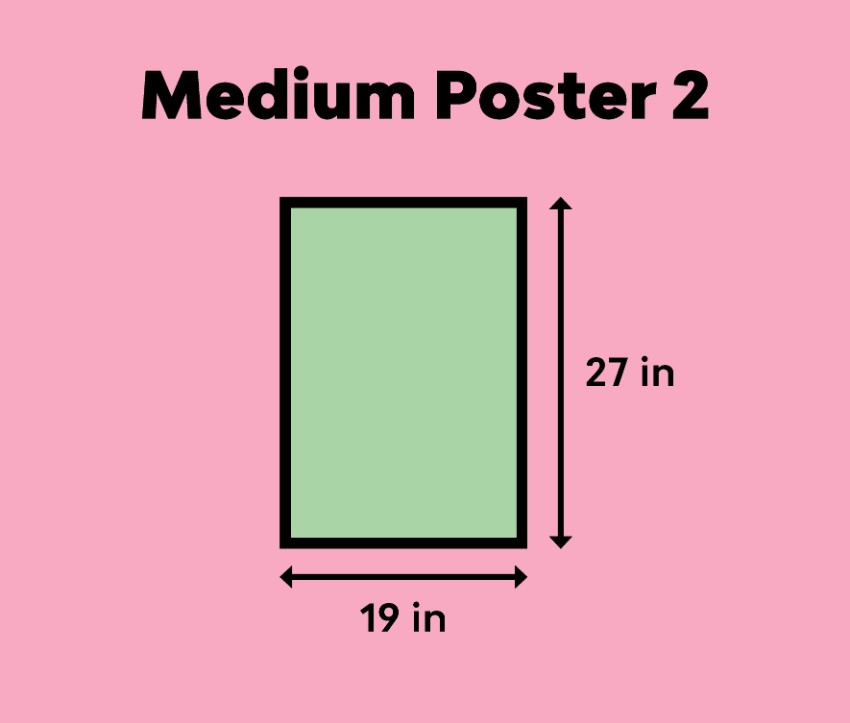
These two poster sizes, 18 by 24 inches (457 x 609.5 mm) and 19 by 27 inches (482.5 x 686 mm), are commonly used in colleges and schools and are the perfect size for showcasing charts or photographs. 

medium poster
medium poster

Large Posters

These large poster sizes, 24 by 36 inches (609.5 x 914.5 mm) and 27 by 39 inches (686 x 990.5 mm), are used for marketing and outdoor advertising. They are also commonly used at trade shows and exhibitions, and in retail as well. 

large poster
Large poster

One Sheet

This is traditionally the standard movie poster size in the US. It’s used to promote new film releases—you’ll see the one sheet size, 27 by 40 inches (686 x 1016 mm), at theaters and posted up in retail areas.

One sheet

International Sizes (ISO 216) for Flyers

These are the standard sizes for flyers used internationally (except Canada and the United States [see above], Mexico, Colombia, and the Dominican Republic).

DL 

DL stands for ‘dimension lengthwise’. This compact flyer size is one-third of a sheet of A4 (99 x 210 mm). The DL term can be confusing, as this means that the flyer is designed to fit inside a DL envelope (which is a bit larger, at 110 by 120 mm).  

This format is tall and slim, and it works well for pamphlets promoting a single offer. 

DL flyer

A5

Slightly wider than a DL size, at 148 by 210 mm, this petite size is also often used for pamphlets and cheap-to-print flyers.

A5 page size

A4

Moving up the A-format scale, A4 (210 by 297 mm) is the European sister of the Letter size in the US. This size can be folded in various ways, and it can also be printed from most home and office printers. 

A4 page size

International Sizes (ISO 216) for Posters

These are the standard sizes for posters used internationally.

A3

The sizes for posters move upwards through the A sizes. Because A3 (297 by 420 mm) can be printed from many home and office printers, you’ll see this size used for school, college, and community posters. 

A3 page size

A2

Twice the size of an A3 sheet at 420 by 594 mm, A2 is used for marketing purposes and to promote music events. 

A2 page size

A1

A large A-size at 594 by 841 mm, this can be used for a wide variety of purposes.

A1 page size

A0

A generous poster size at 841 by 1189 mm, again this is used widely for marketing and advertising purposes.

A0 page size

One Sheet

This standard US movie poster size, which measures up at 27 by 40 inches (686 x 1016 mm), is sometimes used to promote movies in some other countries, such as the UK and Australia.

one sheet

Conclusion

Choosing a suitable size for your flyer or poster doesn’t need to put your head in a spin. You’re sure to find a paper size to suit you from the options above. 

Now that you’ve discovered the right size for your flyer, it’s time to start designing!