When anyone suffers from gas and acidity the stomach feels full and bloated. We have exaggerated this feeling with the kind of food which usually causes the problem.
When anyone suffers from gas and acidity the stomach feels full and bloated. We have exaggerated this feeling with the kind of food which usually causes the problem.
KFC South Africa wanted to launch their most significant innovation in more than 50 years on our country – a new Hot and Crispy flavour that was their first alternative to their world-famous Original Recipe Chicken. The reactions people have to hot food – perspiration, tugging at collars and flushed faces – can easily be misconstrued as signs of guilt. So we created Detective Duma, a private eye hell-bent on figuring out where the heat was coming from. The ad follows his search for the truth, wherever it may lead him.
Countless are the conflicts that are generated day by day in Bogotá, both business and personal and coexistence, the latter being the most common and where more reports are generated in which people do not find how to resolve differences without having to go to a legal instance, for this, the Bogotá Chamber of Commerce and its Arbitration and Conciliation Center launched services for the resolution of coexistence conflicts, such as debts, separations, pet related issues, noisy neighbors, delinquent tenants, among others.
THE IDEA: Achieving that such a complex and stiff topic was seen and communicated in a different, simple and understandable way, was a great challenge but at the same time a great achievement. Under the concept: „Unleashing the knot that united them was never so easy”, we developed a campaign with a message and a disruptive graphic identity in the category. From illustrations made by hand and in a single stroke, we show how easy a conflict can originate but at the same time how simple it would be to solve it thanks to the Arbitration and Conciliation Center. The result is a campaign as simple as blunt.
KFC South Africa wanted to launch their most significant innovation in more than 50 years on our country – a new Hot and Crispy flavour that was their first alternative to their world-famous Original Recipe Chicken. The reactions people have to hot food – perspiration, tugging at collars and flushed faces – can easily be misconstrued as signs of guilt. So we created Detective Duma, a private eye hell-bent on figuring out where the heat was coming from. The ad follows his search for the truth, wherever it may lead him.
Countless are the conflicts that are generated day by day in Bogotá, both business and personal and coexistence, the latter being the most common and where more reports are generated in which people do not find how to resolve differences without having to go to a legal instance, for this, the Bogotá Chamber of Commerce and its Arbitration and Conciliation Center launched services for the resolution of coexistence conflicts, such as debts, separations, pet related issues, noisy neighbors, delinquent tenants, among others.
THE IDEA: Achieving that such a complex and stiff topic was seen and communicated in a different, simple and understandable way, was a great challenge but at the same time a great achievement. Under the concept: „Unleashing the knot that united them was never so easy”, we developed a campaign with a message and a disruptive graphic identity in the category. From illustrations made by hand and in a single stroke, we show how easy a conflict can originate but at the same time how simple it would be to solve it thanks to the Arbitration and Conciliation Center. The result is a campaign as simple as blunt.
Campaign created by DMC Propaganda for divulgation of SANASA sponsorship of Campinas Symphony Orchestra Background In 1919, Campinas Municipal Symphony Orchestra was the first institution of the gender to arise in a Brazilian city outside the state capital. Ninety years later, the Symphony Orchestra goes on being sponsored by Sanasa – Water and Sanitation Supply Society. Reasoning Just like people who have thirst for water, the society also has thirst for entertainment , for fun. That was how the slogan Sanasa & OSMC has sprung up. For those who have thirst for culture.Visually, music instruments and orchestral elements – like a baton – are made up of nothing but water.
Campaign created by DMC Propaganda for divulgation of SANASA sponsorship of Campinas Symphony Orchestra Background In 1919, Campinas Municipal Symphony Orchestra was the first institution of the gender to arise in a Brazilian city outside the state capital. Ninety years later, the Symphony Orchestra goes on being sponsored by Sanasa – Water and Sanitation Supply Society. Reasoning Just like people who have thirst for water, the society also has thirst for entertainment , for fun. That was how the slogan Sanasa & OSMC has sprung up. For those who have thirst for culture.Visually, music instruments and orchestral elements – like a baton – are made up of nothing but water.
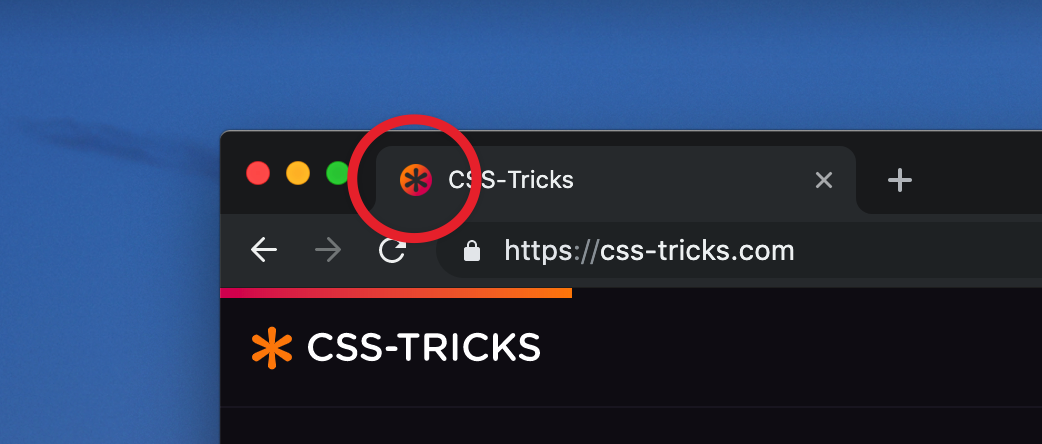
It’s the first thing your eyes look for when you’re switching tabs.
That’s one way of explaining what a favicon is. The tab area is a much more precious screen real-estate than what most assume. If done right, besides being a label with icon, it can be the perfect billboard to represent what’s in or what’s happening on a web page.
The CSS-Tricks Favicon
Favicons are actually at their most useful when you’re not active on a tab. Here’s an example:
Imagine you’re backing up photos from your recent summer vacation to a cloud service. While they are uploading, you’ve opened a new tab to gather details about the places you went on vacation to later annotate those photos. One thing led to the other, and now you’re watching Casey Neistat on the seventh tab. But you can’t continue your YouTube marathon without the anxious intervals of checking back on the cloud service page to see if the photos have been uploaded.
It’s this type of situation where we can get creative! What if we could dynamically change the pixels in that favicon and display the upload progress? That’s exactly what we’ll do in this article.
In supported browsers, we can display a loading/progress animation as a favicon with the help of JavaScript, HTML <canvas> and some centuries-old geometry.
Jumping straight in, we’ll start with the easiest part: adding the icon and canvas elements to the HTML.
In practical use, you would want to hide the <canvas> on the page, and one way of doing that is with the HTML hidden attribute.
<canvas hidden width=32 height=32></canvas>
I’m going to leave the <canvas> visible on the page for you to see both the favicon and canvas images animate together.
Both the favicon and the canvas are given a standard favicon size: 32 square pixels.
For demo purposes, in order to trigger the loading animation, I’m adding a button to the page which will start the animation when clicked. This also goes in the HTML:
<button>Load</button>
Now let’s set up the JavaScript. First, a check for canvas support:
onload = ()=> {
  canvas = document.querySelector('canvas'),
  context = canvas.getContext('2d');
  if (!!context) {
      /* if canvas is supported */
  }
};
Next, adding the button click event handler that will prompt the animation in the canvas.
button = document.querySelector('button');
button.addEventListener('click', function() {
    /* A variable to track the drawing intervals */
    n = 0,
    /* Interval speed for the animation */
    loadingInterval = setInterval(drawLoader, 60);
});
drawLoader will be the function doing the drawing at intervals of 60 milliseconds each, but before we code it, I want to define the style of the lines of the square to be drawn. Let’s do a gradient.
/* Style of the lines of the square that'll be drawn */
let gradient = context.createLinearGradient(0, 0, 32, 32);
gradient.addColorStop(0, '#c7f0fe');
gradient.addColorStop(1, '#56d3c9');
context.strokeStyle = gradient;
context.lineWidth = 8;
In drawLoader, we’ll draw the lines percent-wise: during the first 25 intervals, the top line will be incrementally drawn; in second quarter, the right line will be drawn; and so forth.
The animation effect is achieved by erasing the <canvas> in each interval before redrawing the line(s) from previous interval a little longer.
During each interval, once the drawing is done in the canvas, it’s quickly translated to a PNG image to be assigned as the favicon.
function drawLoader() {
  with(context) {
    clearRect(0, 0, 32, 32);
    beginPath();
    /* Up to 25% */
    if (n<=25){
      /*
        (0,0)-----(32,0)
      */
      // code to draw the top line, incrementally
    }
    /* Between 25 to 50 percent */
    else if(n>25 && n<=50){
      /*
        (0,0)-----(32,0)
                  |
                  |
                  (32,32)
      */
      // code to draw the top and right lines.
    }
    /* Between 50 to 75 percent */
    else if(n>50 && n<= 75){
      /*
        (0,0)-----(32,0)
                  |
                  |
        (0,32)----(32,32)
      */
      // code to draw the top, right and bottom lines.
    }
      /* Between 75 to 100 percent */
    else if(n>75 && n<=100){
      /*
        (0,0)-----(32,0)
            |      |
            |      |
        (0,32)----(32,32)
      */
      // code to draw all four lines of the square.
    }
    stroke();
  }
  // Convert the Canvas drawing to PNG and assign it to the favicon
  favicon.href = canvas.toDataURL('image/png');
  /* When finished drawing */
  if (n === 100) {
    clearInterval(loadingInterval);
    return;
  }
  // Increment the variable used to keep track of the drawing intervals
  n++;
}
Now to the math and the code for drawing the lines.
Here’s how we incrementally draw the top line at each interval during the first 25 intervals:
n = current interval,
x = x-coordinate of the line’s end point at a given interval.
(y-coordinate of the end point is 0 and start point of the line is 0,0)
At the completion of all 25 intervals, the value of x is 32 (the size of the favicon and canvas.)
So…
x/n = 32/25
x = (32/25) * n
The code to apply this math and draw the line is:
moveTo(0, 0); lineTo((32/25)*n, 0);
For the next 25 intervals (right line), we target the y coordinate similarly.
A lot of people out there tend to think that virtual reality is only for video games, films, and casino online America games. However, this is not true as recent developments show an increase in VR apps. In this article, we focus on a few of the best virtual reality apps for 2019.
Allumette This stop-motion VR film is truly breath-taking, telling the story of a young girl living in a cloud-borne village. In this app, you can decide to be the camera. That way, you get to explore the beautiful world, while ignoring the main storyline, if you wish. Allumette is not a game but rather a narrative. None of the characters in this narrative can speak well, although they can convey emotions and intent using noises.
This story has based a poem by Hans Christian Andersen and will transport you into a storybook world. The runtime’s actually quite long (20 minutes) as compared to other stories that last for less than 10 minutes. This app, which is between a video game and film narrative, will surely give you a divine experience.
Colosse This real-time visual reality story comes with top-notch sound design, as well as great animations. As you take a journey in this story, you get a natural pace as some audio and visual cues are the ones that will direct your gaze. Also, sitting objects will only be activated after you look at them. You also noticed that some of the events that happen will depend on the direction that you will be facing. Because of that, you’ll never get stuck looking for the next piece of the puzzle.
Google Earth VR We have always loved Google Earth and VR has made it super cool. You get to go around the world, enjoying the cool landscape. It’s also quite educational if you like geography. What we really love about Google Earth VR or online betting sites south africa is that you can quickly navigate the menu and visit some major landmarks such as the Golden Gate Bridge or the Sphinx.
If you have used Google Earth before, you probably already know what it’s about. The only huge difference now is that you can now zoom across fast distances within a matter of seconds and you also get to land on major structures all around the world.
Agregator najlepszych postów o designie, webdesignie, cssie i Internecie