Archiwum kategorii: Design

Why the Jaguar rebrand is a total disaster

Post pobrano z: Why the Jaguar rebrand is a total disaster

Copy nothing. #Jaguar pic.twitter.com/BfVhc3l09B

— Jaguar (@Jaguar) November 19, 2024

At this point, you must all have seen the Jaguar latest video, as it went viral on almost every social media platform. The car brand went for something totally different from their usual ads, as you can see in the embedded video above. If success is determined by the virality of a video, this was a huge success. If it’s defined by the positive/negative ratio of the reactions, it was a total failure.

Social media reactions to the Jaguar re-branding

The first to complain were the conservative accounts, who were shocked by the fabulous characters and colors of the video, putting all the blame on the LGBT community right away. On X, Jaguar’s post was met with a lot of irony, to which the community manager replied with tweets that seemed to be copy-pasted.

The second point that brought everybody’s attention, even beyond conservative, is the lack of car in the video. If you check the brand’s replies on social media, it was intentional and the video was more of a marketing stunt promising big changes.

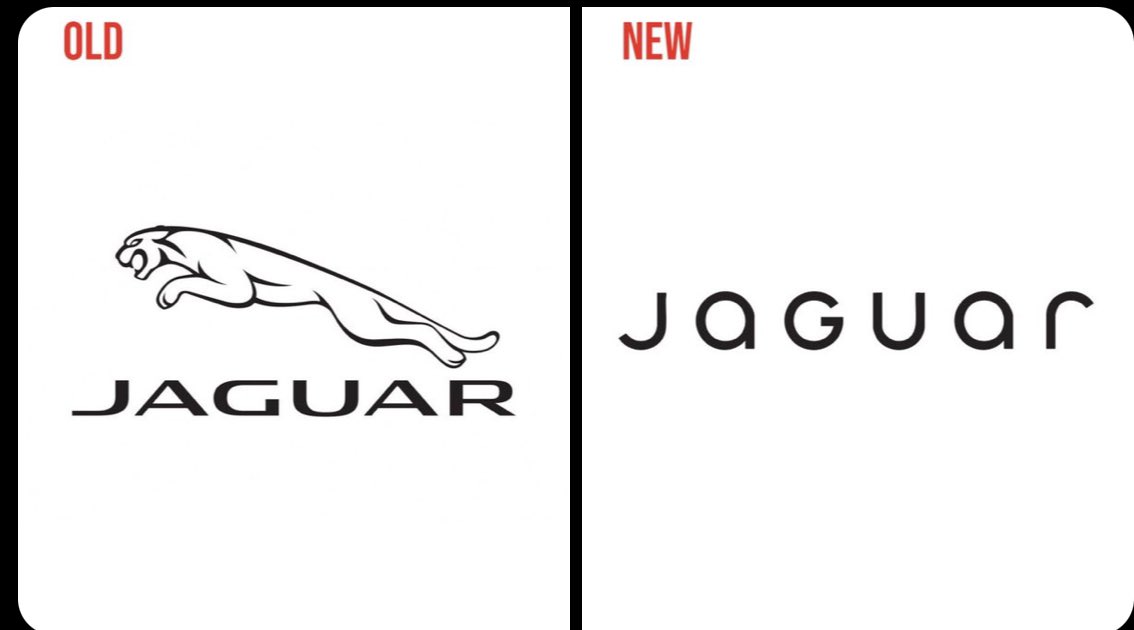
For graphic designers, although the video was the main center of attention, the logo redesign didn’t go unnoticed. Following a global trend, it takes a much more minimalist approach, going as far as removing the jaguar drawing. The typography is less “agressive”, with rounded lower-case letters and much bigger letter-spacing.

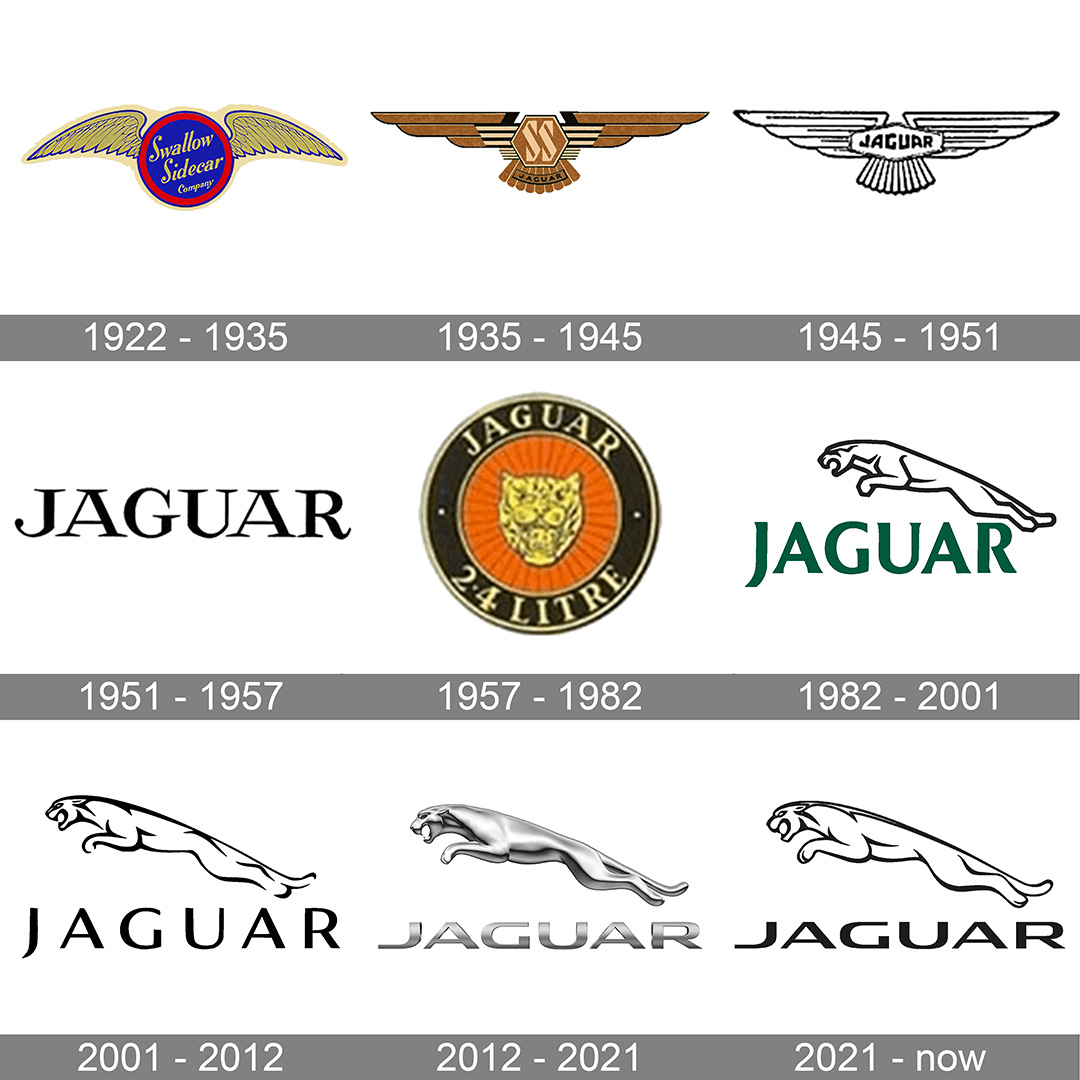
At first sight, removing the stylized jaguar drawing from the logo is surprising, but we could have only seen a part of it, as the drawing might be reserved for other uses. After all, the former logo was also occasionally used without the jaguar drawing in the past. On top of that, this isn’t the first time Jaguar underwent a radical redesign. In fact, it happened several times, as you can see it in the image below. As a sidenote, it’s worth taking a look at the 1935-1945 logo, which was surprising for a British brand considering the politics of the time.

So, what’s the problem with the new branding?

The first issue is that the re-design was totally off-brand. In itself, this is only a problem if the off-brand re-design is unpopular with its targetted audience. In this case, the usual target audience reacted very negatively.

The other major issue comes from the root causes of the re-branding. Although inclusivity is a noble cause, it should not take over the main product in the company’s ads. The radical change in style is also very politically connoted, which is always dangerous when doing business. In the video below, which dates from a few months ago, you can see Jaguar’s head of branding explaining his intentions.

A message from @jaguar’s Santino Pietrosanti, one of our #AttitudeAwards sponsors ❤️

“We are here to celebrate you, the ones who, despite everything, keep that vital flame alive.” pic.twitter.com/aDIJi6hYJf

— Attitude Magazine (@AttitudeMag) October 9, 2024

He clearly explains that a radical change is coming, but the change we have been seeing doesn’t have anything to do, but everything to do with the agenda of the head of branding. This type of behavior, not caring about customers, but caring about your own opinions only, reveals a level of narcissism that isn’t very good for the brand.

So, will there be a massive backlash about this ad? It seems so when seeing the first reactions, but we’ll see that in the longer term.

The post Why the Jaguar rebrand is a total disaster appeared first on Designer Daily: graphic and web design blog.

How to Select Promotional Items That Resonate with Your Audience

Post pobrano z: How to Select Promotional Items That Resonate with Your Audience

Promotional products are a powerful tool for enhancing brand recognition and building relationships with clients and prospects. However, the success of a promotional campaign largely depends on choosing promotional items for your audience that resonate with your target group. Whether it’s a branded pen, reusable tote bag, or a custom tech gadget, choosing promotional items that align with your audience’s preferences can make a lasting impact. When carefully selected, these items not only increase brand visibility but also strengthen customer loyalty over time.

1. Know Your Target Audience

Understanding your target audience is the first step to selecting promotional items that will resonate with them. Analyze demographic data like age, gender, occupation, and interests to gain insights into their preferences. For instance, tech-savvy customers might prefer gadgets like USB drives, while an environmentally conscious audience would appreciate eco-friendly products like reusable water bottles. By tailoring your promotional items to your audience’s specific needs and interests, you increase the likelihood of creating a positive and memorable experience.

2. Align the Product with Your Brand Message

The promotional items you choose should reflect your brand’s identity and core message. If your brand emphasizes innovation, selecting high-tech products like Bluetooth speakers or smart accessories can help reinforce this image. On the other hand, if your company values sustainability, opt for eco-friendly items such as recycled notebooks or bamboo utensils. Aligning your promotional products with your brand message not only enhances your brand’s image but also ensures that your audience associates the items with your company’s values and vision.

3. Focus on Practicality and Usability

Choosing practical and useful promotional items increases the chances that your audience will use them frequently, which in turn boosts brand visibility. Products like pens, notepads, and tote bags are popular because they serve a daily purpose. Consider the context in which the item will be used. For example, travel accessories like portable chargers or luggage tags can appeal to a frequently traveling audience. Practical items that fit seamlessly into your audience’s daily routine are more likely to be kept and appreciated.

4. Consider Trends and Seasonal Relevance

Keeping up with current trends and considering seasonal factors can help you choose promotional items that are timely and relevant. For example, the rising demand for sustainable products means that items like reusable bags or stainless steel straws may resonate well with an eco-conscious audience. Additionally, think about the season: sunglasses and sunscreen make great summer giveaways, while cozy beanies and insulated mugs are perfect for winter. Seasonal and trendy products show that your brand is in tune with your audience’s preferences and needs at specific times of the year.

5. Prioritize Quality Over Quantity

Investing in high-quality promotional items can have a lasting impact on how your brand is perceived. While it may be tempting to choose cheaper products to distribute widely, low-quality items may be discarded quickly and could reflect poorly on your brand. Instead, opt for fewer, high-quality items that recipients are more likely to keep and use. A durable, well-made product not only enhances the user experience but also signals that your company values quality, which can help build trust and credibility with your audience.

6. Choose Items That Encourage Brand Interaction

Interactive promotional items can create memorable experiences and engage your audience in a unique way. Products that require user engagement, like branded puzzles or tech gadgets, can increase the time spent with your brand. Items that offer customization options, such as choosing a preferred color or design, can also enhance the appeal by making the product feel more personal. When recipients interact with your promotional items, it reinforces your brand message and creates a stronger connection with your audience.

7. Set a Clear Budget and Evaluate ROI

Before selecting promotional products, it’s essential to set a clear budget that aligns with your marketing goals. Consider the potential return on investment (ROI) of each item, focusing on products that offer high visibility and usage. Items like tote bags and travel mugs, which are used frequently, can provide ongoing brand exposure and better ROI compared to novelty items that might be used once and forgotten. Maximizing your budget by choosing effective products will help ensure that your promotional campaign delivers strong results.

8. Test and Gather Feedback

Testing a small batch of promotional items before placing a large order can help you assess their quality and appeal. Gathering feedback from a sample of your target audience allows you to make adjustments and ensure the items are well-received. Pay attention to the feedback and look for patterns that indicate what your audience likes or dislikes about the products. This proactive approach helps you refine your selection process and increases the chances of success in your promotional campaigns by choosing items that truly resonate with your audience.

The post How to Select Promotional Items That Resonate with Your Audience appeared first on Designer Daily: graphic and web design blog.
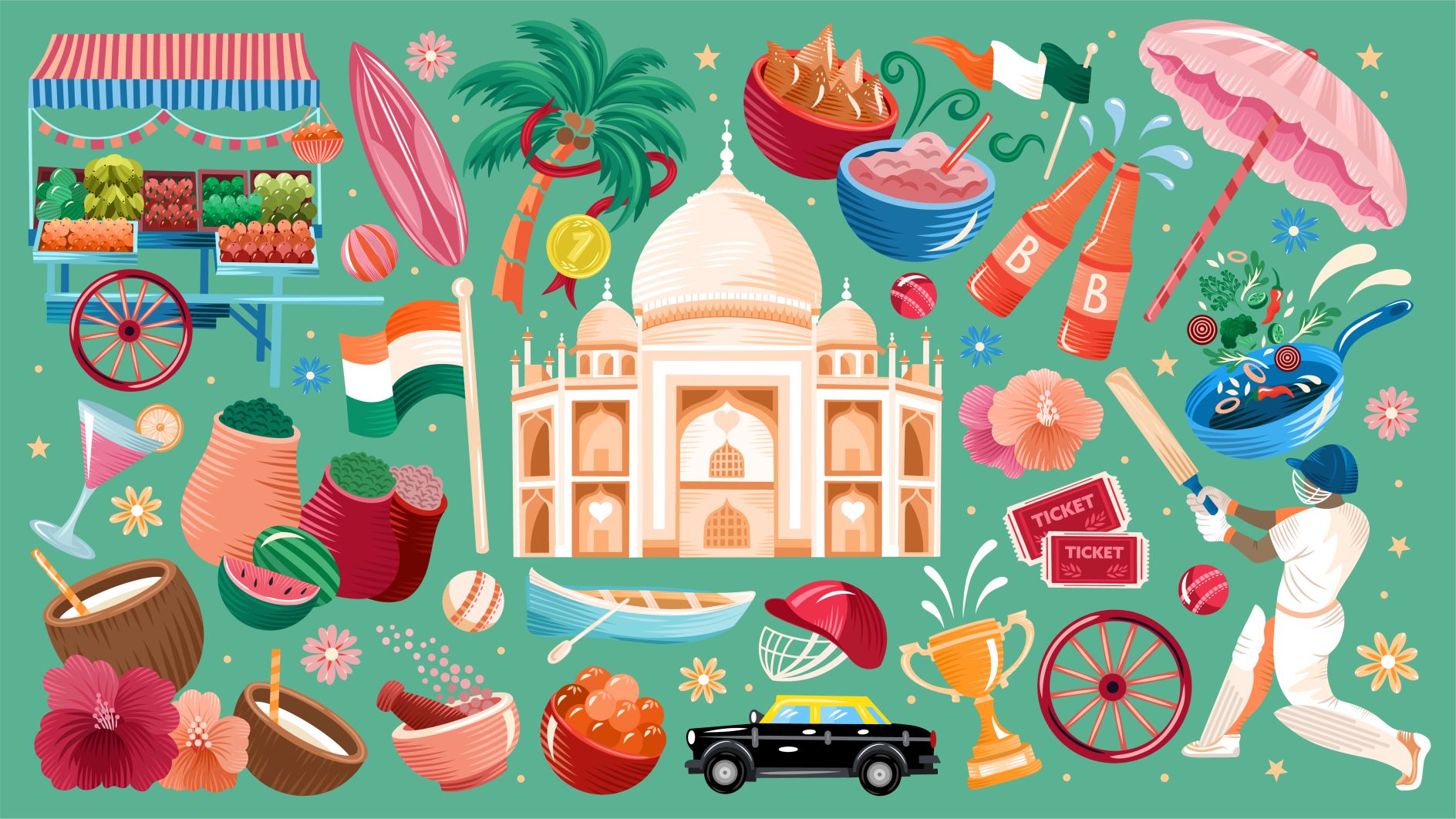
Martha Olivia’s Illustrations About India For Highlife Magazine

Post pobrano z: Martha Olivia’s Illustrations About India For Highlife Magazine

Martha Olivia is not just any illustrator; she’s a creative powerhouse known for her colorful, patterned artwork that brings places to life. When approached by British Airways to illustrate six key sights of India for their High Life magazine, she was thrilled. “British Airways is such an iconic name,” she said. “It’s inspiring to collaborate with a brand that connects people and destinations worldwide.”Her mission? To capture the essence of India’s diverse culture through her unique artistic lens while highlighting its rich food, architecture, nature, and bustling cities.

A Colorful Journey Through India

Olivia’s illustrations are a feast for the eyes! Each piece is infused with vibrant colors and intricate patterns that reflect India’s rich heritage. For this project, she selected six favorite sights from a list of 25 must-see attractions. Her illustrations are not just images; they are invitations to explore the heart and soul of India.Imagine wandering through the lively streets of Jaipur, where every corner bursts with color, or savoring the spices of a bustling market in Delhi—all beautifully depicted in Olivia’s work. She describes her style as one that often features “repeats, symmetry, or flowing designs,” which perfectly aligns with India’s stunning crafts and intricate patterns.

The Art of Research: A Dream Project

What makes this collaboration even more special is Olivia’s passion for travel. Although she had never visited India before taking on this project, she embraced the opportunity to dive deep into its culture during her research phase. “It wasn’t a challenge; it was an opportunity to discover great new places,” she explained.Her research allowed her to draw inspiration from various elements—food, markets, clothing, nature, and architecture—ensuring that her illustrations resonate with authenticity and vibrancy. Each illustration tells a story, inviting viewers to experience the sights and sounds of India.

A Palette Inspired by Tradition

When it comes to color, Olivia went all out! She started with the colors of the Indian flag—saffron, white, and green—and then expanded her palette to reflect the diversity and energy of India. “I wanted it to feel bright, colorful, and warm,” she said. This thoughtful approach ensures that each piece not only captures the visual beauty of India but also evokes its spirit.From the rich reds of traditional textiles to the lush greens of its landscapes, Olivia’s illustrations are a celebration of India’s vibrant culture. They serve as a reminder that art can transport us to different places and inspire wanderlust in our hearts.

The Future Looks Bright

As Olivia looks ahead, she dreams of continuing her journey through travel-related projects. “I’ve always loved traveling and capturing places through film photography,” she shares. Illustrating different towns and countries allows her to blend her passions for art and exploration into one delightful package.

Conclusion: An Invitation to Explore

Through Martha Olivia’s stunning illustrations for British Airways, we are invited on an enchanting journey through India—a land where every color tells a story and every pattern holds a memory. As travelers seek authentic experiences beyond traditional tourist traps, these vibrant artworks remind us that there’s always more to discover in this incredible country.So grab your passport and your camera! With Olivia’s illustrations as your guide, let your imagination take flight as you explore the wonders of India—where every corner is Instagram-worthy and every moment is filled with magic!

The post Martha Olivia’s Illustrations About India For Highlife Magazine appeared first on Designer Daily: graphic and web design blog.
11 Upcoming UX Design Trends

Post pobrano z: 11 Upcoming UX Design Trends

Analyzing UI and UX trends is essential to anticipate user needs and optimize the experience you offer. By adopting trendy features and designs, your business can improve its efficiency and offer innovative experiences.

1. Minimalism, still a big UI UX trend

In UX and UI, minimalism is a quality. On the one hand because it allows for faster page loading (and therefore more efficient for the user), on the other hand because it allows only the most important elements to be shown.

In design, this will involve white spaces, of course, but also a more than moderate use of notifications and pop-ups. You will also avoid an excess of innovative tools: a few will be welcome, but you will rely primarily on techniques already known (and validated) by Internet users.

2. Artificial intelligence to the rescue of UX

By simplifying the way we interact with digital systems, AI significantly improves the user experience. From intelligent voice assistants to chatbots, AI offers a more natural and intuitive interaction, reducing the need for a complex user interface.

In addition, machine learning, a subset of AI, allows for more adaptive and personalized design, by anticipating user needs based on their past behaviors. A good solution to save time for the many UX/UI designers.

Artificial intelligence can also open up new opportunities for sites, such as new interactions available thanks to AI, or making your site dynamic by reacting to the visitor’s actions.

3. Even more micro-interactions

Micro-interactions are today an effective way to captivate your audience, and remain one of the main trends in UX and UI design. You’ll see:

  • Tactile reviews in mobile apps.
  • Color changes according to the program states.
  • Visualization of page loading.
  • Animations during transitions.

These small details make navigation more pleasant and warmer, and prolong visitor engagement.

4. Less conventional navigation

Attracting the attention of users is a constant struggle for designers who must constantly renew themselves. A truly unique design allows you to stand out in the eyes of Internet users, who are accustomed to ever more technological prowess.

It’s up to you to bet on new arrangements to attract users:

  • Combined horizontal and vertical scrolling.
  • Exploration by sliding.

However, be sure to preserve intuitive navigation! User comfort must always be at the heart of your concerns.

5. Ever more personalization

Personalization is a key lever for engaging users, and has been for several years now. Use big data to offer tailored experiences in real time (according to time, location, etc.). You have to go beyond integrating first names or birthday wishes, your users are already used to all that.

Your web design then plays a role in personalization, and this can include:

  • Dynamic content.
  • Themes based on user preferences.
  • Personalized browsing experiences.

6. Abstract data visualization

Classic tables and lists are outdated, they tend to spoil the design of your home pages. Opt for a more creative visualization:

  • Reinforced visual communication.
  • Originality.
  • More attractive and functional user interfaces.
  • Reduction of the familiarization time between the user and the service or product.
  • Depth of the site.

7. Dare to use bold typography

Large fonts and strong contrasts dominate in 2025, bringing a modern and striking touch to designs.

Texts, important words and impactful numbers will be highlighted with contrasting colors to create a strong visual hierarchy and encourage Internet users to engage with the website. Also, consider revisiting serif typography for a timeless look.

8. Ethical design

In 2025, designers are, as they have been for several years now, called upon to adopt practices ethical, respecting a hierarchy of human needs:

  • Respect for human rights: Privacy, diversity, accessibility.
  • Effort: Reliability and performance.
  • Overall experience: Pleasure and added value.

Ethical design therefore aims to support all these layers simultaneously, and it is necessary to balance business objectives with human needs for a more respectful experience.

9. Interactive storytelling

Interactive storytelling has become an essential pillar for capturing users’ attention. By combining classic narration with interactive elements, it transforms a simple visit into a memorable experience.

  • Interactive stories: Use animations and scrolling effects to tell a story as the user explores the page. Brands like Apple and Nike use interactive storytelling to present products by telling their design story.
  • Personalized choices: Give the user the opportunity to influence the story
  • Immersive experiences: Integrate full-screen videos, sound effects and animations to completely immerse the user in a story.

By focusing on captivating storytelling, you can transform complex information into engaging content, improving user retention and loyalty.

10. Developing the voice user interface (VUI)

With the growing popularity of voice assistants like Siri, Alexa, and Google Assistant, the Voice User Interface (VUI) has become essential for smoother and more natural navigation.

Users expect to be able to interact with applications via voice commands, especially on mobile and on devices without a screen like smart speakers. By integrating voice UX, you can simplify access to information and services for a hands-free experience.

Also think about accessibility: voice interfaces are particularly useful for people with visual or motor disabilities. They offer them increased autonomy by facilitating interaction with technologies.

11. Inclusive and accessible design

Digital accessibility is no longer a simple addition, but a must. Inclusive design aims to create interfaces that adapt to all users, regardless of their abilities.

  • Text and contrast: Use easily readable fonts and ensure sufficient contrast between text and background. Increase the size of your fonts and line spacing. Use text effects (italics, bold, or underline) to highlight important information.
  • Universal navigation: Provide clear navigation. Optimize your site for keyboard commands for users who cannot use a mouse.
  • Accessible components: Make sure your buttons, forms, and other interactive elements are easily usable for people with motor limitations. For example, areas of

The post 11 Upcoming UX Design Trends appeared first on Designer Daily: graphic and web design blog.
Top 8 Must-Have Plugins to Supercharge Your Business Website

Post pobrano z: Top 8 Must-Have Plugins to Supercharge Your Business Website

So, you’ve got your business website up and running, but it feels like it’s missing a little something. Maybe the speed isn’t quite there, or you need more features to really enhance user experience. 

Sounds familiar? Don’t worry—plugins can help with that.

Plugins are like the extra tools you didn’t know you needed. They boost your site’s performance, security, and functionality without requiring you to dive into complicated coding. But with so many out there, which ones are worth your time?

Let’s take a look at the must-have plugins that can help you supercharge your business website.

1. SEO Plugin: Driving Organic Traffic to Your Website

If your website isn’t easily found in search engines, it’s like having a store in the middle of nowhere. That’s where an SEO plugin comes in handy. These tools help optimize your website for search engines, giving you the visibility you need.

An SEO plugin can assist with things like keyword placement, improving meta descriptions, and even checking the readability of your content. In short, it helps make your site more search engine-friendly, which means more organic traffic coming your way.

2. Security Plugin: Keeping Your Website Safe

Imagine leaving your business unlocked overnight—risky, right? The same principle applies to your website. You need a good security system in place to protect it from potential threats like hackers and malware.

A security plugin will help keep everything safe by offering features like firewalls, malware scanning, and login protection. It’s all about locking down your site and making sure only the right people have access.

3. Website Accessibility Plugin: Ensuring Inclusivity for All Users

It’s important to make sure your website is accessible to everyone, including those with disabilities. To ensure that your site can be easily navigated by users with different needs, you’ll need a website accessibility plugin

These plugins can make adjustments to things like font sizes and color contrast and even support screen readers for visually impaired users. Not only does this create a better experience for all visitors, but it also keeps you in line with legal accessibility standards.

4. Caching Plugin: Boosting Site Speed and Performance

No one likes a slow website. If your site takes too long to load, people will leave before they even get a chance to see what you have to offer. That’s why a caching plugin is essential.

Caching stores parts of your site so that they load faster for returning visitors. This improves both user experience and search engine rankings, making it a must-have for any business website looking to stay competitive.

5. Backup Plugin: Protecting Your Data

Losing your website’s data is the stuff of nightmares, but a backup plugin can save the day. Regular backups are crucial, whether you’re dealing with technical issues, hacking attempts, or just an accidental mistake.

A backup plugin ensures that your site’s content and data are safely stored. That way, if something goes wrong, you can quickly restore your website and get back to business.

6. Form Plugin: Capturing Leads and Feedback

Your website isn’t just about providing information—it’s also a key tool for gathering data from your visitors. Whether you’re looking to capture customer inquiries, feedback, or newsletter sign-ups, a form plugin will help you do just that.

Form plugins allow you to create customized forms for various purposes, ensuring you collect the right information from your audience. With easy-to-use drag-and-drop builders, you can create forms that fit your brand and your business needs perfectly.

7. E-commerce Plugin: Powering Online Sales

If your business involves selling products or services online, having an e-commerce plugin is a game changer. These plugins give your website all the features you need to run a successful online store.

From managing payments and inventory to displaying your products in a user-friendly way, an e-commerce plugin will help turn your website into a revenue-generating machine.

8. Social Media Plugin: Enhancing Engagement and Reach

Your website and social media should work hand in hand. A social media plugin makes it easier for your visitors to share your content, driving more traffic back to your site.

With a good plugin, you can add social sharing buttons, display your social media feeds, and even auto-publish your content to your social profiles. It’s a simple way to boost your online presence and keep your audience engaged.

Selecting the Right Plugins for Your Business Website

Your business website is one of the most important tools you have, so it’s essential to make the most of it. Plugins are the secret to taking your site from “just okay” to truly exceptional. They can improve your SEO, speed, security, accessibility, and so much more.

Take a moment to think about what areas of your website could use a boost, then start integrating these must-have plugins. With the right tools, you’ll have a website that not only looks great but also performs at its best.

Happy plugin hunting!

The post Top 8 Must-Have Plugins to Supercharge Your Business Website appeared first on Designer Daily: graphic and web design blog.
Useful Tips to Help You Optimize Your Search Engine Performance Effortlessly

Post pobrano z: Useful Tips to Help You Optimize Your Search Engine Performance Effortlessly

Search engine optimization (SEO) has become a critical factor in driving traffic, enhancing visibility, and improving website performance. Whether you’re a seasoned marketer or a business owner, refining your SEO strategies is a necessity to stay ahead of competitors. When you focus on key aspects like keyword research, content creation, and technical SEO, you can optimize your search engine performance effortlessly and achieve better results. Below are some practical tips to help guide you in the process.

Understand the Importance of Accurate Keyword Research

Keywords are the foundation of any effective SEO strategy. Aside from other techniques to improve website ranking, online resources like Serpple can offer insights into keyword performance so you can pinpoint the terms most relevant to your niche. Once you understand keyword difficulty, search volume, and competition, you can strategically integrate these keywords into your content.

When conducting keyword research, remember to focus on long-tail keywords. These phrases, typically three or more words long, tend to have lower competition and a higher intent, meaning they can drive more targeted traffic to your website. Instead of optimizing for “SEO tips,” consider something more specific like “local SEO tips for small businesses.”

Focus on High-Quality Content

Content continues to be king in the world of SEO. Crafting high-quality, informative, and engaging content is key to ranking well on search engines. Google’s algorithms prioritize websites that offer value to readers, so your content needs to be relevant, original, and comprehensive.

Creating long-form content, such as blog posts over 1,000 words, has been shown to rank better on search engines. Longer articles allow for in-depth exploration of topics, and they provide more opportunities for keyword placement. The length is not enough on its own: the content must remain focused and informative, avoiding filler and irrelevant information. Include actionable insights that readers can implement, as this will not only improve your SEO but also boost user engagement.

Optimize On-Page SEO Elements

On-page SEO refers to the elements within your website that you can directly control, such as title tags, meta descriptions, and headers. Each of these elements plays a crucial role in how search engines index and rank your pages. Your title tag should include your primary keyword and be no longer than 60 characters to ensure it displays correctly on search results pages.

Meta descriptions, while not a direct ranking factor, improve click-through rates. These short summaries should be engaging and contain relevant keywords to entice users to click on your link. Header tags (H1, H2, etc.) also help search engines understand the structure of your content. Using keywords naturally in your headers improves readability for both users and search engines, enhancing your chances of ranking higher.

Your URLs should be clean and descriptive. Avoid long strings of numbers or unnecessary characters, and aim for a structure that clearly indicates the content of the page: “www.example.com/seo-tips” is far more effective than “www.example.com/123456.”

Prioritize Mobile Optimization

With more than half of global web traffic coming from mobile devices, you want to optimize your website for mobile users. Google now uses mobile-first indexing, meaning it primarily ranks sites based on their mobile versions rather than desktop ones. If your site is not mobile-friendly, you risk losing valuable traffic and rankings.

A responsive design is the best way to ensure your site works seamlessly on both desktop and mobile devices. This design approach automatically adjusts your site’s layout based on the user’s screen size, offering a better user experience across all devices. Mobile-friendly sites also tend to have faster loading times, which is another factor Google uses to rank pages.

Improve Site Speed for Better Rankings

Page speed is among the most critical ranking factors for search engines and an essential component of user experience. Visitors are likely to leave a site if it takes too long to load, which can increase your bounce rate and hurt your SEO performance. Google has confirmed that slower sites are penalized in search rankings, so ensuring your site loads quickly is a key part of optimization.

You can improve site speed by minimizing the use of large images, leveraging browser caching, and reducing the number of redirects on your site. Easy-to-use tools like Google PageSpeed Insights can help identify areas for improvement. Don’t forget to choose a reliable hosting provider and compressing files can further enhance loading times, giving your website a competitive edge in search engine rankings.

Focus on Building Quality Backlinks

Backlinks, or links from other websites to yours, signal to search engines that your site is trustworthy and authoritative. The more high-quality backlinks you have, the higher your chances of ranking well on search engine results pages. However, it’s not just about quantity. Links from reputable, relevant sites hold far more weight than links from low-quality or irrelevant sources.

To build quality backlinks, consider engaging in guest blogging, reaching out to industry influencers, or creating shareable content like infographics. High-quality content will be referenced by others, naturally attracting backlinks over time. Avoid black hat SEO techniques such as buying backlinks, as these practices can result in penalties from search engines.

Leverage Social Media for SEO Benefits

Although social media signals are not a direct ranking factor for search engines, an active social media presence can still contribute to better SEO performance. Sharing your content across social media platforms like Facebook, Twitter, and LinkedIn can increase its visibility and drive more traffic to your site. Social media profiles often appear in search results, meaning a strong presence on these platforms can improve your overall online visibility.

Social media also facilitates engagement, building trust and authority in your industry. When your content is shared and discussed, it creates opportunities for natural backlinks and can indirectly enhance your SEO. Make sure your posts include relevant keywords and engage with your audience by responding to comments and sharing insights.

Improving your website’s search engine performance doesn’t have to be complicated. By focusing on these key areas—keyword research, content creation, on-page SEO, mobile optimization, site speed, backlinks, and social media—you can boost your rankings effortlessly. Optimizing each of these elements will help ensure your site is both user-friendly and search engine-friendly, increasing visibility and driving long-term success.

The post Useful Tips to Help You Optimize Your Search Engine Performance Effortlessly appeared first on Designer Daily: graphic and web design blog.
5 Ways to Make More Money with Your Design Skills

Post pobrano z: 5 Ways to Make More Money with Your Design Skills

Photo by UX Store on Unsplash 

As a designer, there are endless opportunities between your creation potential and your usual clients. With the growing demand for visual expertise, the possibility of earning more and increasing income is growing. By specializing in graphic design, web development, or UX/UI, you open doors to new ways of developing your revenues. Selling design templates, coaching, or affiliate marketing is among the many ways to increase revenues from your potential. Here are five effective ways to convert your design skills into various income streams.

1. Freelance on Multiple Platforms

Freelancing opens flexible ways of earning for the designer, and you are free to connect with numerous clients. To maximize your earnings, you should sign up on several freelance platforms: Upwork, Fiverr, and Freelancer. This will increase your chances of securing gigs that are paying well and suit your expertise. 

With a good portfolio and strategic pricing, you will manage to stand out. Package your services for returning clients to yield a consistent revenue stream, leveraging competitive services. Network within the platform communities for reviews that improve your visibility to prospective clients and referrals.

2. Create and Sell Design Templates

With platforms such as Creative Market, Etsy, and Envato, designers make templates they sell for websites, presentations, and social media. The beauty of this approach is that you can create once and sell multiple times, providing an ongoing income stream. 

Keep an eye on trends your target audience desires, like minimalistic website themes or bold Instagram post templates. Constantly adding new products to the shop will also mean your portfolio is fresh and relevant, and more buyers will come to take a look at what you have available.

3. Affiliate Marketing

You can also affiliate with design software, tools, or educational programs offering affiliate deals. By joining a web design referral program, you may get a commission for each client or friend you refer. After selecting the best platform, understand how it works and keep polishing your skills to offer the best assistance. 

You must gain the trust of your audience if you want to make affiliate marketing work. This can be done by providing honest reviews and tutorials on your blog or YouTube channel. Once your audience trusts what you say, they will likely follow your suggestions and eventually make purchases through your affiliate link.

4. Offer Design Coaching or Courses

If you have rich experience and good expertise in design, then it’s worth considering coaching services or even an online course on your subject. Many designers, especially beginners, are okay with paying for step-by-step instruction from a real expert. 

You could offer one-on-one coaching or structured learning cases on Skillshare, Udemy, or Teachable. When pricing your coaching or courses, remember the value that you’re providing. Exclusive, high-quality sessions can be priced higher while having a bigger audience at a lower rate attending group courses.

5. Licensing Your Work

Licensing enables others to work with and use your artwork, illustrations, or design patterns without owning them. With websites like Redbubble or Society6, you can upload your work and sell it as licensed products. This way, you can make new designs while receiving royalties from work you have previously designed. Ensure you understand each licensing agreement’s terms and how much control you maintain over your work.

Endnote

Design skills are at the core of the world’s digitization, impacting various sectors, from web design to application development. If this is the area of your expertise, it is easy for you to add more cash to your wallet. You need to make a correct choice of the area in which you should venture, from affiliate marketing to online coaching.

The post 5 Ways to Make More Money with Your Design Skills appeared first on Designer Daily: graphic and web design blog.
The McDonalds Redesign That Could Have Been

Post pobrano z: The McDonalds Redesign That Could Have Been

In the 1970s, McDonald’s was at a pivotal point in its growth, and the fast-food giant sought to enhance its brand identity. To achieve this, McDonald’s engaged Unimark International, a prominent design firm, to explore a comprehensive redesign of its packaging and signage. This collaboration aimed to create a more cohesive and appealing visual identity for the restaurant chain.

Unimark’s Approach

In 1973, Unimark conducted extensive studies of McDonald’s operations. They analyzed various aspects of the restaurants, interviewing employees, managers, and customers to gather insights into the brand’s strengths and weaknesses. One of their primary focuses was on improving packaging and ensuring that signage across all locations maintained a consistent look and feel.

Key Findings

  1. Packaging Love: Unimark discovered that the apple pie packaging was particularly well-received by customers. This insight highlighted the potential for creating packaging that resonated with consumers while also enhancing the overall dining experience.
  2. Signage Consistency: The firm emphasized the need for uniformity in signage throughout McDonald’s locations. They believed that a consistent visual language would strengthen brand recognition and improve customer navigation within stores.
  3. Brand Symbol Usage: A notable recommendation from Unimark was to reconsider the placement of the iconic McDonald’s symbol on trash cans. The design team questioned whether it was appropriate for such a prominent brand element to be associated with waste disposal, suggesting that it could dilute the brand’s image.
  4. Uniform Design: Unimark also critiqued McDonald’s employee uniforms, stating they were “not exciting enough.” The firm proposed redesigning uniforms to reflect a more vibrant and engaging aesthetic that would align with the energetic atmosphere of McDonald’s restaurants.

The Refusal of Unimark’s Redesign

Despite the thorough research and innovative proposals presented by Unimark, McDonald’s ultimately decided against implementing their redesign suggestions. The refusal was likely influenced by several factors:

  • Brand Identity: At that time, McDonald’s had already established a strong brand identity that resonated with its customer base. Any significant changes could risk alienating loyal customers who were accustomed to the existing look and feel.
  • Operational Considerations: Implementing widespread changes across thousands of locations would require substantial investment in new materials, training for staff regarding new uniforms, and adjustments to existing signage.
  • Corporate Culture: McDonald’s corporate culture may have favored maintaining control over its branding decisions rather than outsourcing them to an external agency like Unimark.

Legacy of Unimark’s Vision

While Unimark’s redesign proposals were ultimately shelved, their insights into customer preferences and branding strategies have had lasting implications for how fast-food chains approach design today. The emphasis on cohesive branding, customer experience, and thoughtful packaging continues to influence modern marketing strategies across various industries.In retrospect, one can only wonder how different McDonald’s might have looked had they embraced Unimark’s vision in the 1970s. The potential for a more unified brand experience could have set new standards in fast-food branding—one that might still resonate today.

The post The McDonalds Redesign That Could Have Been appeared first on Designer Daily: graphic and web design blog.

Generating Images with Clear Text Using FLUX.1

Post pobrano z: Generating Images with Clear Text Using FLUX.1

The challenge of generating images with legible text has long plagued AI image generators. However, the introduction of the FLUX.1 model by Black Forest Labs marks a significant advancement in this area. FLUX.1 not only excels in rendering text but does so with a clarity and beauty that sets it apart from other models. This article explores how to effectively generate images with clear text using the Flux AI image generator available at getimg.ai.

Why FLUX.1 Stands Out

FLUX.1 is a game-changer in the realm of text-to-image generation. Unlike many existing models that produce jumbled or unreadable text, FLUX.1 delivers crisp and clear typography that resembles professional graphic design work. The model understands crucial design elements such as kerning, spacing, and font styles, resulting in text that is not just readable but visually appealing

This capability positions FLUX.1 as a superior choice compared to other leading models like Stable Diffusion 3 and DALL-E 3.

Tips for Crafting Effective Prompts

To harness the full potential of FLUX.1, crafting precise prompts is essential. Here are some strategies:

Be Specific

Instead of vague descriptions, provide detailed instructions about your desired output. For example, rather than saying “retro postcard,” specify “retro vacation postcard with ‘Summer Vibes’ in bold, sans-serif yellow font at the center.” This level of detail helps FLUX.1 understand exactly what you envision

Experiment with Styles

Utilize descriptive terms to convey the style of text you want. Words like “vintage,” “modern,” or “art deco” can guide the AI in selecting appropriate typefaces that match your desired aesthetic

Refine Text Placement

After generating an image, assess whether the text integrates well with the overall composition. If necessary, adjust the placement or size of the text for better visibility and impact

Consider contrast between text and background to ensure legibility.

Best Practices for Different Text Styles

FLUX.1 can accommodate a variety of text styles, making it versatile for different applications:

  • Bold Headlines: Use phrases like “bold, impact-style font” for attention-grabbing titles.
  • Intricate Typography: Request “ornate Victorian-era lettering” for a sophisticated look.
  • Handwritten Notes: Specify “casual handwritten text” for a personal touch.
  • Minimalist Text: Opt for “sleek, minimalist sans-serif typography” for clean designs1.

By being specific about your desired style, you can significantly enhance the quality of the generated images.

Generating Images on getimg.ai

Accessing FLUX.1 is straightforward through getimg.ai:

  1. Sign Up or Log In: Create an account or log into your existing one.
  2. Select the AI Generator: Navigate to the AI Generator section and ensure you are using either the FLUX.1 [schnell] or [dev] model.
  3. Craft Your Prompt: Utilize the tips mentioned earlier to create a detailed prompt.
  4. Create Images: Click on “Create images” and watch as FLUX.1 generates your desired output within seconds1.

You can also refine your prompts as needed and generate up to ten images simultaneously for more options.

Real-World Applications of FLUX.1

The ability to generate images with clear text opens up numerous practical applications across various fields:

  • Posters: Create concert or movie posters with easily readable titles.
  • Logos: Design unique brand logos that feature clear and stylish typography.
  • Album Covers: Generate album art where band names and titles are prominent.
  • Advertisements: Produce product ads with crisp brand names and slogans.
  • Book Mockups: Craft enticing book covers that attract readers’ attention.
  • Social Media Graphics: Create quote images or promotional posts with sharp text1.

These applications demonstrate how FLUX.1 can benefit professionals in design, marketing, and business.

Conclusion

The FLUX.1 AI model represents a significant leap forward in generating images with legible text, making it an invaluable tool for designers and marketers alike. By utilizing effective prompting strategies on getimg.ai, users can create stunning visuals that incorporate clear typography seamlessly into their designs. Whether you’re crafting posters, logos, or social media graphics, FLUX.1 offers endless possibilities for creative expression while ensuring that your text remains readable and aesthetically pleasing

The post Generating Images with Clear Text Using FLUX.1 appeared first on Designer Daily: graphic and web design blog.

How Small Online Businesses in Canada Can Use Government Programs and Funding Opportunities to Fuel Growth

Post pobrano z: How Small Online Businesses in Canada Can Use Government Programs and Funding Opportunities to Fuel Growth

Table of contents

  • Canadian businesses are avoiding debt financing 
  • They are largely unaware government funding is available   
  • PME MTL – Social Initiatives
  • The ESSOR Program – Component 1B 
  • Grow Your Business Online 

The role of small businesses in employing Canadians and contributing to the economy is nothing less than pivotal. 86.7% of all employer businesses in the country had between one and 19 employees in 2023, according to a survey. They had 5.2 million employees, accounting for just under 30% of the total. Businesses with 20 to 99 staff members made of 11.2% of all employer businesses. Their staff comprised 32.5% of the total employed population or 5.7 million individuals.  

Canadian businesses are avoiding debt financing 

The same survey found that 72.9% of businesses with up to 19 employees did not intend to take out a conventional loan in the next three months. The number was slightly lower (66.5%) for businesses with 20 to 99 employees and 64% for those with at least 100. 

23.2% of the businesses with the fewest employees and 13.2% of those with 20-99 said they didn’t plan on applying for a loan from a traditional lender because they were unable to take on more debt. Less than 8% of companies with 100 or more employees were in this situation. These trends have persisted throughout 2024. 

They are largely unaware of the government funding available   

The Canadian government has subsidies for small businesses, like providers of web hosting in Canada, to foster economic growth and innovation. These subsidies and grants fund activities like staff training, research and development, expansion, etc.

At the same time, just 42% of small and medium-sized business owners are aware of the government programs and funding opportunities available to them. However, they don’t know how to apply. Almost a third (32%) are not aware of government grants and subsidies. 

PME MTL – Social Initiatives

This program offers up to $50,000 in resources and grants to support projects aimed at developing new expertise or exploring innovations and new sectors. FDÉS (Fonds de développement de l’économie sociale) supports projects in the area of social economy that have a formal entrepreneurial approach and explore new sectors. Small businesses are eligible if they are involved in technological acquisition, capital expenses, and professional fees.

The ESSOR Program – Component 1B 

Component 1B of ESSOR provides grants for digital plans and diagnostics and implementation plans. It’s only available to businesses in Quebec. The project has to start within three months of approval and include selecting tech solutions and similar activities. Funding is capped at $20,000 per application and covers up to 50% of eligible expenses.

Grow Your Business Online grant

This grant, provided by the Canada Digital Adoption Program or CDAP, helps small and medium-sized businesses get online, adopt security software, increase sales, connect with customers, and improve online user experience and social media marketing. 

For-profit businesses that are registered or incorporated are eligible, including cooperatives and for-profit social enterprises. In addition, the business must have at least one employee, sell directly to consumers, and maintain a digital adoption strategy for half a year. Brokerage firms, dropshipping businesses, and online resellers are not eligible. 

As the CDAP ends on March 31 next year, businesses can only apply for the online grant until September 30, 2024. 

FAQ

What criteria must small businesses meet to be eligible for Canadian government funding? 

Most Canadian government funding programs require applicants to have been incorporated for two or more years and have at least four payroll employees. The programs for unincorporated small businesses entail limited funding. Applicants usually need to submit a current income statement and balance sheet. 

What are the most successful online businesses in Canada?

According to the most recent data, businesses such as e-commerce, blogging, affiliate marketing, and YouTube channels are highly lucrative in Canada. 

What is the best online business to start in Canada?

  • A clothing line
  • A dropshipping business
  • Selling art online
  • Becoming a freelance developer or designer
  • Teaching an online course
  • Starting a newsletter or a blog.

The post How Small Online Businesses in Canada Can Use Government Programs and Funding Opportunities to Fuel Growth appeared first on Designer Daily: graphic and web design blog.