Post pobrano z: Sam Arnold “Allumette” [NSFW]

Post pobrano z: Sam Arnold “Allumette” [NSFW]
Post pobrano z: Planet ID

Post pobrano z: SPECTRUM: Eliza Jappinen

Entrepreneur, animator, musician. Eliza Jappinen does it all with inspiring ferocity. In this issue of Spectrum, we learn how the Helsinki-based artist forged her own path and what it’s like being a mommy with blue hair.
Post pobrano z: How to Make Sure Your Site is Up-to-Date: The 10 Most Important Factors
Creating and launching a website is a great deal. However, if you think that once you launch a website, you’re done, you’re likely to miss quite a lot. A website requires constant care and regular updates. Why is updating a website important? There are several quite important factors why you should consider regular investments to […]
The post How to Make Sure Your Site is Up-to-Date: The 10 Most Important Factors appeared first on Web Resources Depot.
Post pobrano z: There is a link between the two / Un lien évident de parenté
 |
 |
| THE ORIGINAL? Doritos (Crash the Superbowl Contest) – 2014 Watch The Video Source : YouTube Author : Romain Pergeaux (France) |
LESS ORIGINAL Skittles “Mother’s Day” – 2017 Watch The Video Source : Creativity Online, AdForum Agency : DDB Chicago (USA) |
Post pobrano z: ClayXYZ: a desktop 3D printer for ceramics
Until now, I refrained from purchasing a 3D printer primarily for one reason: all you could print was plastic. Of course, I’m talking about consumer 3D printers, it’s been possible to print on metal or ceramics for a while already, but purchasing one of these printers was out of budget.
ClayXYZ is the first 3D printer for clay and ceramics that you can purchase at an affordable price. There is still a Kickstarter campaign running for it, but it has been largely financed already.

The device is as simple as any printer should be. Get your 3D model ready, load some clay, and print. It’s natural material, so you can add some extra finishes and touch it up by hand, but that’s not mandatory. For designers, this is a whole new field that opens up, and no need to use ugly plastic for 3D printers anymore.


Post pobrano z: 10 gorgeous UI kits for designers and developpers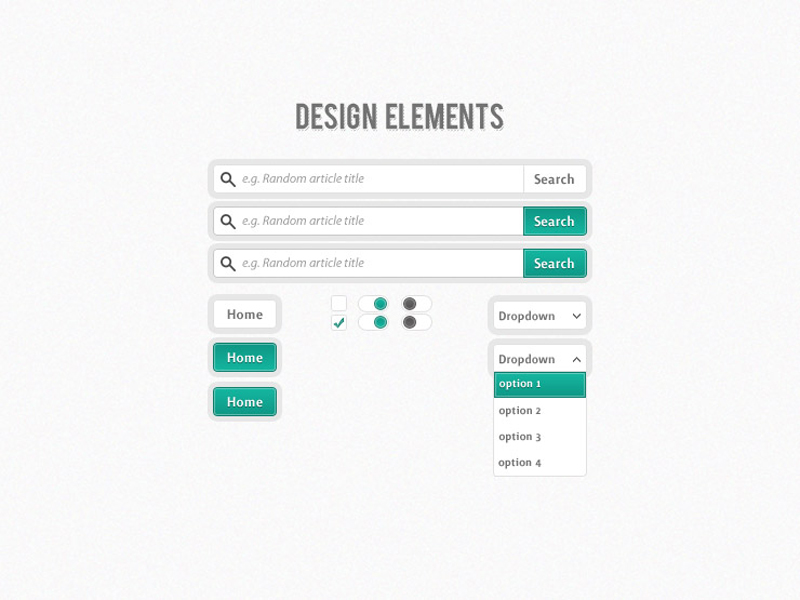
Working on website or apps interfaces? Check out these free UI kits, they will make you more productive and save you tons of time.
Clean and simple, a standard kit that will always prove useful. Download here.
Icons, bars, buttons,… tons on design elements. Download here.
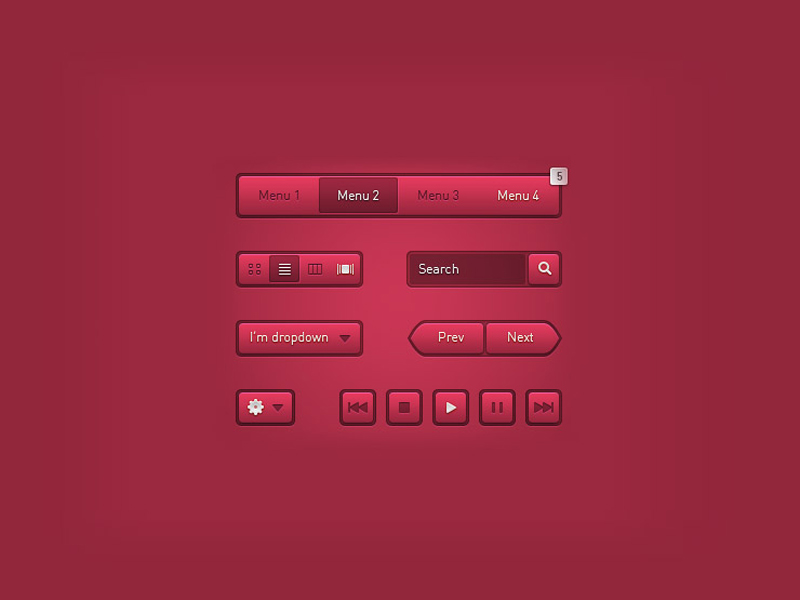
A PSD kit filled with great UI elements. Download here.
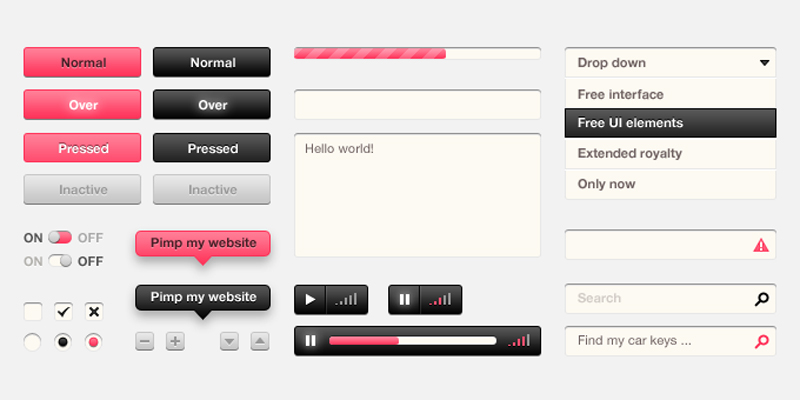
Designed to help you create a great mobile app UI interface with common smartphone and tablet UI elements. Download here.

A UI kit filled with all the elements to create your own media player. Download here.
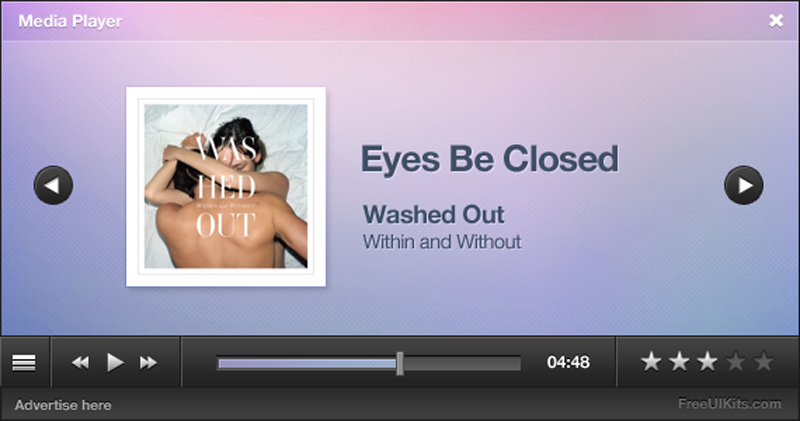
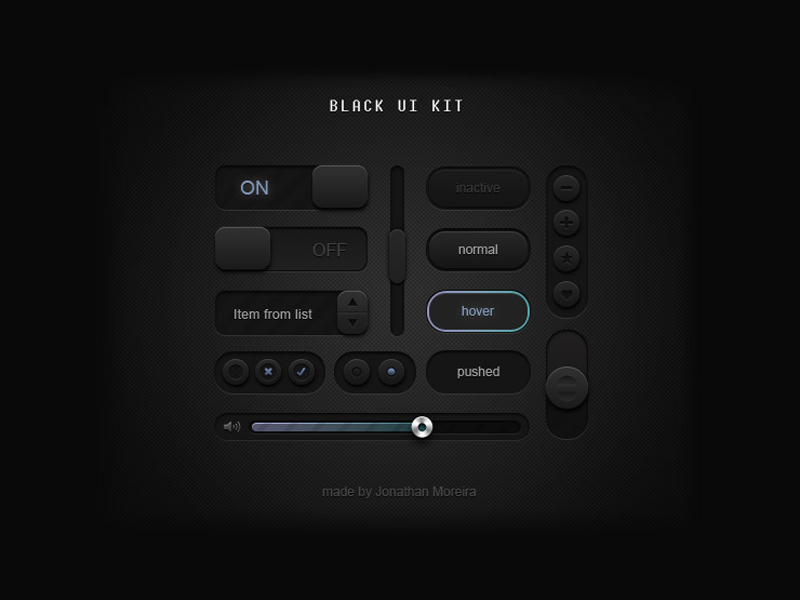
A dark-themed set of GUI elements. Download here.
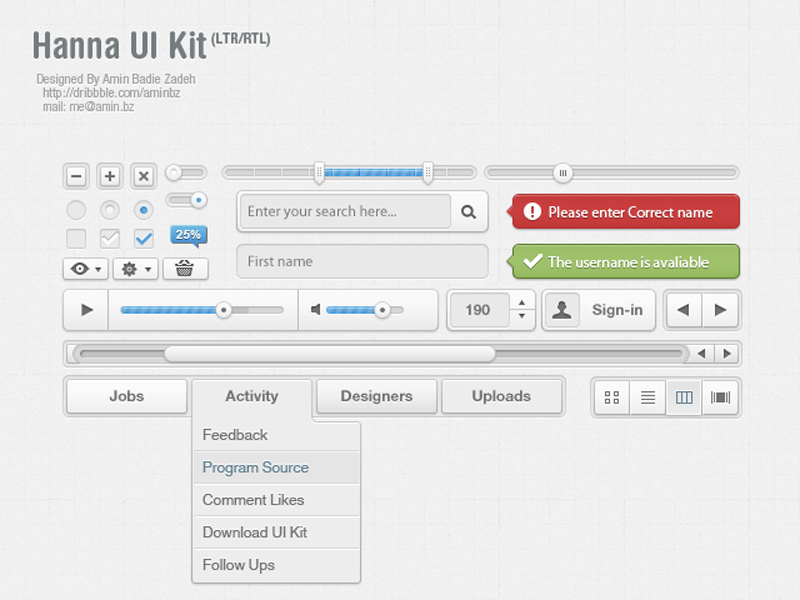
A complete UI kit with many useful elements. Download here.
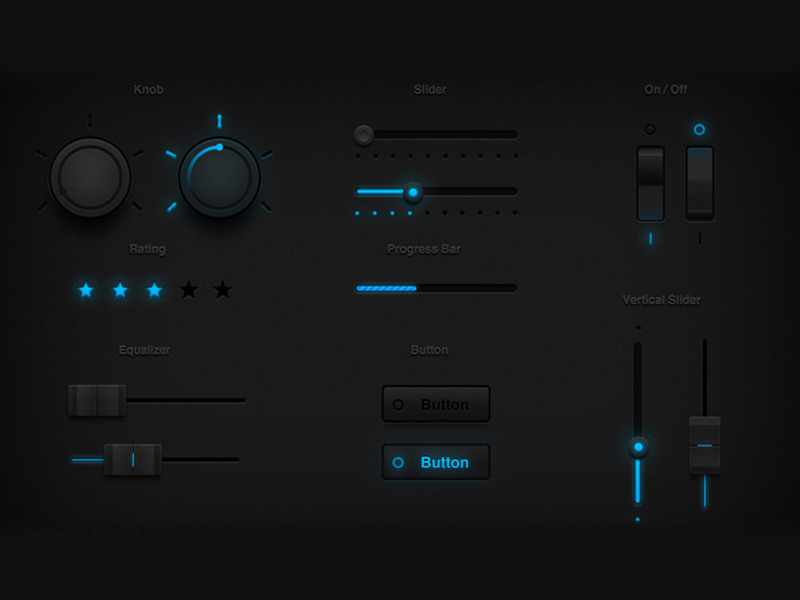
A dark UI theme with cool glowing effects. Download here.
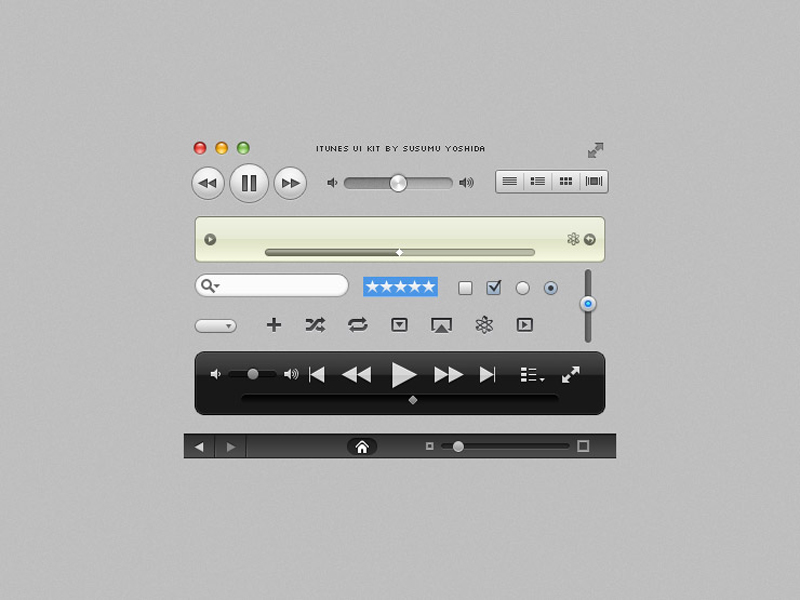
All the UI elements you’ll need to emulate the iTunes interface. Download here.
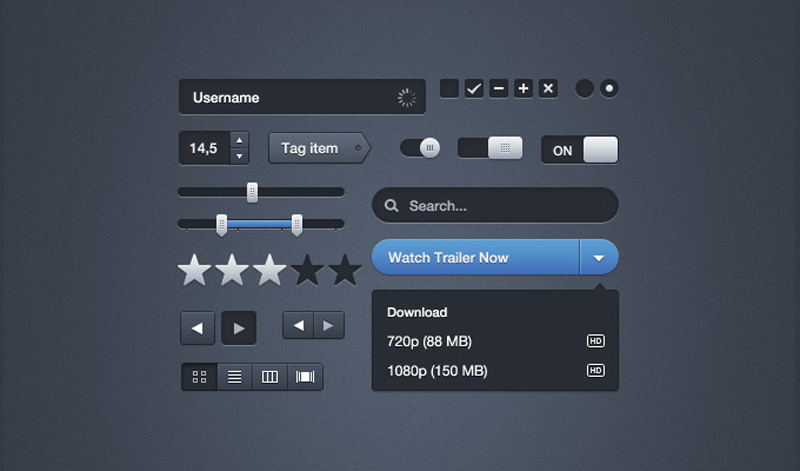
A black UI set with bold elements for gorgeous designs. Download here.
Post pobrano z: 8 design freebies you should download right now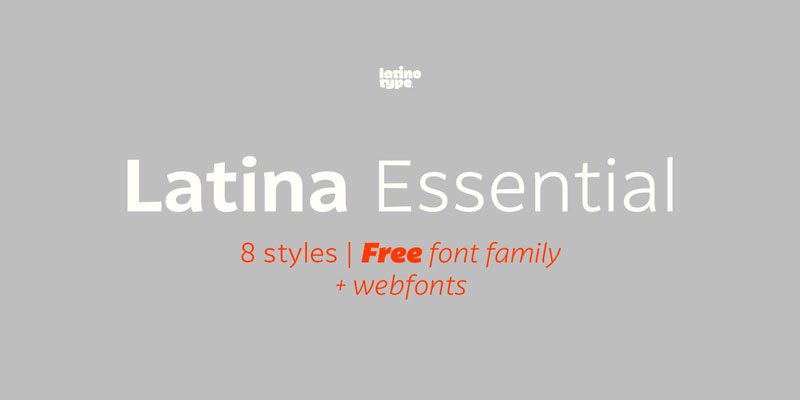
A round-up of recent useful freebies for graphic and web designers.
This font is based on calligraphy, but calligraphic features have been changed in order to make Latina a more neutral font. This prevents readers from losing their focus when reading a continuous text. On the other hand, these same features get highlighted when using the font for headlines or display text. Latina is the perfect choice for publishing design (books and magazines), branding and advertising.


For many things that you may need to include in a Photoshop composition, all you need is often to take a quick photo. For smoke, you’d have a hard time to do it quickly, so these free smoke brushes for Photoshop come in very handy.

A large set of gorgeous line icons created by Ekaterina Sosedova. Deserts, fruits, first and second courses, you’ll find all icons to be aligned, accurate and editable.

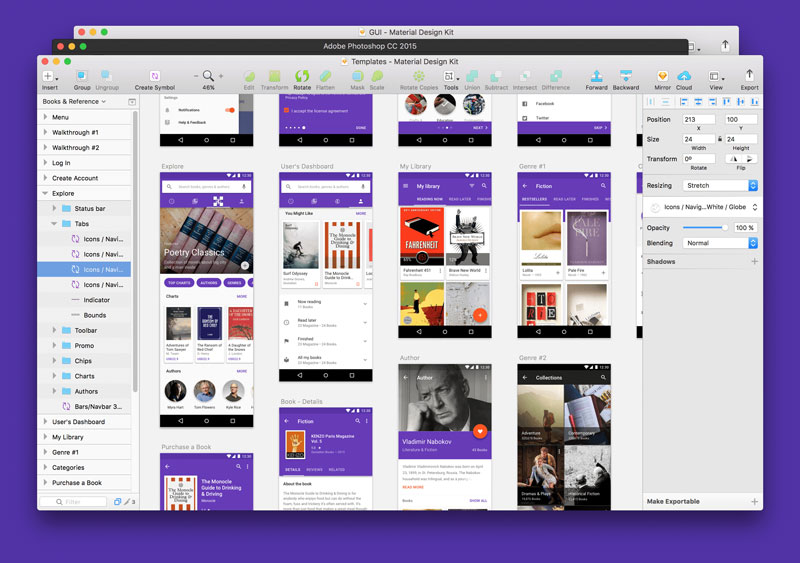
Material Design Kit is the ultimate library of UI elements, app templates, and style guides combined into high-quality source files for Sketch & Photoshop. Everything you need for a faster workflow and better results when design for Android.
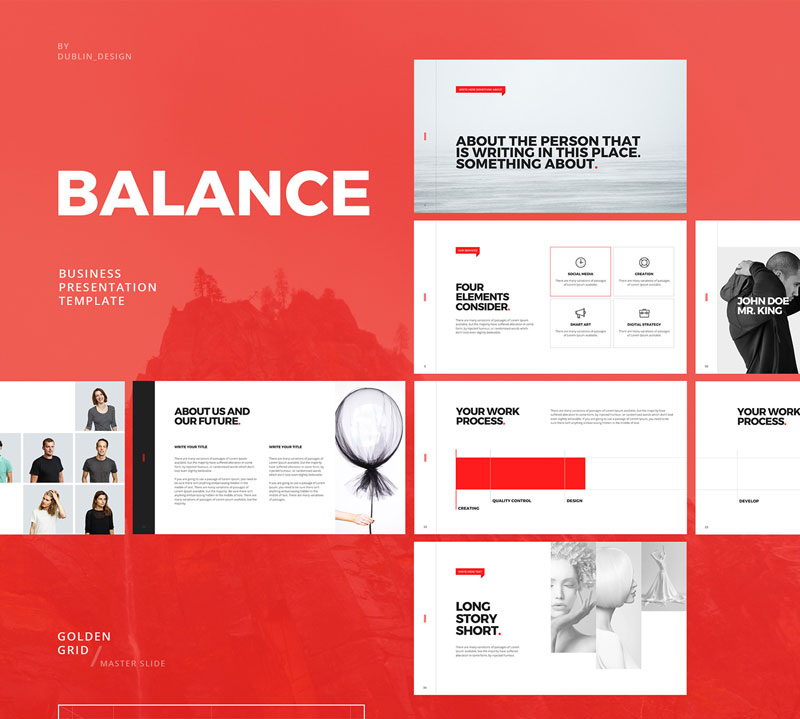
If you are like me and try to attend events that are not directly design related, you surely have seen plenty of horrible Power Point presentations. This free Power Point and Keynote template was presented by Dublin Design to help you create beautiful presentation quickly.
A collection of all kind of T-shirt mockups collected by Design Freebies. You’ll find various style and designs of shirts to present your designs.

Beautiful and customizable components to create material designs for iOS, Android, or the Web.
An elegant template, in case you deliver certificates or diploma and want to make it look good.

Post pobrano z: Combine Webpack with Gulp 4
Webpack is so hot right now! Webpack is great when it comes to module bundling and working with frameworks like Vue or React, but it is a bit more awkward when handling static assets (like CSS). You might be more used to handling your static assets with something like Gulp, and there are some pretty good reasons for that.
Still, the amount of JavaScript in our static projects is growing, so to compensate, let’s make use of Webpack, while remaining in Gulp. In this article, specifically, Gulp 4. We’ll use modern techniques to build an easily maintainable workflow, including the powerful and useful Hot Module Reloading (HMR).

This article isn’t quite for beginners. If you are new to Webpack or Gulp, perhaps start with these tutorials.
Check the demo repo on GitHub. The branch „hmr” shows how to set up Hot Module Reloading.
Run the following to install necessary packages:
npm install babel-core \
            babel-preset-es2015 \
            browser-sync \
            gulpjs/gulp#4.0 \
            webpack \
            webpack-dev-middleware \
            webpack-hot-middleware -D
As of Node v7.9.0, ES6 modules are not supported, that is why we install Babel to make use of import statements and other cutting edge JS features in our tasks.
If you don’t need HMR, feel free to leave Hot Middleware out of the packages listed above. The Dev Middleware does not depend on it.
Let’s get started! Create a tasks folder in your project root with three files: index.js, webpack.js and server.js. We have less clutter in our project root since the index file acts like gulpfile.js and the webpack file as webpack.config.js .
The site folder holds all your site’s assets:
╔ site
║   ╚═══ main.js
╠ tasks
║   ╠═══ index.js
║   ╠═══ server.js
║   ╚═══ webpack.js
╚ package.json
To tell Gulp where the tasks are located, we need to add flags in our `package.json`:
"scripts": {
  "dev": "gulp --require babel-register --gulpfile tasks",
  "build": "NODE_ENV=production gulp build --require babel-register --gulpfile tasks"
}
The babel-register command processes the import statements and the --gulpfile flag defines the path to gulpfile.js or, in our case, index.js . We only need to reference the tasks folder because like in HTML the file named index marks the entry point.
In `webpack.js`:
import path from 'path'
import webpack from 'webpack'

let config = {
    entry: './main.js',
    output: {
        filename: './bundle.js',
        path: path.resolve(__dirname, '../site')
    },
    context: path.resolve(__dirname, '../site')
}

function scripts() {

    return new Promise(resolve => webpack(config, (err, stats) => {

        if (err) console.log('Webpack', err)

        console.log(stats.toString({ /* stats options */ }))

        resolve()
    }))
}

module.exports = { config, scripts }
Notice how we don’t export the object directly like many tutorials show but put it into a variable first. This is necessary so we can use the configuration in the Gulp task scripts below as well as in the server middleware in the next step.
The config.context setup is necessary to set all paths relative to our site folder. Otherwise they would start from the tasks folder which could lead to confusion down the road.
If you have a very long Webpack config, you can also split it and the task into two files.
// webpack.js
export let config = { /* ... */ }
// scripts.js
import { config } from './webpack'
export function scripts() { /* ... */ }Here’s how to make HMR work. Change the entry and plugins:
entry: {
  main: [
    './main.js',
    'webpack/hot/dev-server',
    'webpack-hot-middleware/client'
  ]
},

/* ... */

plugins: [
  new webpack.HotModuleReplacementPlugin()
]
Make sure to disable the extra entries and the HMR plugin for production. The package Webpack Merge helps setting up different environments for development and production.
Now a BrowserSync task setup:
import gulp from 'gulp'
import Browser from 'browser-sync'
import webpack from 'webpack'
import webpackDevMiddleware from 'webpack-dev-middleware'
import webpackHotMiddleware from 'webpack-hot-middleware'

import { config as webpackConfig } from './webpack'

const browser = Browser.create()
const bundler = webpack(webpackConfig)

export function server() {

    let config = {
        server: 'site',
        middleware: [
            webpackDevMiddleware(bundler, { /* options */ }),
            webpackHotMiddleware(bundler)
        ],
    }

    browser.init(config)

    gulp.watch('site/*.js').on('change', () => browser.reload())
}
The Dev Middleware enables BrowserSync to process what was defined as entry in webpack.js. To give it this information we import the config module. Hot Middlware on the other hand checks for changes in app components like `.vue` files for Vue.js to inject.
Since we cannot hot reload files like main.js, we watch them and reload the window on change. Again, if you don’t need HMR, remove webpackHotMiddleware.
The `index.js` file includes all tasks:
import gulp from 'gulp'

import { scripts } from './webpack'
import { server }  from './server'

export const dev   = gulp.series( server )
export const build = gulp.series( scripts )

export default dev
The exported variables define what tasks to run under which command. The default export runs with gulp.
If you separate development and production environments for Webpack, you might want to run a gulp build task which makes use of production options. For that, we import the scripts tasks on its own since we don’t need to start the server here.
During development, Webpack is run by BrowserSync so putting the scripts task in the dev command is not necessary.
To start developing you cannot just run gulp or gulp build since it will look for a gulpfile.js in the project root. We have to run the npm commands npm run dev and npm run build to make use of the defined flags.
Now you can imagine how easy it is to expand and write more tasks. Export a task in one file and import it in `index.js`. Clean and easy to maintain!
To give you an idea of how to set up your project folder, here is my personal setup:
╔ build
╠ src
╠ tasks
║   ╠═══ config.js => project wide
║   ╠═══ icons.js  => optimize/concat SVG
║   ╠═══ images.js => optimize images
║   ╠═══ index.js  => run tasks
║   ╠═══ misc.js   => copy, delete
║   ╠═══ server.js => start dev server
║   ╠═══ styles.js => CSS + preprocessor
║   ╚═══ webpack.js
╚ package.jsonGulp can handle static assets better than Webpack. The Copy Webpack Plugin can also copy files from your source to your build folder but when it comes to watching file deletion or changes like overriding an image, gulp.watch is a safer bet.
Webpack also comes with a local server environment via Webpack Dev Server but using BrowserSync has some features you might not want to miss:
As seen in this post on GitHub Sass gets processed by node-sass much quicker than by Webpack’s combination of sass-loader, css-loader and extract-text-webpack-plugin.
In Webpack, you have to import your CSS and SVG files for instance into JavaScript to process them which can be quite tricky and confusing sometimes. With Gulp, you don’t need to adjust your workflow.
Combine Webpack with Gulp 4 is a post from CSS-Tricks
Post pobrano z: 5 Awesome Sublime Plugins you Won’t Find in Top Plugin Posts
I am a huge fan of Sublime text editor and whenever I go and try other text editors I come back to Sublime crying: „Forgive me I’ll never, ever, leave you again!” But I’m not here to praise Sublime. In this post I’m rather going to share some of the Sublime plugins I’ve been using a lot and which are really helpful and fun to work with. You may find them for your favorite text editor as well.
Let’s dive into the first one.
How many times have you had a markup and all you wanted to do was to add incremental numbers to it? For example if you have a list with a heavy content, of course you can’t use Emmet or similar tools to add those incremental numbers because the markup is already there, unless you use some tricks. However there is a faster way to get there.
With Text Pastry plugin we can extend the power of multiple selections in Sublime and do lots of awesome things.
Here is the basic usage of this plugin:
Sometimes you even have a range of numbers in mind and, as you can see in the video, you will be able to put numbers in a specific range and you can even specify the steps.
Pretty cool, huh?
This plugin can do more than what I have just shown you. You can find more information and examples on GitHub.
If you are using Atom you can find the Text Pastry plugin here.
Once I needed a component, but since I didn’t have much time, writing it from scratch was not ideal. Fortunately I could find that component on the web; however the developer used pxs for all the properties and sizes. So for making that component responsive I was supposed to change all the pxs to em or rem, and, as you know, doing that is just a pain in the ass. I used Cmd/Ctrl+D to see all the pxs units and then I stared at the screen wishing I had a magic wand to turn all those pxs units into a relative unit.
It turned out that magic existed and I did find it after 5 minutes of Googling.
Super Calculator is just amazing, all you have to do is press Alt+C and Super Calculator will select the mathematical expression closest to the cursor position so that you can review what is going to be calculated. If you press Alt+C for a second time, it will calculate the result and insert it into your code right away, or if you select a mathematical expression and hit Alt+C, the magic will happen all the same.
I think I found this one on Twitter and it’s just brilliant.
When we code we usually love to make our text editor fullscreen so that we can concentrate at our best. But sometimes we get to this point where we need to find something on the web, maybe a piece of code or maybe a wired syntax, hence we have to get out of that fullscreen mode.
InstaGoogling plugin will help you to Google something without losing the full-screen mode. All you have to do is hit f1 and you will have a nice Google window popping up on your screen.
After installing this plugin you will need to add its extension to Chrome as well.
As you can see from the video, I’m going through my search result by using the tab key, I hit enter for opening the page and I use Ctrl+W to close the window, so that I don’t have to move my hands away from the keyboard.
Another great feature of InstaGoogling is that you can select a piece of code, then hit f1 and the plugin will search that on Google automatically and it will insert the language at the end of that piece in order to have a better result.
Unfortunately there isn’t yet a version of plugin for Mac, but I hope it will come out soon, as it seems to be in the making.
To me this plugin is the most handy one.
Usually in a project you have a lot of files and you wanna be able to easily move back and forth from one file to another. Imagine you are looking at your Sass index file and you see a lot of imports and paths. if you want to open one of them you can move the cursor on that path and just simply hit Alt+D and boom, you will be in that file.
What I love about Open-Include is that it doesn’t matter what that path is and where it goes, Open-Include will just open it for you. You can be dealing with a JavaScript module or a file on a CDN or an image, this plugin will do its job in any case.
Unfortunately this plugin was removed from packagecontrol.io. As a consequence, you can’t install it as you normally would, but you can go to its Github page, download the entire set of files and install the plugin manually by pasting all files in your package folder.
I have a colleague who, from time to time, comes to me bad mouthing another colleague of ours: „Why does he never remove his console.log lines?”
Console Wrap can help us removing those lines my colleague hates so much:
If you use Atom try this plugin.
To be honest when I discussed with Chris the possibility of writing this post I only had four plugins in my mind, so I said to myself: 'I’m not gonna write this post with a title like „4 Plugins…” that is so lame!’ So I went to packagecontrol.io, to the trending section in the hope of finding something useful, and I immediately spotted Console Wrap plugin shining there and it turned out I really needed this plugin.
So, from time to time do go to this page. You may find something you didn’t know you needed which will make your life so much easier!
5 Awesome Sublime Plugins you Won’t Find in Top Plugin Posts is a post from CSS-Tricks