I think of named grid areas in CSS Grids as bring-your-own syntactic sugar. You don’t absolutely need them (you could express grid placement in other ways), but it can make that placement more intuitive. And, hey, if I’m wrong about that, correct me in the comments.
No rows defined there; those are implicit and will appear as needed. We could define them, we just aren’t, because like most situations in web design, we don’t care how tall the items are — the height will grow as needed to accomodate the content.
Now, how do we place something in that very top-left position in the grid? We could tell the grid to place it there like this:
.item {
  grid-column: 1 / 2; /* start at the first grid column line and end at the second */
}
That works, although that .item better be the first child of .grid. Otherwise, something else may implicitly be placed there and .item will kick down to the next open row. If we wanted to be super sure to place it in the top-left, we could do the row as well:
.item {
  grid-column: 1 / 2;
  grid-row: 1 / 2;
}
Now it will be in the top-left for sure, even if other items are explicitly placed there (they’ll just overlap). We can even shorten things up with the grid-area property:
.item {
  grid-area: 1 / 1 / 2 / 2;
}
All those 1’s and 2’s might be intuitive enough for now, but the numbers become a bit much in more complex grids involving both column and row placement.
Check this. While we are defining the columns, we can name them with a separate property:
.grid {
  display: grid;
  grid-gap: 1rem;
  grid-template-columns:
     200px  1fr  1fr;
  grid-template-areas:
    "pro    a    b"
    "pro    c    d";
}
Every quoted group in grid-template-areas is a row. Inside are names I just made up. Could be just about anything, as long as it makes sense to you. See how the word „pro” is repeated twice there on two rows? That’s important, as it’s saying that we could place a grid item where that value „pro” is and it will be in the first of three columns and span two rows. Pretty intuitive, yeah?
We place it like this:
.pro-features {
  /* rather than */
  grid-area: 1 / 1 / 2 / 3;
  /* we can now do */
  grid-area: pro;
}
Here’s a great post by Aditya Agarwal on the difference between render props and higher-order components in React. I particularly like the demo he chose to explain the two. But, to summarize:
Higher-order components (HOCs) take a component and return a component. So let’s say you have a component called Username that just returns a string of a user’s name and you want to capitalize that somewhere – this is the perfect opportunity to use a HOC that wraps that Username component and changes each character. Just like the excellent tutorial Kingsley Silas wrote up here on CSS-Tricks.
HOCs are particularly useful for when you want to modify a component and then use it in a bunch of places, or to make tiny batches of code to prevent overwhelming a component with too many options and props.
A render prop on the other hand is “a function prop that a component uses to know what to render.” At least, that’s what the React docs say, but it took me a while to figure it out. As far as I understand, it lets you provide a way for a React component (typically one that just has a bunch of data you want to reuse) and give it to another (so a component that then renders that data).
What’s happening here is that someone defined a Mouse component in the codebase that provides x + y coordinates based on the position of the user’s mouse. This Mouse component then returns a bunch of data that we store as mouse and then pass it down into the Cat component which is what renders something with that data.
This is great when you want to reuse the data from Mouse but also when you want to pass lots of different types of data into the Cat component. Say you want Cat to render something else based on the type of data you feed into it.
So, to summarize: HOCs and render props are two ways to do similar work. Namely, they can break our code into lots of reusable bits and encourage us to make components that are more flexible in the long run.
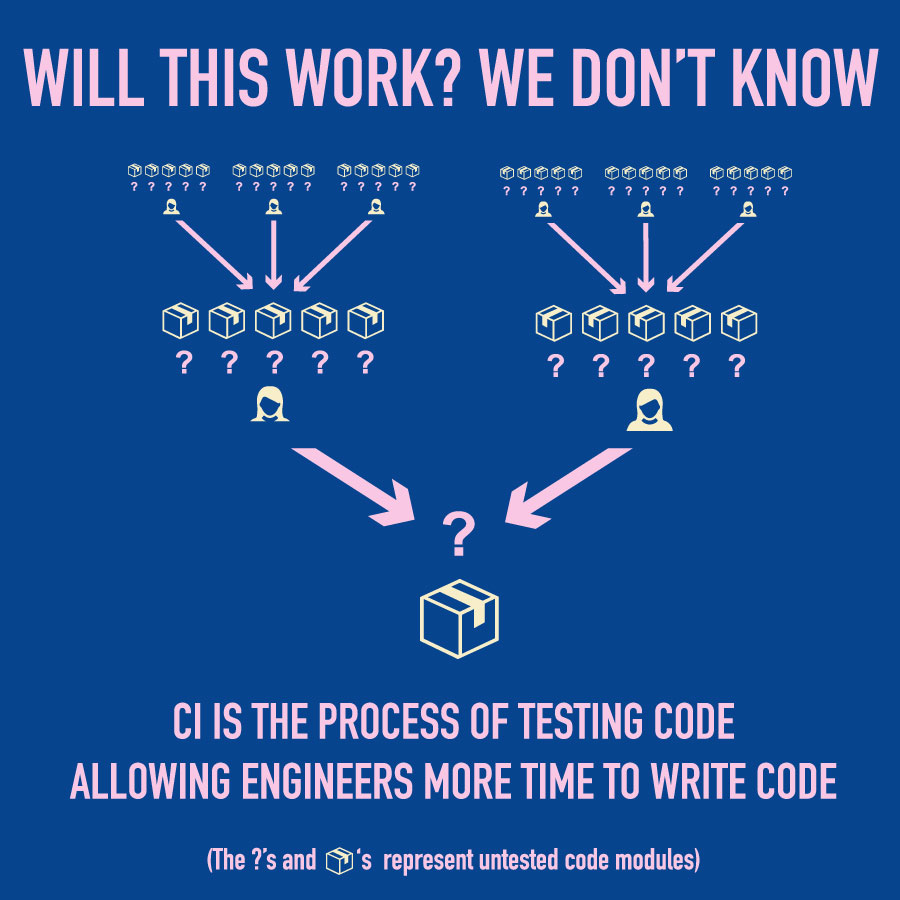
Not long ago, I had a novice understanding of Continuous Integration (CI) and thought it seemed like an extra process that forces engineers to do extra work on already large projects. My team began to implement CI into projects and, after some hands-on experience, I realized its great benefits, not only to the company, but to me, an engineer! In this post, I will describe CI, the benefits I’ve discovered, and how to implement it for free, and fast.
CI and Continuous Delivery (CD) are usually discussed together. Writing about both CI and CD within a post is a lot to write and read about all at once, so we’ll only discuss CI here. Maybe, I will cover CD in a future post. 😉
Continuous Integration, as I understand it, is a pattern of programming combining testing, safety checks, and development practices to confidently push code from a development branch to production ready branch continuously.
Microsoft Word is an example of CI. Words are written into the program and checked against spelling and grammar algorithms to assert a document’s general readability and spelling.
Why CI should be used everywhere
We’ve already touched on this a bit, but the biggest benefit of CI that I see is that it saves a lot of money by making engineers more productive. Specifically, it provides quicker feedback loops, easier integration, and it reduces bottlenecks. Directly correlating CI to company savings is hard because SaaS costs scale as the user base changes. So, if a developer wants to sell CI to the business, the formula below can be utilized. Curious just how much it can save? My friend, David Inoa, created the following demo to help calculate the savings.
What really excites enough to scream to the top of the rooftops is how CI can benefit you and me as developers!
For starters, CI will save you time. How much? We’re talking hours per week. How? Oh, do I want to tell you! CI automatically tests your code and lets you know if it is okay to be merged in a branch that goes to production. The amount of time that you would spend testing your code and working with others to get code ready for production is a lot of time.
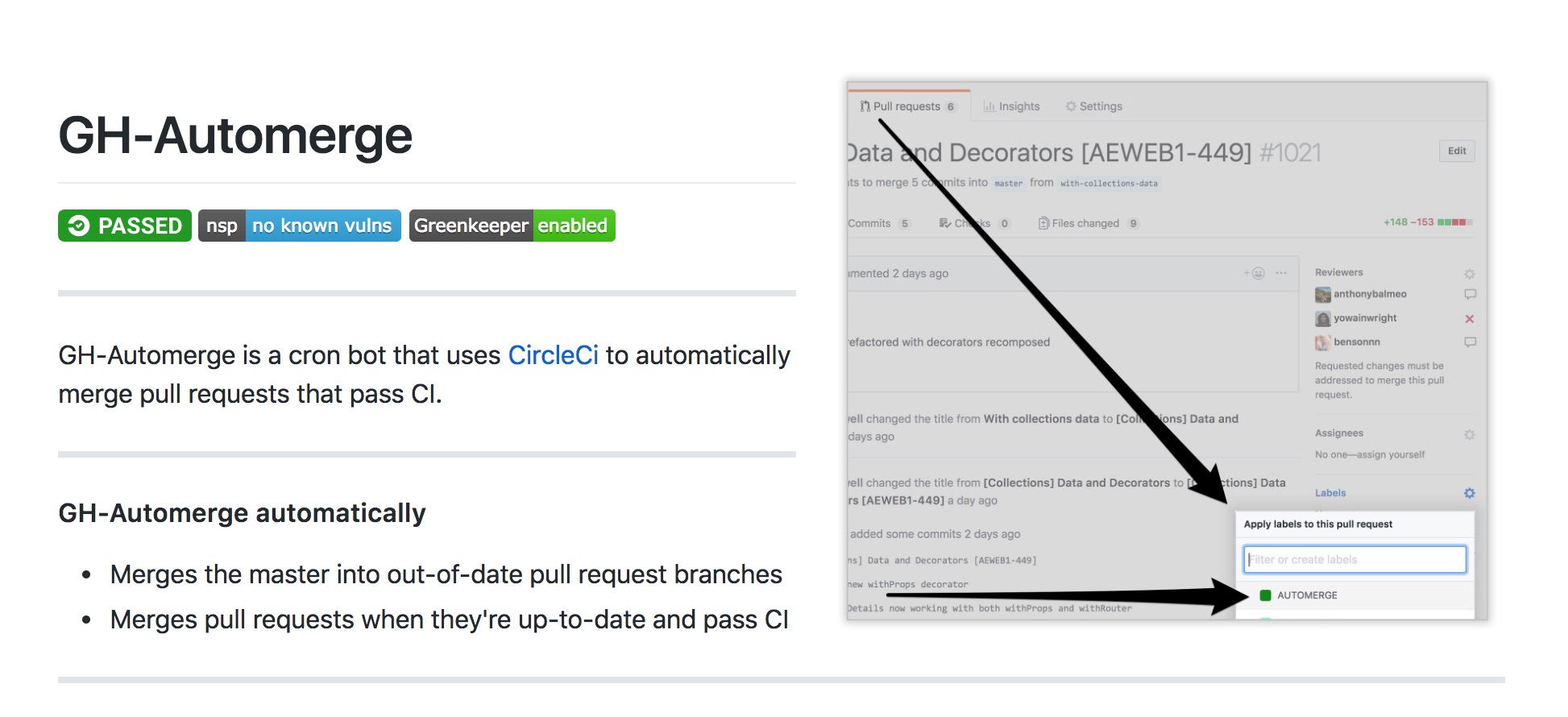
Then there’s the way it helps prevent code fatigue. It sports tools like Greenkeeper, which can automatically set up — and even merge — pull requests following a code review. This keeps code up-to-date and allows developers to focus on what we really need to do. You know, like writing code or living life. Code updates within packages usually only need to be reviewed for major version updates, so there’s less need to track every minor release for breaking changes that require action.
CI takes a lot of the guesswork out of updating dependencies that otherwise would take a lot of research and testing.
No excuses, use CI!
When talking to developers, the conversation usually winds up something like:
„I would use CI but…[insert excuse].”
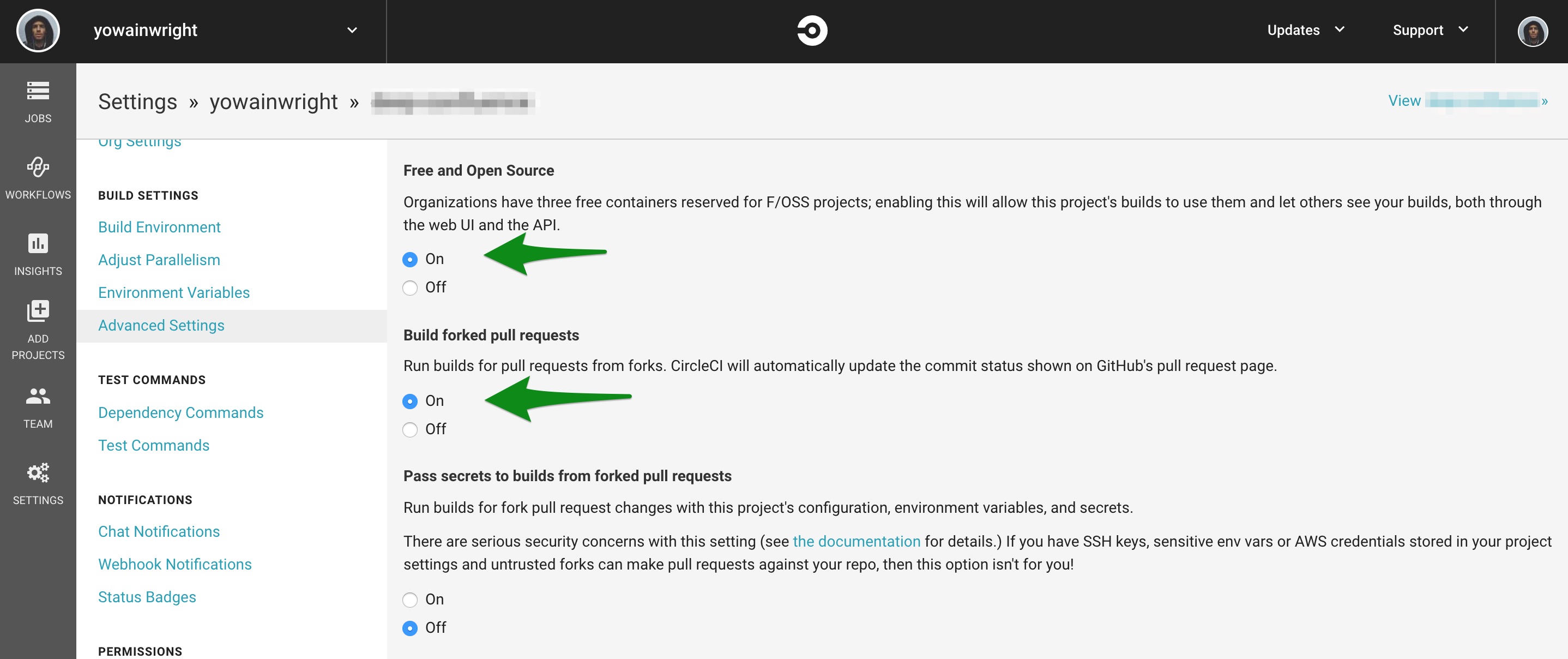
To me, that’s a cop out! CI can be free. It can also be easy. It’s true that the benefits of CI come with some costs, including monthly fees for tools like CircleCI or Greenkeeper. But that’s a drop in the bucket with the long-term savings it provides. It’s also true that it will take time to set things up. But it’s worth calling out that the power of CI can be used for free on open source projects. If you need or want to keep your code private and don’t want pay for CI tools, then you really can build your own CI setup with a few great npm packages.
So, enough with the excuses and behold the power of CI!
What problems does CI solve?
Before digging in much further, we should cover the use cases for CI. It solves a lot of issues and comes in handy in many situations:
When more than one developer wants to merge into a production branch at once
When mistakes are not caught or cannot be fixed before deployment
When dependencies are out of date
When developers have to wait extended periods of time to merge code
When packages are dependent on other packages
When a package is updated and must be changed in multiple place
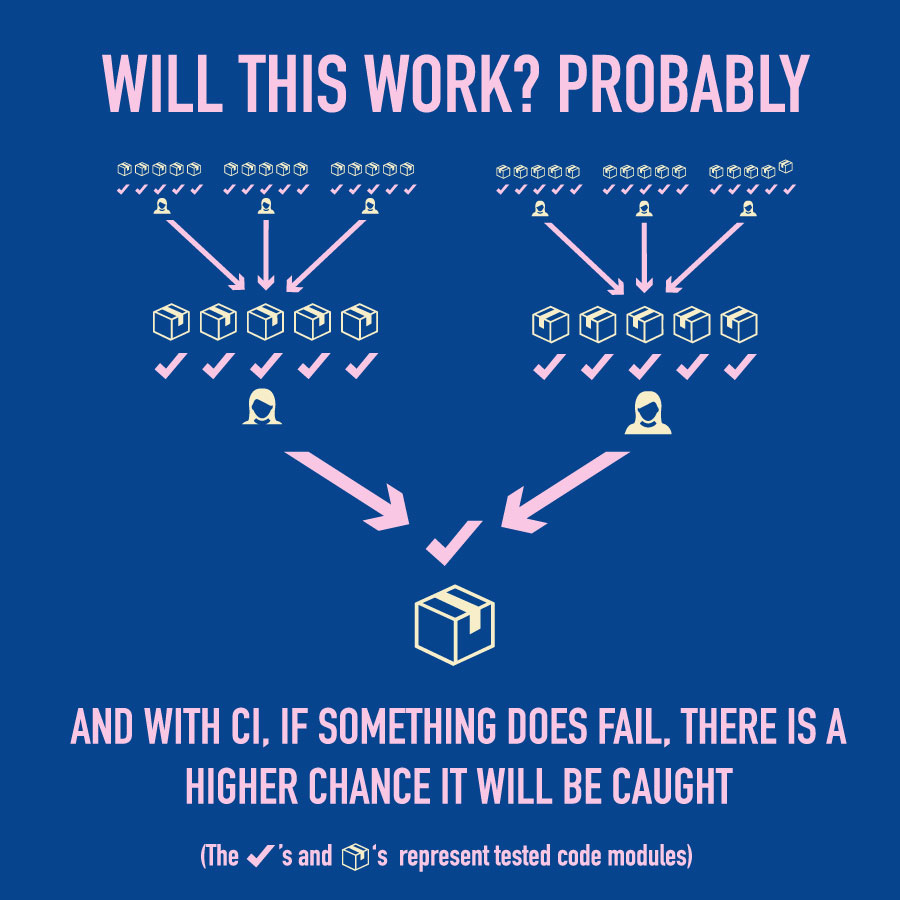
CI tests updates and prevents bugs from being deployed.
Recommended CI tools
Let’s look at the high level parts used to create a CI feedback loop with some quick code bits to get CI setup for any open source project today. We’ll break this down into digestible chunks.
Documentation
In order to get CI working for me right away, I usually set CI up to test my initial documentation for a project. Specifically, I use MarkdownLint and Write Good because they provide all the features and functionality I need to write tests for this part of the project.
The great news is that GitHub provides standard templates and there is a lot of content that can be copied to get documentation setup quickly. Read more about quickly setting up documentation and creating a documentation feedback loop.
I keep a package.json file at the root of the project and run a script command like this:
Those two lines allow me to start using CI. That’s it! I can now run CI to test grammar.
At this point, I can move onto setting up CircleCI and Greenkeeper to help me make sure that packages are up to date. We’ll get to that in just a bit.
Unit testing
Unit tests are a method for testing small blocks (units) of code to ensure that the expected behavior of that block works as intended.
Unit tests provide a lot of help with CI. They define code quality and provide developers with feedback without having to push/merge/host code. Read more about unit tests and quickly setting a unit test feedback loop.
Here is an example of a very basic unit test without using a library:
const addsOne = (num) => num + 1 // We start with 1 as an initial value
  const numPlus1 = addsOne(3) // Function to add 3
  const stringNumPlus1 = addsOne('3') // Add the two functions, expect 4 as the value

  /**
    * console.assert
    * https://developer.mozilla.org/en-US/docs/Web/API/console/assert
    * @param test?
    * @param string
    * @returns string if the test fails
    **/

  console.assert(numPlus1 === 4, 'The variable `numPlus1` is not 4!')
  console.assert(stringNumPlus1 === 4, 'The variable `stringNumPlus1` is not 4!')
Over time, it is nice to use libraries like Jest to unit test code, but this example gives you an idea of what we’re looking at.
Here’s an example of the same test above using Jest:
Using Jest, tests can be hooked up for CI with a command in a package.json like this:
"test:jest": "jest --coverage",
The flag --coverage configures Jest to report test coverage.
Safety checks
Safety checks help communicate code and code quality. Documentation, document templates, linter, spell checkers, and type checker are all safety checks. These tools can be automated to run during commits, in development, during CI, or even in a code editor.
Safety checks fall into more than one category of CI: feedback loop and testing. I’ve compiled a list of the types of safety checked I typically bake into a project.
All of these checks may seem like another layer of code abstraction or learning, so be gentle on yourself and others if this feels overwhelming. These tools have helped my own team bridge experience gaps, define shareable team patterns, and assist developers when they’re confused about what their code is doing.
Committing, merging, communicating: Tools like husky, commitizen, GitHub Templates, and Changelogs help keep CI running clean code and form a nice workflow for a collaborative team environment.
Defining code (type checkers): Tools like TypeScript define and communicate code interfaces — not only types!
Linting: This is the practice of ensuring that something matches defined standards and patterns. There’s a linter for nearly all programming languages and you’ve probably worked with common ones, like ESlint (JavaScript) and Stylelint (CSS) in other projects.
Writing and commenting:Write Good helps catch grammar errors in documentation. Tools like JSDoc, Doctrine, and TypeDoc assist in writing documentation and add useful hints in code editors. Both can compile into markdown documentation.
ESlint is a good example for how any of these types of tools are implemented in CI. For example, this is all that’s needed in package.json to lint JavaScript:
"eslint": "eslint ."
Obviously, there are many options that allow you to configure a linter to conform to you and your team’s coding standards, but you can see how practical it can be to set up.
High level CI setup
Getting CI started for a repository often takes very little time, yet there are plenty of advanced configurations we can also put to use, if needed. Let’s look at a quick setup and then move into a more advanced configuration. Even the most basic setup is beneficial for saving time and code quality!
Two features that can save developers hours per week with simple CI are automatic dependency updates and build testing. Dependency updates are written about in more detail here.
Build testing refers to node_modules installation during CI by running an install — for example, (npm install where all node_modules install as expected. This is a simple task and does fail. Ensuring that node_modules installs as expected saves considerable time!
Quick CI Setup
CI can be setup automatically for both CircleCI and Travis! If a valid test command is already defined in the repository’s package.json, then CI can be implemented without any more configuration.
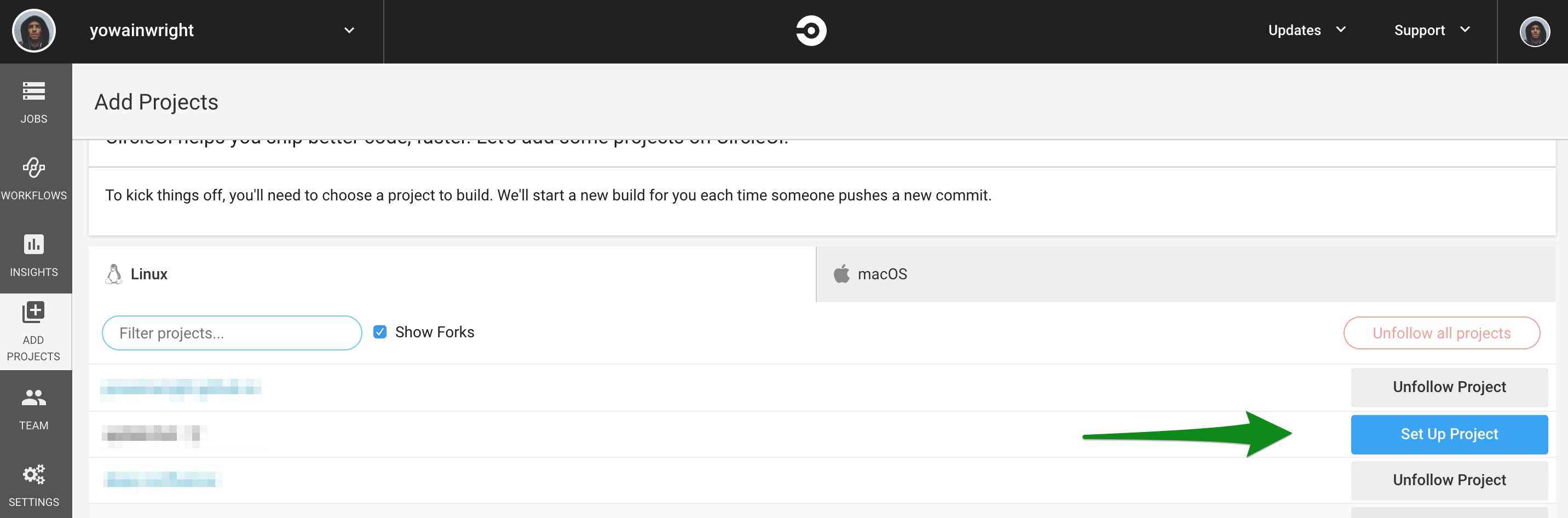
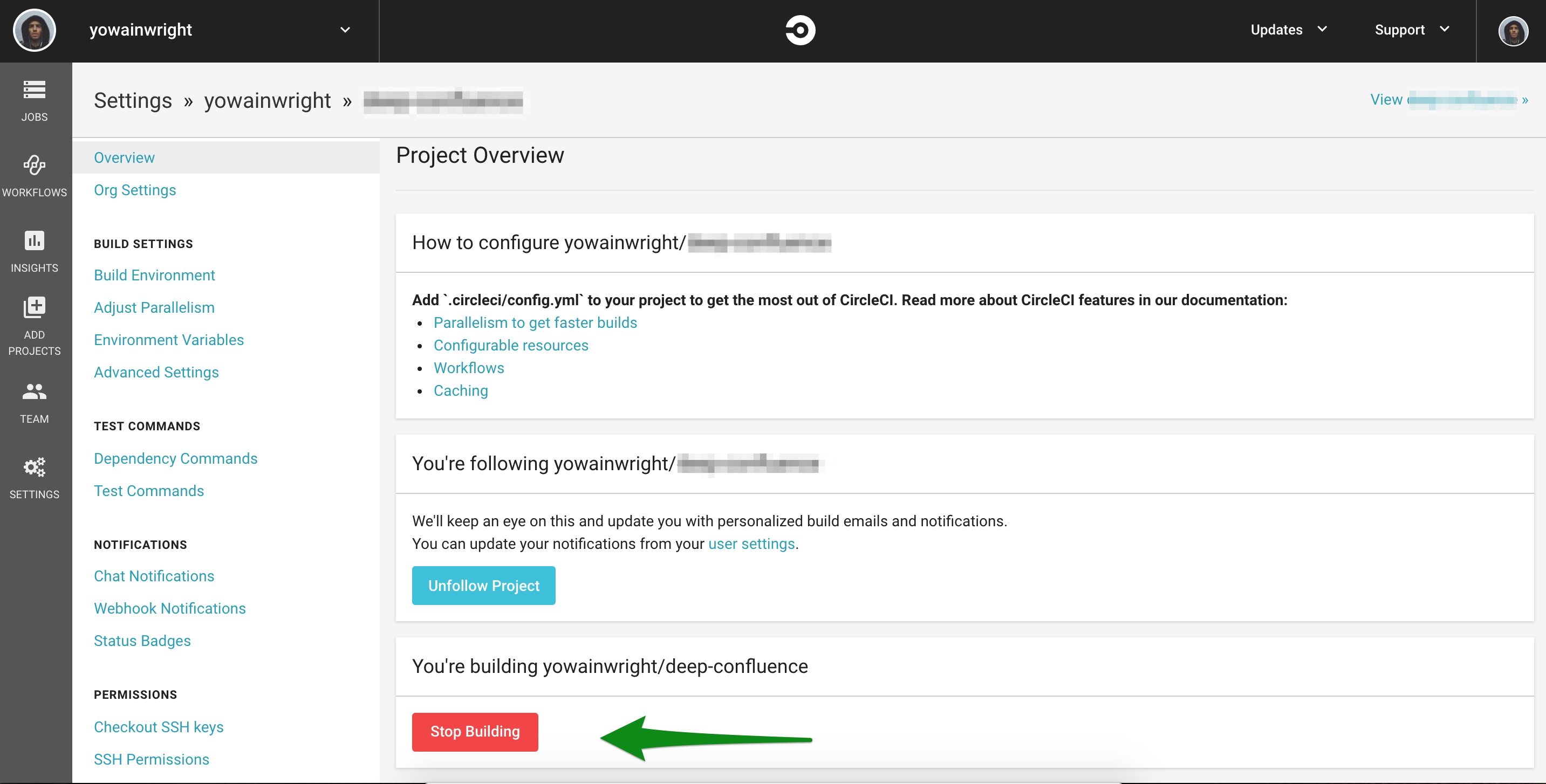
In a CI tool, like CircleCI or Travis, the repository can be searched for after logging in or authentication. From there, follow the CI tool’s UI to start testing.
For JavaScript, CircleCI will look at test within a repository’s package.json to see if a valid test script is added. If it is, then CircleCI will begin running CI automatically! Read more about setting up CircleCI automatically here.
Advanced configurations
If unit tests are unfinished, or if a more configuration is needed, a .yml file can be added for a CI tool (like CircleCI) where the execute runner scripts are made.
Below is how to set up a custom CircleCI configuration with JavaScript linting (again, using ESlint as an example) for a CircleCI.
First off, run this command:
mkdir .circleci && touch .circleci/config.yml
Then add the following to generated file:
defaults: &defaults
  working_directory: ~/code
  docker:
    - image: circleci/node:10
  environment:
  NPM_CONFIG_LOGLEVEL: error # make npm commands less noisy
  JOBS: max <h3>https://gist.github.com/ralphtheninja/f7c45bdee00784b41fed
    version: 2
    jobs:
    build:
      <<: *defaults
      steps:
        - checkout
        - run: npm i
        - run: npm run eslint:ci
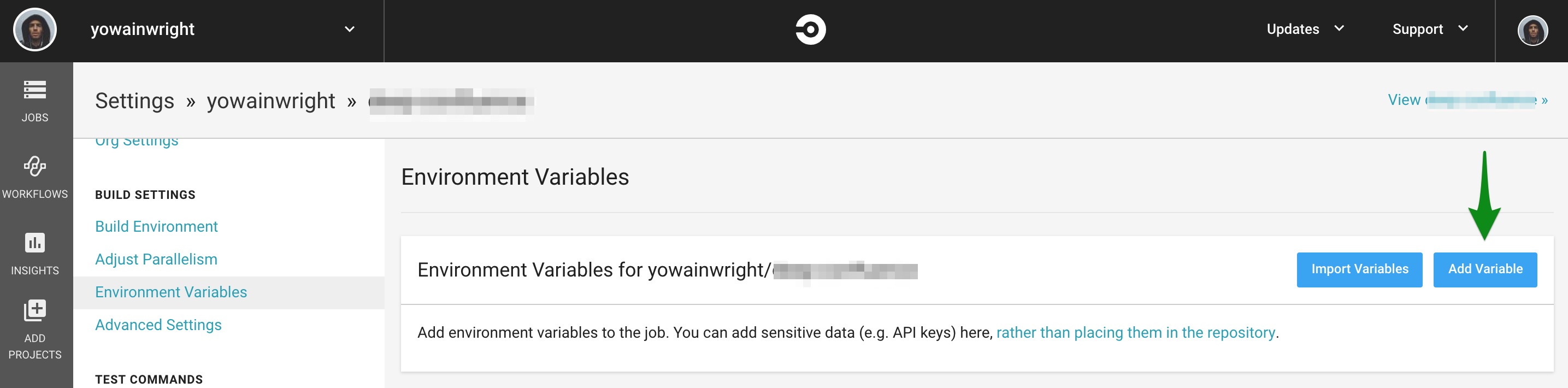
After these steps are completed and after CircleCI has been configured in GitHub (more on that here), CircleCI will pick up .circleci/config.yml and lint JavaScript in a CI process when a pull request is submitted.
I created a folder with examples in this demo repository to show ideas for configuring CI with config.yml filesand you can reference it for your own project or use the files as a starting point.
The are more even more CI tools that can be setup to help save developers more time, like auto-merging, auto-updating, monitoring, and much more!
Summary
We covered a lot here! To sum things up, setting up CI is very doable and can even be free of cost. With additional tooling (both paid and open source), we can have more time to code, and more time to write more tests for CI — or enjoy more life away from the screen!
Here are some demo repositories to help developers get setup fast or learn. Please feel free to reach out within the repositories with questions, ideas or improvements.
Not long ago, I had a novice understanding of Continuous Integration (CI) and thought it seemed like an extra process that forces engineers to do extra work on already large projects. My team began to implement CI into projects and, after some hands-on experience, I realized its great benefits, not only to the company, but to me, an engineer! In this post, I will describe CI, the benefits I’ve discovered, and how to implement it for free, and fast.
CI and Continuous Delivery (CD) are usually discussed together. Writing about both CI and CD within a post is a lot to write and read about all at once, so we’ll only discuss CI here. Maybe, I will cover CD in a future post. 😉
Continuous Integration, as I understand it, is a pattern of programming combining testing, safety checks, and development practices to confidently push code from a development branch to production ready branch continuously.
Microsoft Word is an example of CI. Words are written into the program and checked against spelling and grammar algorithms to assert a document’s general readability and spelling.
Why CI should be used everywhere
We’ve already touched on this a bit, but the biggest benefit of CI that I see is that it saves a lot of money by making engineers more productive. Specifically, it provides quicker feedback loops, easier integration, and it reduces bottlenecks. Directly correlating CI to company savings is hard because SaaS costs scale as the user base changes. So, if a developer wants to sell CI to the business, the formula below can be utilized. Curious just how much it can save? My friend, David Inoa, created the following demo to help calculate the savings.
What really excites enough to scream to the top of the rooftops is how CI can benefit you and me as developers!
For starters, CI will save you time. How much? We’re talking hours per week. How? Oh, do I want to tell you! CI automatically tests your code and lets you know if it is okay to be merged in a branch that goes to production. The amount of time that you would spend testing your code and working with others to get code ready for production is a lot of time.
Then there’s the way it helps prevent code fatigue. It sports tools like Greenkeeper, which can automatically set up — and even merge — pull requests following a code review. This keeps code up-to-date and allows developers to focus on what we really need to do. You know, like writing code or living life. Code updates within packages usually only need to be reviewed for major version updates, so there’s less need to track every minor release for breaking changes that require action.
CI takes a lot of the guesswork out of updating dependencies that otherwise would take a lot of research and testing.
No excuses, use CI!
When talking to developers, the conversation usually winds up something like:
„I would use CI but…[insert excuse].”
To me, that’s a cop out! CI can be free. It can also be easy. It’s true that the benefits of CI come with some costs, including monthly fees for tools like CircleCI or Greenkeeper. But that’s a drop in the bucket with the long-term savings it provides. It’s also true that it will take time to set things up. But it’s worth calling out that the power of CI can be used for free on open source projects. If you need or want to keep your code private and don’t want pay for CI tools, then you really can build your own CI setup with a few great npm packages.
So, enough with the excuses and behold the power of CI!
What problems does CI solve?
Before digging in much further, we should cover the use cases for CI. It solves a lot of issues and comes in handy in many situations:
When more than one developer wants to merge into a production branch at once
When mistakes are not caught or cannot be fixed before deployment
When dependencies are out of date
When developers have to wait extended periods of time to merge code
When packages are dependent on other packages
When a package is updated and must be changed in multiple place
CI tests updates and prevents bugs from being deployed.
Recommended CI tools
Let’s look at the high level parts used to create a CI feedback loop with some quick code bits to get CI setup for any open source project today. We’ll break this down into digestible chunks.
Documentation
In order to get CI working for me right away, I usually set CI up to test my initial documentation for a project. Specifically, I use MarkdownLint and Write Good because they provide all the features and functionality I need to write tests for this part of the project.
The great news is that GitHub provides standard templates and there is a lot of content that can be copied to get documentation setup quickly. Read more about quickly setting up documentation and creating a documentation feedback loop.
I keep a package.json file at the root of the project and run a script command like this:
Those two lines allow me to start using CI. That’s it! I can now run CI to test grammar.
At this point, I can move onto setting up CircleCI and Greenkeeper to help me make sure that packages are up to date. We’ll get to that in just a bit.
Unit testing
Unit tests are a method for testing small blocks (units) of code to ensure that the expected behavior of that block works as intended.
Unit tests provide a lot of help with CI. They define code quality and provide developers with feedback without having to push/merge/host code. Read more about unit tests and quickly setting a unit test feedback loop.
Here is an example of a very basic unit test without using a library:
const addsOne = (num) => num + 1 // We start with 1 as an initial value
  const numPlus1 = addsOne(3) // Function to add 3
  const stringNumPlus1 = addsOne('3') // Add the two functions, expect 4 as the value

  /**
    * console.assert
    * https://developer.mozilla.org/en-US/docs/Web/API/console/assert
    * @param test?
    * @param string
    * @returns string if the test fails
    **/

  console.assert(numPlus1 === 4, 'The variable `numPlus1` is not 4!')
  console.assert(stringNumPlus1 === 4, 'The variable `stringNumPlus1` is not 4!')
Over time, it is nice to use libraries like Jest to unit test code, but this example gives you an idea of what we’re looking at.
Here’s an example of the same test above using Jest:
Using Jest, tests can be hooked up for CI with a command in a package.json like this:
"test:jest": "jest --coverage",
The flag --coverage configures Jest to report test coverage.
Safety checks
Safety checks help communicate code and code quality. Documentation, document templates, linter, spell checkers, and type checker are all safety checks. These tools can be automated to run during commits, in development, during CI, or even in a code editor.
Safety checks fall into more than one category of CI: feedback loop and testing. I’ve compiled a list of the types of safety checked I typically bake into a project.
All of these checks may seem like another layer of code abstraction or learning, so be gentle on yourself and others if this feels overwhelming. These tools have helped my own team bridge experience gaps, define shareable team patterns, and assist developers when they’re confused about what their code is doing.
Committing, merging, communicating: Tools like husky, commitizen, GitHub Templates, and Changelogs help keep CI running clean code and form a nice workflow for a collaborative team environment.
Defining code (type checkers): Tools like TypeScript define and communicate code interfaces — not only types!
Linting: This is the practice of ensuring that something matches defined standards and patterns. There’s a linter for nearly all programming languages and you’ve probably worked with common ones, like ESlint (JavaScript) and Stylelint (CSS) in other projects.
Writing and commenting:Write Good helps catch grammar errors in documentation. Tools like JSDoc, Doctrine, and TypeDoc assist in writing documentation and add useful hints in code editors. Both can compile into markdown documentation.
ESlint is a good example for how any of these types of tools are implemented in CI. For example, this is all that’s needed in package.json to lint JavaScript:
"eslint": "eslint ."
Obviously, there are many options that allow you to configure a linter to conform to you and your team’s coding standards, but you can see how practical it can be to set up.
High level CI setup
Getting CI started for a repository often takes very little time, yet there are plenty of advanced configurations we can also put to use, if needed. Let’s look at a quick setup and then move into a more advanced configuration. Even the most basic setup is beneficial for saving time and code quality!
Two features that can save developers hours per week with simple CI are automatic dependency updates and build testing. Dependency updates are written about in more detail here.
Build testing refers to node_modules installation during CI by running an install — for example, (npm install where all node_modules install as expected. This is a simple task and does fail. Ensuring that node_modules installs as expected saves considerable time!
Quick CI Setup
CI can be setup automatically for both CircleCI and Travis! If a valid test command is already defined in the repository’s package.json, then CI can be implemented without any more configuration.
In a CI tool, like CircleCI or Travis, the repository can be searched for after logging in or authentication. From there, follow the CI tool’s UI to start testing.
For JavaScript, CircleCI will look at test within a repository’s package.json to see if a valid test script is added. If it is, then CircleCI will begin running CI automatically! Read more about setting up CircleCI automatically here.
Advanced configurations
If unit tests are unfinished, or if a more configuration is needed, a .yml file can be added for a CI tool (like CircleCI) where the execute runner scripts are made.
Below is how to set up a custom CircleCI configuration with JavaScript linting (again, using ESlint as an example) for a CircleCI.
First off, run this command:
mkdir .circleci && touch .circleci/config.yml
Then add the following to generated file:
defaults: &defaults
  working_directory: ~/code
  docker:
    - image: circleci/node:10
  environment:
  NPM_CONFIG_LOGLEVEL: error # make npm commands less noisy
  JOBS: max <h3>https://gist.github.com/ralphtheninja/f7c45bdee00784b41fed
    version: 2
    jobs:
    build:
      <<: *defaults
      steps:
        - checkout
        - run: npm i
        - run: npm run eslint:ci
After these steps are completed and after CircleCI has been configured in GitHub (more on that here), CircleCI will pick up .circleci/config.yml and lint JavaScript in a CI process when a pull request is submitted.
I created a folder with examples in this demo repository to show ideas for configuring CI with config.yml filesand you can reference it for your own project or use the files as a starting point.
The are more even more CI tools that can be setup to help save developers more time, like auto-merging, auto-updating, monitoring, and much more!
Summary
We covered a lot here! To sum things up, setting up CI is very doable and can even be free of cost. With additional tooling (both paid and open source), we can have more time to code, and more time to write more tests for CI — or enjoy more life away from the screen!
Here are some demo repositories to help developers get setup fast or learn. Please feel free to reach out within the repositories with questions, ideas or improvements.
With our robust SDK, super clean dashboard, detailed documentation, and world-class support, HelloSign API is one of the most flexible and powerful API on the market. Start building for free today.
Anybody building a site in that requires users to create accounts is going to face this language challenge. You’ll probably have this language strewed across your entire site, from prominent calls-to-action in your homepage hero, to persistent header buttons, to your documentation.
So which is correct? „Sign Up” or „Signup”? Let’s try to figure it out.
With some light internet grammar research, the term „sign up” is a verbal phrase. As in, „sign” is a verb (describes an action) and „sign up” is a verb plus a complement — participial phrase, best I can tell. That sounds about right to me.
My best guess before looking into this was that „signup” isn’t even a word at all, and more of a lazy internet mistake. Just like „frontend” isn’t a word. It’s either „front-end” (a compound adjective as in a front-end developer), or „front end” (as in, „Your job is to work on the front end.”).
I was wrong, though. „Signup” is a noun. Like a thing. As in, „Go up the hallway past the water fountain and you’ll see the signup on the wall.” Which could certainly be a digital thing as well. Seems to me it wouldn’t be wrong to call a form that collects a user’s name and email address a „signup form.”
„Sign-up” is almost definitely wrong, as it’s not a compound word or compound adjective.
The fact that both „sign up” and „signup” are both legit words/phrases makes this a little tricky. Having a verbal phrase as a button seems like a solid choice, but I wouldn’t call it wrong to have a button that said „Signup” since the button presumably links directly to a form in which you can sign up and that’s the correct noun for it.
Let’s see what some popular websites do.
Twitter goes with „Sign Up” and „Log in.” We haven’t talked about the difference between „Log in” and „Login” yet, but the difference is very much the same. Verbal phrase vs. noun. The only thing weird about Twitter’s approach here is the capitalization of „Up” and the lowercase „in.” Twitter seems giant enough that they must have thought of this and decided this intentionally, so I’d love to understand why because it looks like a mistake to my eyes.
Facebook, like Twitter, goes with „Sign Up” and „Log In.”
Google goes with „Sign in” and „Create account.” It’s not terribly rare to see companies use the „Create” verb. Visiting Microsoft’s Azure site, they used the copy „Create your account today” complemented with a „Start free” button. Slack uses „Sign in” and „Get Started.”
I can see the appeal of going with symmetry. Zoom uses „SIGN IN” and „SIGN UP” with the use of all-caps giving a pass on having to decide which words are capitalized.
Figma goes the „Sign In” and „Sign up” route, almost having symmetry — but what’s up with the mismatched capitalization? I thought, if anything, they’d go with a lowercase „i” because the uppercase „I” can look like a lowercase „L” and maybe that’s slightly weird.
At CodePen, we rock the „Sign Up” and „Log In” and try to be super consistent through the entire site using those two phrases.
If you’re looking for a conclusion here, I’d say that it probably doesn’t matter all that much. There are so many variations out there that people are probably used to it and you aren’t losing customers over it. It’s not like many will know the literal definition of „Signup.” I personally like active verb phrases — like „Sign Up,” „Log In,” or „Sign In” — with no particular preference for capitalization.
Anybody building a site in that requires users to create accounts is going to face this language challenge. You’ll probably have this language strewed across your entire site, from prominent calls-to-action in your homepage hero, to persistent header buttons, to your documentation.
So which is correct? „Sign Up” or „Signup”? Let’s try to figure it out.
With some light internet grammar research, the term „sign up” is a verbal phrase. As in, „sign” is a verb (describes an action) and „sign up” is a verb plus a complement — participial phrase, best I can tell. That sounds about right to me.
My best guess before looking into this was that „signup” isn’t even a word at all, and more of a lazy internet mistake. Just like „frontend” isn’t a word. It’s either „front-end” (a compound adjective as in a front-end developer), or „front end” (as in, „Your job is to work on the front end.”).
I was wrong, though. „Signup” is a noun. Like a thing. As in, „Go up the hallway past the water fountain and you’ll see the signup on the wall.” Which could certainly be a digital thing as well. Seems to me it wouldn’t be wrong to call a form that collects a user’s name and email address a „signup form.”
„Sign-up” is almost definitely wrong, as it’s not a compound word or compound adjective.
The fact that both „sign up” and „signup” are both legit words/phrases makes this a little tricky. Having a verbal phrase as a button seems like a solid choice, but I wouldn’t call it wrong to have a button that said „Signup” since the button presumably links directly to a form in which you can sign up and that’s the correct noun for it.
Let’s see what some popular websites do.
Twitter goes with „Sign Up” and „Log in.” We haven’t talked about the difference between „Log in” and „Login” yet, but the difference is very much the same. Verbal phrase vs. noun. The only thing weird about Twitter’s approach here is the capitalization of „Up” and the lowercase „in.” Twitter seems giant enough that they must have thought of this and decided this intentionally, so I’d love to understand why because it looks like a mistake to my eyes.
Facebook, like Twitter, goes with „Sign Up” and „Log In.”
Google goes with „Sign in” and „Create account.” It’s not terribly rare to see companies use the „Create” verb. Visiting Microsoft’s Azure site, they used the copy „Create your account today” complemented with a „Start free” button. Slack uses „Sign in” and „Get Started.”
I can see the appeal of going with symmetry. Zoom uses „SIGN IN” and „SIGN UP” with the use of all-caps giving a pass on having to decide which words are capitalized.
Figma goes the „Sign In” and „Sign up” route, almost having symmetry — but what’s up with the mismatched capitalization? I thought, if anything, they’d go with a lowercase „i” because the uppercase „I” can look like a lowercase „L” and maybe that’s slightly weird.
At CodePen, we rock the „Sign Up” and „Log In” and try to be super consistent through the entire site using those two phrases.
If you’re looking for a conclusion here, I’d say that it probably doesn’t matter all that much. There are so many variations out there that people are probably used to it and you aren’t losing customers over it. It’s not like many will know the literal definition of „Signup.” I personally like active verb phrases — like „Sign Up,” „Log In,” or „Sign In” — with no particular preference for capitalization.
Anybody building a site in that requires users to create accounts is going to face this language challenge. You’ll probably have this language strewed across your entire site, from prominent calls-to-action in your homepage hero, to persistent header buttons, to your documentation.
So which is correct? „Sign Up” or „Signup”? Let’s try to figure it out.
With some light internet grammar research, the term „sign up” is a verbal phrase. As in, „sign” is a verb (describes an action) and „sign up” is a verb plus a complement — participial phrase, best I can tell. That sounds about right to me.
My best guess before looking into this was that „signup” isn’t even a word at all, and more of a lazy internet mistake. Just like „frontend” isn’t a word. It’s either „front-end” (a compound adjective as in a front-end developer), or „front end” (as in, „Your job is to work on the front end.”).
I was wrong, though. „Signup” is a noun. Like a thing. As in, „Go up the hallway past the water fountain and you’ll see the signup on the wall.” Which could certainly be a digital thing as well. Seems to me it wouldn’t be wrong to call a form that collects a user’s name and email address a „signup form.”
„Sign-up” is almost definitely wrong, as it’s not a compound word or compound adjective.
The fact that both „sign up” and „signup” are both legit words/phrases makes this a little tricky. Having a verbal phrase as a button seems like a solid choice, but I wouldn’t call it wrong to have a button that said „Signup” since the button presumably links directly to a form in which you can sign up and that’s the correct noun for it.
Let’s see what some popular websites do.
Twitter goes with „Sign Up” and „Log in.” We haven’t talked about the difference between „Log in” and „Login” yet, but the difference is very much the same. Verbal phrase vs. noun. The only thing weird about Twitter’s approach here is the capitalization of „Up” and the lowercase „in.” Twitter seems giant enough that they must have thought of this and decided this intentionally, so I’d love to understand why because it looks like a mistake to my eyes.
Facebook, like Twitter, goes with „Sign Up” and „Log In.”
Google goes with „Sign in” and „Create account.” It’s not terribly rare to see companies use the „Create” verb. Visiting Microsoft’s Azure site, they used the copy „Create your account today” complemented with a „Start free” button. Slack uses „Sign in” and „Get Started.”
I can see the appeal of going with symmetry. Zoom uses „SIGN IN” and „SIGN UP” with the use of all-caps giving a pass on having to decide which words are capitalized.
Figma goes the „Sign In” and „Sign up” route, almost having symmetry — but what’s up with the mismatched capitalization? I thought, if anything, they’d go with a lowercase „i” because the uppercase „I” can look like a lowercase „L” and maybe that’s slightly weird.
At CodePen, we rock the „Sign Up” and „Log In” and try to be super consistent through the entire site using those two phrases.
If you’re looking for a conclusion here, I’d say that it probably doesn’t matter all that much. There are so many variations out there that people are probably used to it and you aren’t losing customers over it. It’s not like many will know the literal definition of „Signup.” I personally like active verb phrases — like „Sign Up,” „Log In,” or „Sign In” — with no particular preference for capitalization.
Hey gang, time for another broad update about various goings on as we tend to do occasionally. Some various happenings around here, appearances on other sites, upcoming conferences, and the like.
At the end of this month, October 29th-30th, I’ll be speaking at JAMstack_conf. Ever since I went to a jQuery conference several million years ago (by my count), I’ve always had a special place in my heart for conferences with a tech-specific focus. Certainly this whole world of JAMstack and serverless can be pretty broad, but it’s more focused than a general web design conference.
In December, I’ll be at WordCamp US. I like getting to go to WordPress-specific events to help me stay current on that community. CSS-Tricks is, and always has been a WordPress site, as are many other sites I manage. I like to keep my WordPress development chops up the best I can. I imagine the Gutenburg talk will be hot and heavy! I’ll be speaking as well, generally about front-end development.
Next Spring, March 4th-6th, I’ll be in Seattle for An Event Apart !
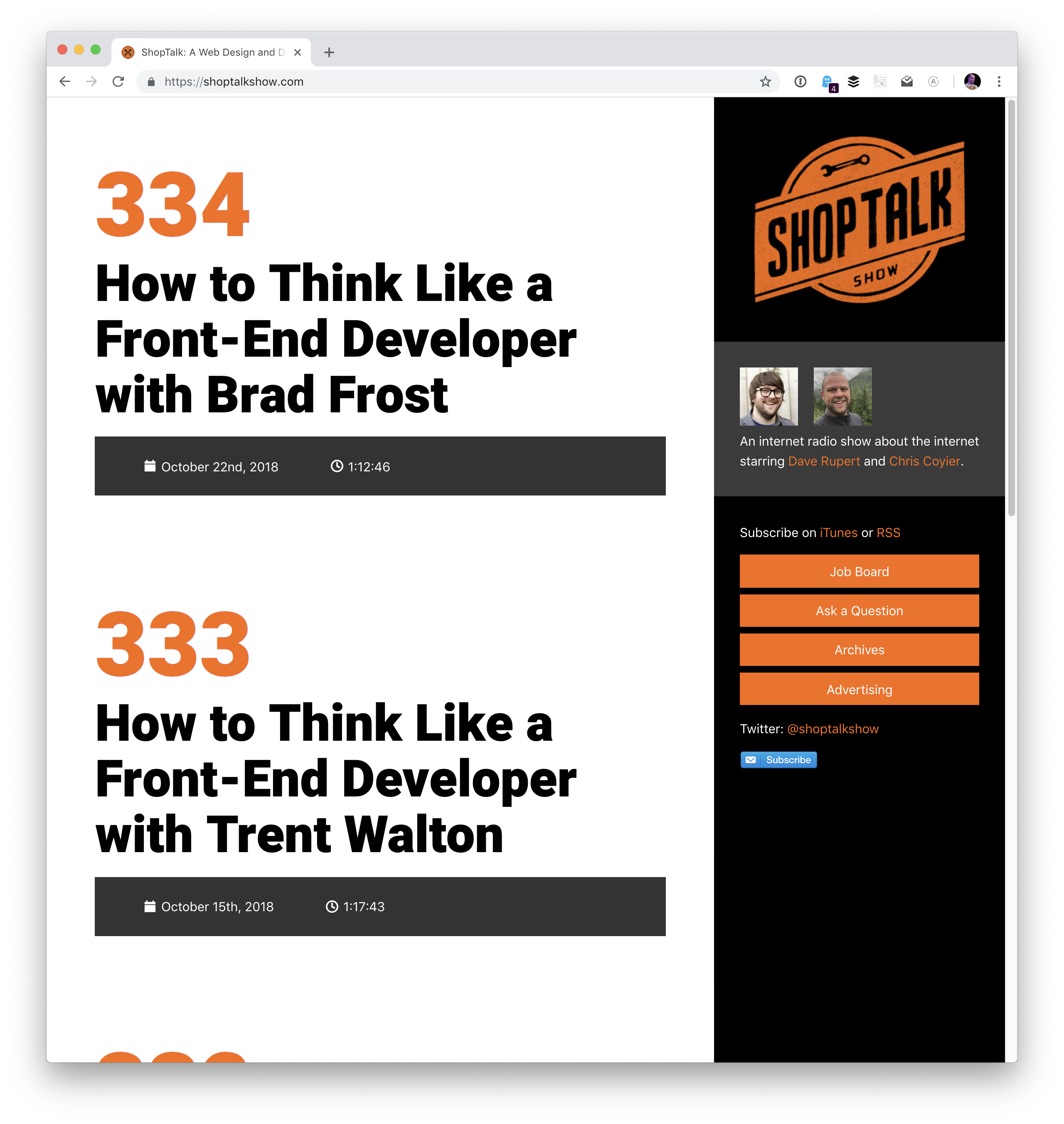
Over on ShopTalk, Dave and I have kicked off a series of shows we’re calling „How to Think Like a Front-End Developer.”
I’ve been fascinated by this idea for a while and have been collecting thoughts on it. I have my own ideas, but I want to contrast them with the ideas of other front-end developers much more accomplished than myself! My goal is to turn all this into a talk that I can give toward the end of this year and next year. This is partially inspired by some posts we’ve published here over the years:
…as well other people’s work, of course, like Brad Frost and Dan Mall’s Designer/Developer Workflow, and Lara Schenck and Mandy Michael’s thoughts on front-end development. Not to mention seismic shifts in the front-end development landscape through New JavaScript and Serverless.
Speaking of ShopTalk, a while back Dave and I mused about wanting to redesign the ShopTalk Show website. We did all this work on the back end making sure all the data from our 350+ episodes is super clean and easy to work when, then I slapped a design on top of it that is honestly pretty bad.
Dan Mall heard us talk about it and reached out to us to see if he could help. Not to do the work himself… that would be amazing, but Dan had an even better idea. Instead, we would all work together to find a newcomer to design and have them work under Dan’s direction and guidence to design the site. Here’s Dan’s intro post (and note that applications are now closed).
We’re currently in the process of narrowing down the applicants and interviewing finalists. We’re planning on being very public about the process, so not only will we hopefully be helping someone who could use a bit of a break into this industry, but we’ll also help anyone else who cares to watch it happen.
I’ve recently had the pleasure of being a guest on other shows.
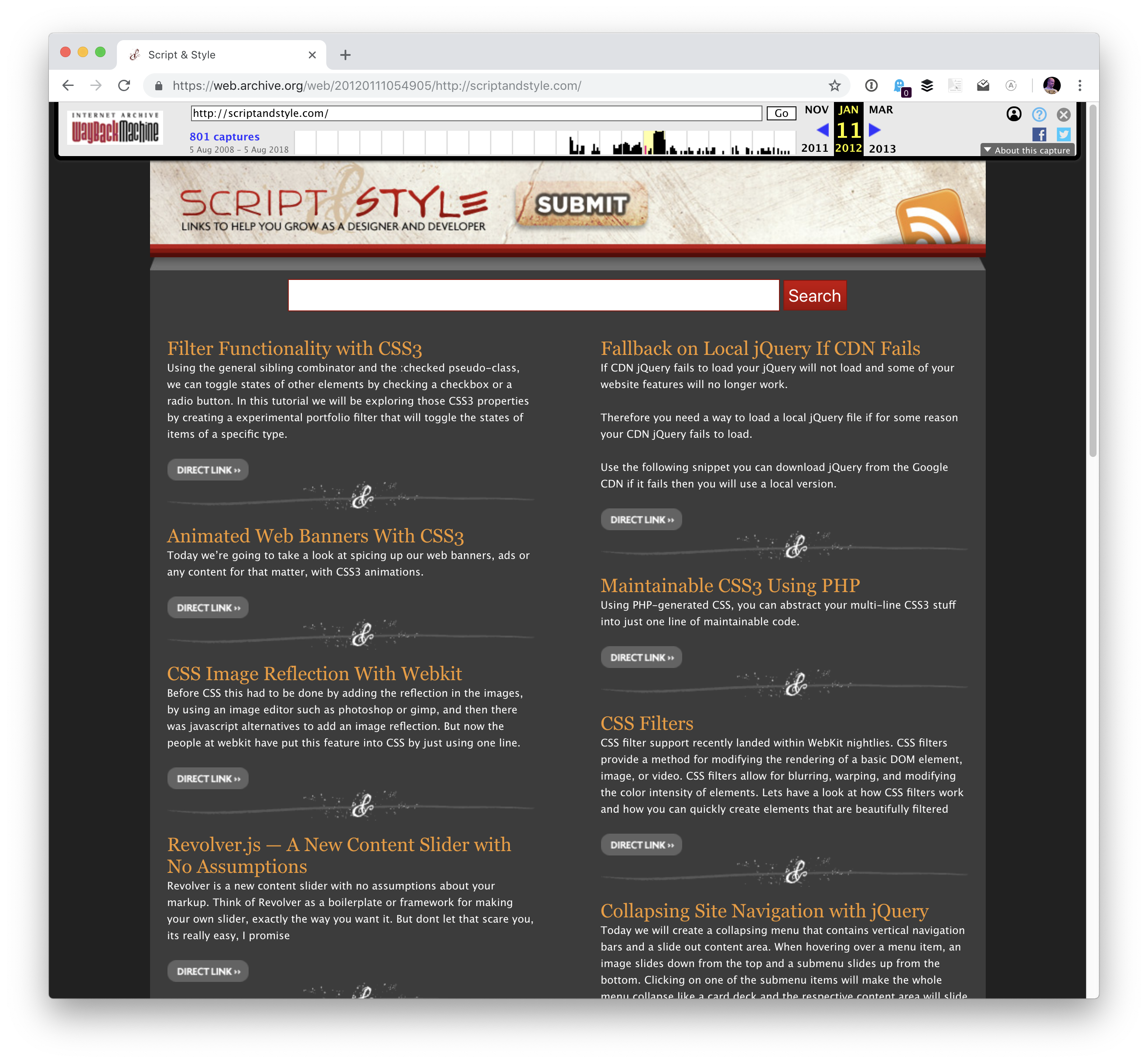
First up, I was on the Script & Style Show with David Walsh and Todd Gardner
I love that David has ressurected the name Script & Style. We did a site together quite a few years back with that same name!
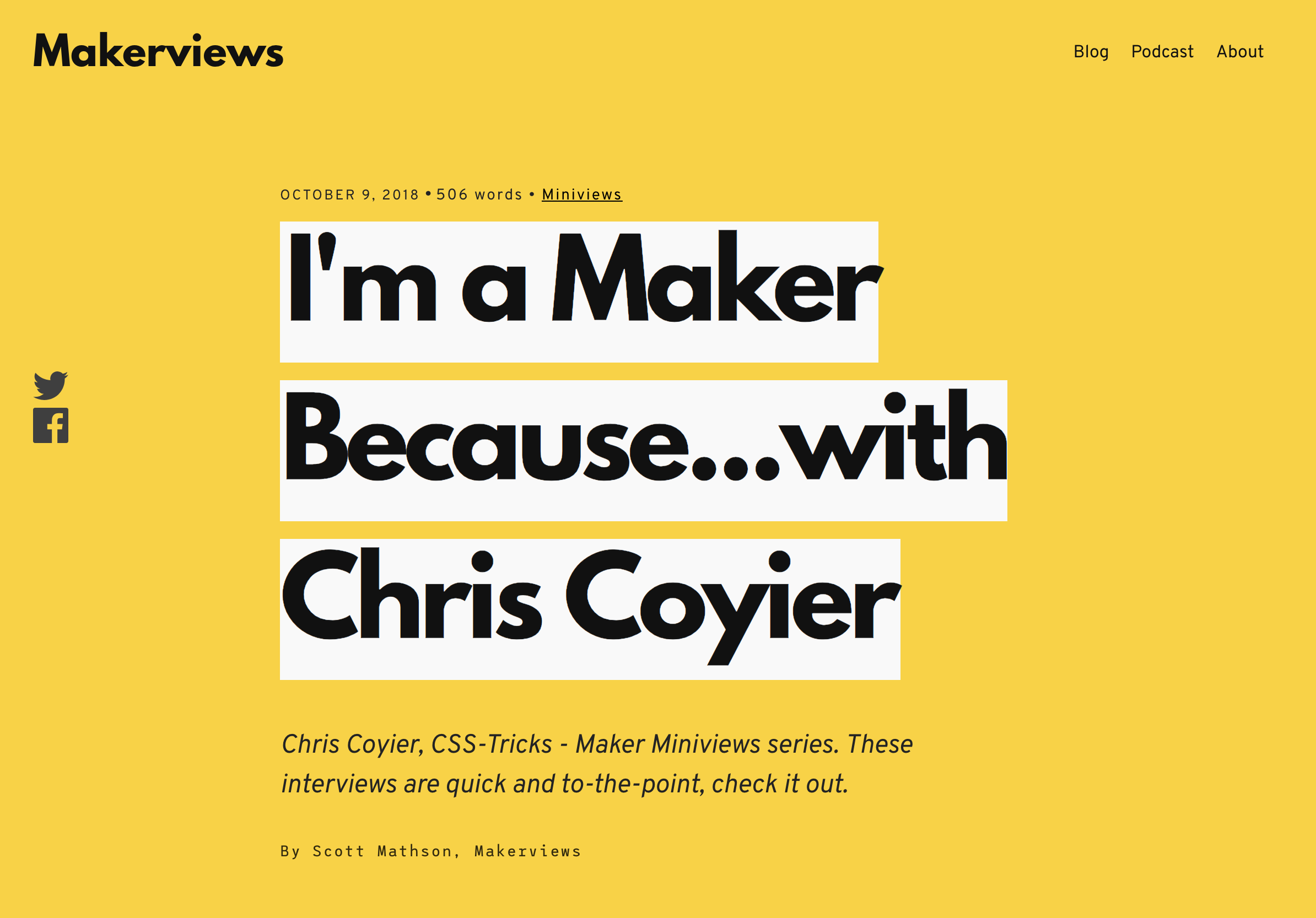
What one piece of advice would you give to other makers?
I’d say that you’re lucky. The most interesting people I know that seem to lead the most fulfilling, long, and interesting lives are those people who do interesting things, make interesting things, and generally just engage with life at a level deeper than just skating by or watching.
If you happen to live in Central Oregon, note that our BendJS meetups have kicked back up for the season. We’ve been having them right at our CodePen office and it’s been super fun.
I haven’t even gotten to CodePen stuff yet! Since my last chronicle, we’ve brought in a number of new employees, like Klare Frank, Cassidy Williams, and now Stephen Shaw. We’re always chugging away at polishing and maintaining CodePen, building new features, encouraging community, and everything else that running a social coding site requires.
Oh and hey! CodePen is now a registered trademark, so I can do this: CodePen®. One of our latest user-facing features is pinned items. Rest assured, we have loads of other features that are in development for y’all that are coming soon.
If you’re interested in the technology side of CodePen, we’ve dug into lots of topics lately on CodePen radio like:
Hey gang, time for another broad update about various goings on as we tend to do occasionally. Some various happenings around here, appearances on other sites, upcoming conferences, and the like.
At the end of this month, October 29th-30th, I’ll be speaking at JAMstack_conf. Ever since I went to a jQuery conference several million years ago (by my count), I’ve always had a special place in my heart for conferences with a tech-specific focus. Certainly this whole world of JAMstack and serverless can be pretty broad, but it’s more focused than a general web design conference.
In December, I’ll be at WordCamp US. I like getting to go to WordPress-specific events to help me stay current on that community. CSS-Tricks is, and always has been a WordPress site, as are many other sites I manage. I like to keep my WordPress development chops up the best I can. I imagine the Gutenburg talk will be hot and heavy! I’ll be speaking as well, generally about front-end development.
Next Spring, March 4th-6th, I’ll be in Seattle for An Event Apart !
Over on ShopTalk, Dave and I have kicked off a series of shows we’re calling „How to Think Like a Front-End Developer.”
I’ve been fascinated by this idea for a while and have been collecting thoughts on it. I have my own ideas, but I want to contrast them with the ideas of other front-end developers much more accomplished than myself! My goal is to turn all this into a talk that I can give toward the end of this year and next year. This is partially inspired by some posts we’ve published here over the years:
…as well other people’s work, of course, like Brad Frost and Dan Mall’s Designer/Developer Workflow, and Lara Schenck and Mandy Michael’s thoughts on front-end development. Not to mention seismic shifts in the front-end development landscape through New JavaScript and Serverless.
Speaking of ShopTalk, a while back Dave and I mused about wanting to redesign the ShopTalk Show website. We did all this work on the back end making sure all the data from our 350+ episodes is super clean and easy to work when, then I slapped a design on top of it that is honestly pretty bad.
Dan Mall heard us talk about it and reached out to us to see if he could help. Not to do the work himself… that would be amazing, but Dan had an even better idea. Instead, we would all work together to find a newcomer to design and have them work under Dan’s direction and guidence to design the site. Here’s Dan’s intro post (and note that applications are now closed).
We’re currently in the process of narrowing down the applicants and interviewing finalists. We’re planning on being very public about the process, so not only will we hopefully be helping someone who could use a bit of a break into this industry, but we’ll also help anyone else who cares to watch it happen.
I’ve recently had the pleasure of being a guest on other shows.
First up, I was on the Script & Style Show with David Walsh and Todd Gardner
I love that David has ressurected the name Script & Style. We did a site together quite a few years back with that same name!
What one piece of advice would you give to other makers?
I’d say that you’re lucky. The most interesting people I know that seem to lead the most fulfilling, long, and interesting lives are those people who do interesting things, make interesting things, and generally just engage with life at a level deeper than just skating by or watching.
If you happen to live in Central Oregon, note that our BendJS meetups have kicked back up for the season. We’ve been having them right at our CodePen office and it’s been super fun.
I haven’t even gotten to CodePen stuff yet! Since my last chronicle, we’ve brought in a number of new employees, like Klare Frank, Cassidy Williams, and now Stephen Shaw. We’re always chugging away at polishing and maintaining CodePen, building new features, encouraging community, and everything else that running a social coding site requires.
Oh and hey! CodePen is now a registered trademark, so I can do this: CodePen®. One of our latest user-facing features is pinned items. Rest assured, we have loads of other features that are in development for y’all that are coming soon.
If you’re interested in the technology side of CodePen, we’ve dug into lots of topics lately on CodePen radio like: